

What's this....two reviews in a week?
I've just posted my review of Pope Joan by Donna Woolfolk Cross over at Historical Tapestry.

Showing posts with label BOTM for HFF. Show all posts
Showing posts with label BOTM for HFF. Show all posts
Sunday, December 16, 2007

Monday, October 01, 2007
Catch up
First things first - I have a new review up at Historical Tapestry for The Book Thief by Markus Zusak - really good book!
Been really busy for the last couple of weeks, spending lots of time at my sister's getting to cuddle with my nephew who is now 11 days old. Because of the baby, my mother has been here....................
Yesterday, it was photo day and lamb day. My goodness, I hate having my photo taken, mainly because when I look at photos I see how other people see me, as opposed to how I see myself when I look in the mirror - and believe me there is a big difference!
After photos, we had roast lamb, which in some ways was unfortunate even though it tasted good, because I had invited some people around for dinner, and I was cooking lamb tagine - two lots of lamb in one day!
This weekend here has all been about sport. There is the Rugby Union World Cup that is on in France at the moment, and then on Saturday the AFL grand final was played and won. Well....more precisely Geelong absolutely thrashed Port Adelaide by 20 goals. Not exactly a great game to watch. Then, on Sunday night, the Rugby League grand final was on and the Melbourne Storm beat the Manley Sea Eagles. Go Storm!!!
This week I have a week off. One of the things I am wanting to do is write a few reviews, but then again, until my guest goes home, who knows how much time I am going to have for doing what I want.
Been really busy for the last couple of weeks, spending lots of time at my sister's getting to cuddle with my nephew who is now 11 days old. Because of the baby, my mother has been here....................
Yesterday, it was photo day and lamb day. My goodness, I hate having my photo taken, mainly because when I look at photos I see how other people see me, as opposed to how I see myself when I look in the mirror - and believe me there is a big difference!
After photos, we had roast lamb, which in some ways was unfortunate even though it tasted good, because I had invited some people around for dinner, and I was cooking lamb tagine - two lots of lamb in one day!
This weekend here has all been about sport. There is the Rugby Union World Cup that is on in France at the moment, and then on Saturday the AFL grand final was played and won. Well....more precisely Geelong absolutely thrashed Port Adelaide by 20 goals. Not exactly a great game to watch. Then, on Sunday night, the Rugby League grand final was on and the Melbourne Storm beat the Manley Sea Eagles. Go Storm!!!
This week I have a week off. One of the things I am wanting to do is write a few reviews, but then again, until my guest goes home, who knows how much time I am going to have for doing what I want.
Share:




Monday, October 02, 2006
The Kitchen Boy by Robert Alexander
 This was the book of the month for September over at Historical Fiction Forum - a welcome change from the usual selections which tend to always feature English royalty. As much as I love reading about those, it is nice to expand the horizons a little bit!
Though the events are almost a century old, the imprisonment and execution of Tsar Nicholas and his family still hold an aura of mystery that fascinates. In haunting prose, Robert Alexander retells the story through the eyes of Leonka, on the kitchen boy to the Romanovs, who claims to be the last living witness to the family's brutal execution. Mysteriously spared by the Bolsheviks, the boy vanished into the bloody tides of the Russian Revolution. Now, through Alexander's conjuring, he reemerges to tell his story. What did the young boy see in those last days of the Imperial Family? Does he have answers to long-standing questions about secret letters smuggled to the Tsar, thirty-eight pounds of missing tsarist jewels, and why the bodies of two Romanov children are missing from the secret grave discovered in 1991?This book is only about 200 pages long but for it's diminutive size it certainly was a captivating read.
It is told from the perspective of an old man telling his grand daughter the story of his life. The story he weaves in an extraordinary one. As a young boy, he was the kitchen boy assigned to the Romanov family. When the Romanovs were imprisoned at the Ipatiev house in Siberia, the kitchen boy Leonka was one of the few personal servants who were allowed to continue to serve the Tsar and his family.
Through the eyes of Leonka, we witness the last few days of the Royal family through several incidents, most notably when it seems as though they might be rescued as indicated in secret notes smuggled in to them. As the Tsarina and her daughters frantically try to hide the family jewels in case they are able to escape.
Incredibly, on the day that the Tsar, his family and his personal attendants are all killed, Leonka has been set free, thus saving his life. But for Leonka this has not necessarily been a blessing, for having snuck back to the house and been witness to the infamous events that followed, he is the last living witness, even able to give some clue as to what happened to the bodies of two of the Romanov children that were missing when the family's grave was finally discovered in 1991.
I really enjoyed the insight into the final days of the Tsar and his family...certainly a terrible incident in the long and turbulent history of Russia. There was a really interesting twist at the end of the book which I liked, although the author may have taken it just a fraction too far!
There is a really good website for this book as well, that can be found here.
Overall, an entertaining read!
Rating 4/5
Share:
Monday, August 14, 2006
To the Tower Born by Robin Maxwell
 This book was Book of the Month for August over at Historical Fiction Forum.
Debated for more than five centuries, the disappearance of the young princes Edward and Richard from the Tower of London in 1483 has stirred the imaginations of numerous writers from Shakespeare to Josephine Tey and posited the question: Was Richard III the boys' murderer, or was he not? In a captivating novel rich in mystery, color, and historical lore, Robin Maxwell offers a new, controversial perspective on this tantalizing enigma.
The events are witnessed through the eyes of quick-witted Nell Caxton, only daughter of the first English printer, William Caxton, and Nell's dearest friend, "Bessie," daughter of the King of England, sister to the little princes, and founding
ancestress of the Tudor dynasty.
With great bravery and heart, the two friends navigate this dark and dangerous medieval landscape in which the king's death sets off a battle among the most scheming, ambitious, and murderous men and women of their age, who will stop at nothing to possess the throne of England.
Hot on the heels of The Daughter of Time, this book offers another perspective on what happened to the little princes in the Tower. Were they murdered by Richard III? If not, what happened to them, and who made it happen?
Nell and Bessie are best friends. Nell's father, William Caxton was the first English printer, and therefore had a lot of royal patronage. By situating his shop within the walls of Westminster, it is therefore made plausible that his only daughter Nell would become close friend of the York princess, Elizabeth, who eventually becomes the wife of Henry Tudor (Henry VII) and therefore mother of Henry VIII.
The story of what happened during the final tumultuous years of the York dynasty is being told to a young Prince Harry by his mother and Nell. Harry's older brother Arthur has just died, and Bessie is beside herself with grief. Nell forces her way into the palace in direct disobedience to Margaret Beaufort, the King's mother, and when Harry also sneaks in to his mother's room, the two women begin reminiscing. Covering the death of Edward IV, and some of the reign of Richard III, the girls tell of the story of the times, up until some time towards the end of the Richard's reign, and also of their loves.
There are several problems with this novel. When a book starts out with an event that appears to be completely unrelated to any other event in the book, it is probably not a great sign, but still I kept reading. The main issues that I had with this book are around the number of coincidences and the modernism of the characters. On numerous occasions either Nell or Bessie just happened to be in a position to overhear one of the meeting between someone plotting an uprising or revolt, or they just happened to be able to sneak into the Tower thanks to all the friends that worked on the gates and promised not to reveal their presence.
With the girls able to come and go just about anywhere, and then Nell being offered a position as the tutor to Edward, Prince of Wales, and then as secretary to Margaret Beaufort, it felt at times as though the author was trying to capture a modern audience at the expense of historical authenticity. There are plenty of other examples as well -for example when a romantic relationship develops between Nell and Anthony Rivers, her father is fine with it, despite the fact that Lord Rivers is already married. It has to be said that it appears that the author is a big fan of Anthony Rivers, to an extent I have never seen before in books about this time period.
So, did I enjoy this book? Weeeellll...how's "kind of" for an answer? I liked her theory as to who was behind the disappearance of the young princes from the Tower - it made a lot of sense, however she didn't really follow through with what actually happened. It was almost as though the author realised that she was right up to her allocated 300 pages, and bam...that's it. Thanks so much for coming! And then right at the very end, there was just a few lines that tried to tell what Nell and Bessie were up to as at the end of the current time that just had me incredulous - hard to say much more without spoiling completely!
If I was to mark just on enjoyment, I would probably give a lower mark, but I am going to rate this book 3 out of 5, simply because it was a new and quite interesting solution to an old question.
Share:
Friday, July 07, 2006
Falling Angels by Tracy Chevalier
 This book is the July Book of the Month in Historical Fiction Forum.
January 1901, the day after Queen Victoria's death: Two families visit neighbouring graves in a fashionable London cemetery. One is decorated with a sentimental angel, the other an elaborate urn. Separated by social class as well as taste, the Waterhouses cling to tradition while the Colemans look ahead to a more modern society. The families are inextricably linked when their two girls meet behind the tombstones and become friends - and worse become involved with the gravedigger's impetuous son.
As the girls grow up and the new century begins, as cars replace horses and electricity outshines gas lighting, the nation emergres from the shadows of oppressive Victorian values to a golden Edwardian summer. It is then that the beautiful frustrated Mrs Coleman makes a bid for greater personal freedom, with disastrous consequences, and the lives of the Colemans and the Waterhouses are changed forever.
The only other Tracy Chevalier book I have read was Girl with a Pearl Earring, which I absolutely loved! When I read that one I picked it up with the intention of just reading the first couple of pages. Two and a half hours later, I had finished it and was blown away. This book never really grabbed my attention in the same way, although it was an entertaining enough read.
On her website, Chevalier talks about wanting to write a book about the mourning etiquette and social restrictions in place in Victorian England, and the changes in society that started to take place during the reign of Edward VII, and whilst it is that, for me, it was also about the way that secrets can destroy families and relationships.
When the two young girls meet behind the headstones of their family gravestones, they are instant best friends. They also become instant friends with Simon, the gravedigger's son, a young boy who they would never have met during their normal day to day life as he is very definitely a working class boy.
The two girls don't see each other again until the Waterhouses move into the house behind the Colemans and they are reunited. Throughout their childhood they spend a lot of their time playing at the cemetery, firstly being accompanied by Jenny, the Colemans maid, and then later by Maude's mother, Mrs Coleman. Both Jenny and Mrs Coleman visit the cemetery for their own reasons, and have their own consequences, but for the Colemans those consequences are far reaching, when Mrs Coleman becomes ill.
As Mrs Coleman finally recovers from her malaise, she becomes heavily involved in the suffragette meeting following a chance meeting with a suffragette at the opening of the local library. Her husband has no idea who involved until she is arrested and ends up spending time in jail. Whilst this would be hard for a young girl to deal with, Maude has actually been coming second to the cause for quite some time, so whilst it is difficult it is not impossible for her to cope.
Once Mrs Coleman is released from jail, she throws herself into the cause almost with abandon, and with her focus on the cause there are tragic consequences for both families.
As a commentary on some of the major changes that started to happen in the 10 years between the death of Queen Victoria and King Edward VII this was very interesting. Some of the changes included the introduction of electricity to homes, the replacement of horses with cars, and of course the suffragette movement.
Overall, an entertaining enough read, although not as good as Girl with a Pearl Earring. I do plan to read her other books before her new book comes out early next year.
Rating 4/5
Share:
Friday, June 23, 2006
A Rose for the Crown by Anne Easter Smith
 This book was Book of the Month for June over at Historical Fiction Forum. I haven't gotten around to May's book yet, so I thought I should probably read this month's book, and I am certainly glad that I did!
AN UNFORGETTABLE HEROINE,
A KING MISUNDERSTOOD BY HISTORY,
A LOVE STORY THAT HAS NEVER BEEN TOLD
In A Rose for the Crown, we meet one of history's alleged villains through the eyes of a captivating new heroine -- the woman who was the mother of his illegitimate children, a woman who loved him for who he really was, no matter what the cost to herself.
As Kate Haute moves from her peasant roots to the luxurious palaces of England, her path is inextricably intertwined with that of Richard, Duke of Gloucester, later King Richard III. Although they could never marry, their young passion grows into a love that sustains them through war, personal tragedy, and the dangerous heights of political triumph.
Anne Easter Smith's impeccable research provides the backbone of an engrossing and vibrant debut from a major new historical novelist.
Richard III is known as one of the most villainous kings of England, mainly because whilst in his care the two princes in the Tower, his nephews, disappeared without a trace. He was the last Plantagenet king, and had his throne taken from him by the first of the Tudor kings, Henry VII. He was portrayed in a negative way ever since the time of the Tudors, with Shakespeare especially getting in on the act. There are quite a few people out there who believe that this reputation is undeserved, and that he is a king that has had bad PR over the years. The author of this book is a member of the Richard III society and it is therefore inevitable that she would portray him in a mostly positive light, but hers is not the only one out there that portrays him in this way. One of the best books I have read with Richard III as subject is Sunne in Splendour by Sharon Kay Penman...awesome book!
Before we come to know Richard, we firstly meet a young lady by the name of Kate Bywood, who is a lovely looking country lass, with the very bad habits of telling everyone what she thinks, and asking too many questions. We follow Kate for many years, getting to know her as she lives both at her family home, and then when she is given the opportunity to travel to Ightham Mote to become companion to a member of her family. She is married at quite a young age to a much older man, and widowed a short time later, making her an independent woman, with a regular income. Along the way we also meet some of the people that will become incredibly important to her, including Margaret Howard, wife of John Howard...a man on the rise within royal circles, and who eventually played a huge role in the reign of Richard III.
When it comes to be time for Kate to marry again she is delighted when she is to be married to George Haute, a very handsome young man, who is in service with the Howards. However, it becomes very clear early on that whilst Kate thinks she loves George, George's reasons for marriage are less honourable. Kate is resigned to another marriage that is less than fulfilling. Into her unhappy life comes the youngest brother of Edward IV, Richard of Gloucester, and there is an instant connection between them. As their paths occasionally cross, everything is building up to their inevitable relationship.
Young Richard of Gloucester is portrayed as a man who values loyalty more than anything, and who is valued for his own loyalty by his brother, something that is not always forthcoming in royal families (their brother, Duke of Clarence was executed for treason against Edward IV). For Richard and Kate, they cannot often be together, but when they are the time spent is precious, and even more so when Kate bears him two children. Richard is, however, a man of honour, and so when the time comes for him to marry for duty, they agree that their time as lovers has to end, but not before Kate once again finds herself with child.
Following the death of Edward, Richard is first appointed as regent to the young King Edward V, and then eventually is declared King in his own right. Kate's two older children are acknowledged by Richard and even taken into his own household by him and his wife Queen Anne, and Kate is separated by the social chasm between them as they begin their lives as young royals. She is not however ever separated from them emotionally.
The connection between Kate and Richard is a strong and loving one, and as Richard deals with the difficulties of being king, Kate is able to provide him with support in a way that no one else can, especially when his two young nephews are taken care of! She is also able to help out some of her closer friends and relatives as a result of her own influence with him.
So, what basis in fact is there? What is known is that Richard has at least two illegitimate children before his marriage that he acknowledged and had living in his own household. On the eve of his death it is thought that he acknowledged a third child as well. As to the identity of the mother(s), that is not known, so the author has taken some information found in the history records and woven her story around them. She suppposes that given that Richard was quite unusual in that he was completely faithful to his wife (quite the opposite of his older brother!), that it was likely that Richard had had such a loving relationship with someone that he was fulfilled in a way that no mistresses could compete with. How true that supposition is .... who knows, but it does make for a very solid and compelling read.
The author takes the facts that are known, along with details of daily lives across a cross section of society, and weaves them into a narrative that is compelling without being dry as some historical fiction can occasionally be.
An extremely satisfying and enjoyable read, and a recommended read to anyone interested in reading about the English royal history before Tudor times.
Rating 4.5/5
Share:
Friday, June 02, 2006
Innocent Traitor by Alison Weir

Alison Weir, our pre-eminent popular historian, has now fulfilled a life's ambition to write historical fiction. She has chosen as her subject the bravest, most sympathetic and wronged heroine of Tudor England, Lady Jane Grey.
Lady Jane Grey was born into times of extreme danger. Child of a scheming father and a ruthless mother, for whom she was merely a pawn in a dynastic power game with the highest stakes, she lived a live in thrall to political machinations and lethal religious fervour.
Jane's astonishing and essentially tragic story was played out during one of the most momentous periods of English history. As a great-niece of Henry VIII, and the cousin of Edward VI, Mary I and Elizabeth I, she grew up to realise that she could never throw off the chains of her destiny. Her honesty, intelligence and strength of
character carry the reader through all the vicious twists of Tudor power politics, to her nine-day reign and its unbearably poignant conclusion.
Alison Weir is the author of numerous non-fiction books, but Innocent Traitor is her first fiction book. She has taken the story of the Nine Day Queen - Lady Jane Grey, and given us the details of her childhood, her relationship with her parents, her introduction to court, and then the machinations behind trying to put Jane on the throne following the death of Henry VIII's son, King Edward. We are also given an insight into Jane as a very enthusiastic and somewhat dogmatic Protestant during a time of huge religious upheaval in 16th century England.
Daughter of Frances Brandon, the sister of Henry VII, Lady Jane Grey had what can only be portrayed as a miserable childhood right from birth, when her parents were very disappointed that she was not a boy. Frances was an extremely strict mother, who punished Jane excessively for even the most minor of infractions. In reality, whilst her parents were well matched in their own marriage, it appeared that they were really only concerned by what they could gain out of marrying Jane off. Right from her earliest days, Jane was raised with an eye to being an extremely accomplished, and therefore marriageable, young lady. I am sure that the Grey's were not the only court families who viewed their daughters in this way, but the portrayal given in the book emphasises the coldness of Frances Brandon in particular.
As Jane grows, she is introduced to court, and she becomes particularly attached to Queen Katherine Parr. Indeed, after Henry's death, and Queen Katherine' s marriage to Thomas Seymour, Jane goes to live with Queen Katherine, and for once in her short life, seems happy. Even then though, the reason for these living arrangements is related to trying to arrange a glittering marriage for Jane (with of course rewards galore for both her parents, and Thomas Seymour who is trying to make the arrangements).
As King Edward gets closer and closer to death, the behind the scenes wheeling and dealing continues, with the end result that Jane is married to the son of John Dudley, Duke of Northumberland and eventually declared a reluctant queen. Her reign lasted just nine days, and she was deserted by those that had put her into the role and left to the mercy of Queen Mary I.
I have to admit that I have never read any of Alison Weir's non-fiction books, so when I started reading this book it wasn't from the perspective of seeing how a historian fared in the change from non fiction to historical fiction, it was from the perspective of a completely new to me author. It has to be said that she certainly challenged herself.
This whole book is written from first person point of view. My major issue with this book is the fact that it isn't just from one or two people's POV - rather we have at least nine different views....that's a lot of head hopping. Granted that a couple of those are only for a few paragraphs, and even the with those people who we do get to know quite well, there are times where an we have a couple of paragraphs from one point of view and then we move onto the next perspective. More than once I had to go back a page or two to find out once again who was providing the narrative to be sure that I was understanding what I was reading in the correct context.
Maybe she decided to write from first person POV because third person could have been perceived as being too similar as writing non-fiction in terms of the detached viewpoint. Who knows. Personally, I felt as though there were at least three or four unnecessary narrators. Yes, they all added something to the narrative about what was happening but there may well have been other ways of achieving the dissemination of the same information.
Weir has taken the known facts, even the strange ones that seem implausible (for example, the way that Queen Katherine Parr's warrant for arrest was found and given to her, eventually meaning that Henry did not carry through with it) and then filled them out admirably, giving us a very interesting portrait of the life and times of Lady Jane Grey. It is shocking to me at times to realise how young many of these young people were when they were found guilty of treasonable offences, and executed - such a young age to be considered mature enough to be such a threat to the monarchy.
Whilst I did have issues with the first person points of view, this was still an entertaining read, and I am glad to have taken the time to read it.
Rating 4/5
Share:
Thursday, March 30, 2006
Slammerkin by Emma Donoghue
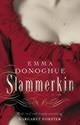 This book was inspired by an actual murder in the Welsh border regions in 1763. In surviving newspaper articles from the time it is suggested that the young girl who committed the murder did so because she was obsessed with clothes. This is the basis that Emma Donoghue chooses to follow.
When we first meet Mary Donoghue she is 14 years old, and a schoolgirl living in London, at an age where most other working class girls have been sent out to work. Mary hasn't been sent out to work yet because her mother promised her father before he was executed for his part in a rebellion that she would ensure that Mary was educated. Mary's mother has remarried to a man that Mary can't stand, and who resents the fact that he is supporting a girl who is old enough to find work and assist more in the household. The problem is that Mary feels that she is too good to go into service, too good to become a seamstress, yet she wants all the fine things in life.
Early in the book Mary has an encounter with a peddler where she gives away her virtue for the price of a red ribbon. Left pregnant by the encounter she is eventually kicked out of home when her condition is discovered. She shortly finds herself in one of the roughest areas of London, and it isn't too big a leap for her before she finds herself servicing the cullies and making some money for herself. Her one friend is a fellow prostitute named Doll, who teaches Mary the tricks of the trade and how to get by, as well as warning her who to stay away from.
In the midst of a terribly cold winter, Doll convinces Mary that needs to sign up to go into a home for reformed prostitutes, if only so that she has warmth and food for the rest of the winter. When she finally rebels against the strict rules and religious environment of the home she comes back to find her only friend gone, well, dead...and then on the wrong side of one of the most dangerous pimps in London.
Mary flees to her mother's home town of Monmouth, hoping to find a new life for herself, to match with the new history she has made of her life. She is taken in as a maid for her mother's former best friend, Mrs Jones, who rapidly befriends Mary, not only employing her but also making her her confidant in her struggle to give her husband a son.
Also living in her home are the slave Abi, originally from Africa, via the Caribbean, who works for no wages. There is also Mrs Ash who was originally employed as a wet nurse but has been living with the family for many years, now in the guise of a governess for the one surviving daughter. Finally there is Daffy, and intense but likeable young man who is trying to make a life for himself away from his hypocritical, cleric father, who also runs one of the village pubs.
Once Mary is living with the Jones, this story becomes several things - firstly a study of extended family as defined at the time to include servants and slaves, secondly, a story of empowerment as Mary encourages Abi to try and get some wages for her toil. Finally, this is a story about whether Mary can take the chance that she has given to live a life away from the prostitution that she has previously undertaken. At one point it appears that Daffy and Mary may marry, but that is shortlived as Mary realises that if she does marry Daffy she will be stuck in a little town in the Welsh Marches for the rest of her life.
As Mary goes through life, pretty much destroying the peace of mind of the people around her, the author gives us a character who is almost totally unlikeable. What makes her so greedy, so convinced of her elevated worth in her own mind, and yet so able to rationalise that choosing a life of prostitution is okay for her. Mary in effect lives hard and fast and dies early without ever seemingly being happy, or at the very least unable to realise when she has a good thing going - a precautionary tale if nothing else.
Whilst Mary, and many of the other characters are unlikeable, and this is in many ways a story without much hope, it is nonetheless well written and compelling. I have had it on my TBR list for ages, so I am glad to have finally read it! Even where there are glimpses of hope, for example, for Abi, to me the suggestion for the future was not really one of happiness.
Within that though, there are glimpses of humour, such as when the ultra religious and judgmental Mrs Ash gets her comeuppance, but those moments are few and far between.
When rating this book, I hovered between 3.5 and 4, mainly because the characters are pretty much unlikeable, but the writing was compelling, and I was completely drawn into the story on more than one occasion.
Rating 4/5
Share:
Wednesday, January 18, 2006
The Dark Queen by Susan Carroll

The Dark Queen by Susan Carroll was quite an unusual read for me! Just deciding what to classify this book as has taken me a while. I have seen it classified as historical romance on one website, and yes, there is definitely a strong element of that here, including a relatively standard plot progression, but there seemed to be more of a basis in actual history in the book than you normally see in most historical romances (which tend to feature a historical setting, but not a whole lot of historical content!).
So, how about historical fiction. Certainly, it is strong enough to stand up in that category (and I saw it shelved in fiction when I went to the bookstore yesterday) with many of the key events based on real events, including the horrifying climax. There are however a lot of witches, spells, potions and enchantments that feature throughout the book so maybe we need to have a category called Historic/Romance/Fantasy for this book.
This mix of styles is part of the reason why I enjoyed this book so much!
Ariane Cheney has inherited the title of Lady of Fair Isle following the death of her mother. With her mother gone, and her father off exploring the world (who knows if and when he will return), it is Ariane's responsibility to look after her sisters - the emotionally damaged Gabrielle and the sensitive Miribelle, whilst also looking after the people of Fair Isle, and guarding the secrets that have been passed from generation to generation. For a lot of the ladies of Fair Isle are white witches, in a time where witchery is a crime, and witch hunters have been known to roam the land. Ariane's great skill is healing, Gabrielle's is using painting and art to create magical environs, and Miri's is that she can talk to the animals, and that she has dreams foretelling the future. Due to events that happen before the start of this book we know that Gabrielle has not painted for a while, due to losing her magic because of an encounter with a man. Gabrielle is becoming a much harder person, laying the foundations for the next book, and causing problems during this book for Ariane and her beau, who Gabrielle calls The Ogre.
Enter Justice, Compte de Renard, who has decided that Ariane is to be his bride. Poor Ariane has so much already going on, that another persistent suitor is the last thing she needs. The book opens with the Compte waiting patiently at the church for his bride to turn up, after he has ordered her that she will marry him after only their second meeting. He will take care of all the arrangements. When a straw mannequin dressed in the wedding dress he provided is taken from the carriage, Justice realises that it is not going to be as easy as he thought to bend Ariane to his will. He goes to visit Ariane at her home, and gives her an enchanted ring. He will leave her alone with the proviso that if she needs him, she places the ring on her finger, and holds it near her heart. If she calls him with the ring 3 times, then they must be married. Ariane accepts the ring, along with the guarantee that he will not continue to bother her, with no intention to use the ring once, let alone 3 times! More interestingly though, and more troubling for Ariane, where did he obtain such enchanted rings, and how can he read her eyes and thoughts so easily if he has no knowledge of witchcraft, whilst being able to guard his own thoughts from her at the same time.
However, there are dark clouds on the horizon. The Dark Queen, Catherine de Medici is planning foul deeds, and she is also a witch, a dark witch at that. Before too long Ariane is called to assist a wounded soldier (Nicholas Remy) who was trying to make his way too Fair Isle. He is carrying a pair of gloves that he believes Catherine used to murder his Queen, Catherine's rival. He needs Ariane's assistance to prove it so that he can stop the wedding between Henry of Navarre and Catherine's daughter. Catherine is however determined to get the gloves back, even if that means sending the witch hunters to Fair Isle to flush out the wanted man..even if it means that all the women on Fair Isle have to die.
This was a very compelling read. The romance between Ariane and Justice was well written and satisfying. Seeing Ariane relax and become a normal young lady at times with Justice instead of the Lady of Fair Isle with all her responsibilities was refreshing for the character. There was plenty of intrigue, and the stage has definitely been set for the next two books in the trilogy featuring the two other Cheney sisters, but also with setting up their nemesis in at least one of the two books.
If there was one criticism to be made of this book, it would be that it was a touch too long, but that is minor when compared to the strengths of the rest of the book.
I had never read any Susan Carroll before this book. I will however be on the lookout for more from her, especially the sequel The Courtesan which is not available here in Australia yet. The third book, The Silver Rose is due out in March of this year.
Rating 4 out of 5
Share:
Sunday, January 15, 2006
The Hidden Diary of Marie Antoinette by Carolly Erickson

The inside flap reads:
Imagine that on the night before she is to die under the blade of the guillotine, Marie Antoinette leaves behind in her prison cell a diary telling the story of her life - from her privileged childhood as Austrian Archduchess to her years as glamorous mistress of Versailles to the heartbreak of imprisonment and humiliation during the French Revolution.
Carolly Erickson takes the reader deep into the psyche of France's doomed queen: her love affair with handsome Swedish diplomat Count Axel Fersen, who risked his life to save her, her fears on the terrifying night the Parisian mob broke into her palace bedroom intent on murdering her and her family, her harrowing attempted escape from France in disguise, her recapture and the grim months of harsh captivity, her agony when her beloved husband was guillotined and her young son was torn from her arms never to be seen again.
I guess that this would be considered a warts and all kind of telling story of one of the more famous figures in history. Whilst Erickson is obviously a fan and a student of Marie Antoinette (she has also written a non fiction book called To the Scaffold that is also about Marie Antoinette) it is not a one-sided account. She does not neglect to tell of the excesses that Marie Antoinette had around her, even when she thought that she was economising, right down to the fact that it was decided that the Queen should have her satin slippers resoled so that she could wear them at least two to three times. The delusions that Marie Antoinette held were never more evident than when she was trying to plot her escape from France disguised as servants and she ordered a grand new carriage, "a spacious new travelling carriage with a stove and dining table so that we can eat on our way. It is a large and handsome vehicle painted dark green and yellow with upholstery of white velvet." And yet, these episodes were not portrayed as meanness as the famous "Let them eat cake" that is attributed to her would suggest, just in the way that this is all she has ever known. On her journey through life, she changes from a pampered princess to a beautiful queen and then to one of the most reviled people of her time.
I learnt quite a few things whilst reading this book, and enjoyed it for that. It also bought back memories of my trips to Versaille and Vienna. It did not however really grab me in a "I can't put this down" kind of way. There are several of Erickson's non fiction books that I will be trying to track down as she has a very easy to read writing style, which I think was hampered a little with the diary style of writing, particularly when it came to writing background type information.
Overall, it was an enjoyable read, but not a great one.
Rating: 3.5 out of 5
Other Blogger's Thoughts:
Just Add Books
Share:
Wednesday, December 07, 2005
The Constant Princess by Philippa Gregory
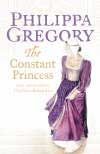
The latest of Philippa Gregory's Tudor novels to be released, The Constant Princess concentrates on the early life of Katherine of Aragon, the first of Henry VIII's wives. I have to say that it was so refreshing to read a novel about this time in history that wasn't about all the usual suspects. For example Elizabeth I doesn't even get a mention, although Henry VIII does, and there is even a brief cameo by Anne Boleyn towards the end of the novel.
I learnt so many new things from this novel. I hadn't really ever paid a lot of attention to the backgrounds of Henry's wives other than Anne Boleyn so it was a big surprise to me to learn that Katherine was actually the daughter of Isabella and Ferdinand of Spain...the same Isabella and Ferdinand who financed Christopher Columbus' journeys to the New World and instituted the Spanish Inquisition.
The description of Katherine's early life in the Alhambra Palace was beautifully described, and made me want to pack my bags to go to Spain to see the places mentioned. I love it when a book does that to me..even though I can't just pack up and go!
We see Katherine in her early life, then as she gets used to marriage with Arthur, dealing with her subsequent widowhood, and waiting to see if she will be married to Henry or not. In effect we watch her mature from being a girl to a woman, all the while remaining a princess of England and Spain.
If I had one criticism of this book, it was that the ending felt very rushed, however having thought about this for a couple of days, maybe the idea behind that was to show Katherine at one of her points of greatest triumphs, and then at one of the lowest points in her life as a kind of contrast. Most fans of English history and historical fiction already know what happens to Katherine, and the end of this book leads quite nicely into the beginning of The Other Boleyn Girl as well.
Gregory writes in a very readable style, and for the most part, manages the changes between first and third person narrative employed in this book quite smoothly. There are however a couple of changes that weren't quite as smooth as they could have been.
Overall, an enjoyable read! I am already looking forward to the next Tudor novel from Philippa Gregory, to be titled The Last Boleyn. This book should be out next November.
Rating: 4/5
Other Bloggers Thoughts:
The Bookworm - Naida
Share:
Subscribe to:
Posts (Atom)