




Showing posts with label Alphabet in Historical Fiction. Show all posts

Tuesday, November 30, 2010

Alphabet in Historical Fiction:W is for Winston Churchill

You would think that by the deadline to put up our posts for the ABC of Historical Fiction, I would have some idea of what I wanted to post about, but apparently not. To be fair, I have had a few different ideas, but in the end I decided to go with the Winston Churchill series by Michael Dobbs after hearing that November 30 was Winston's birthday!

The reason why I even had this as one of the options I was thinking about is that I was looking through the list of series I have been reading and couldn't work out why I still had this series showing as not having been finished. Turns out I have read the first, third and fourth books in the series but had somehow missed the second one. That book is now waiting for me to go and pick it up from the library so that this time I can say for sure that the series is finished.

So here are the reviews for the three books in the series that I have read:


Winston's War is a masterful blending of imagination and compelling fact that places the reader at the right hand of the most momentous events in our history.

Saturday 1 October 1938. Two men meet. One is elderly, the other in his twenties. One will become the most revered man of his time, and the other known as the greatest of traitors.

Winston Churchill met Guy Burgess at a moment when the world was about to explode. Now in his astonishing new novel, Michael Dobbs throws brilliant fresh light upon Churchill's relationship with the Soviet spy and the twenty months of conspiracy, chance and outright treachery that were to propel Churchill from outcast to messiah and change the course of history.
Winston's War opens in October 1938. Winston Churchill is a man on the outer with his political companions, Hitler has just annexed part of Czechoslovakia and Prime Minister Neville Chamberlain has just returned home from talks with the Fuhrer declaring that he has obtained 'peace with honour, peace for our times'.

We are given several different view points throughout the novel, starting with Churchill and Chamberlain and their political allies as well as the barber who goes about the business of cutting and shaving whilst the very important men go about their business almost oblivious to the barber.

Another is from Guy Burgess, a man who worked as a journalist for the BBC, and whose paths crossed with those of Churchill on several occasions. I don't want to give too much away about Burgess, but he lived a very notorious life, and as a reader you are never quite sure where his loyalties lie, other than to himself. He is a degenerate character but completely key to this fictionalisation of the events in the twenty month period covered by the novel.

One of the other perspectives is from a post mistress in Bournemouth. I must confess that as I read the novel I wasn't sure about this final storyline as I couldn't see how it connected to the main plot, but in the end the author I didn't need to be worried due to a couple of different events. Whilst many of the interconnections between the various characters are obvious others are more subtle, but in the end the connections are there.

As much as this is a novel about the momentum towards and the beginning of WWII, including leaving the people of Poland and Czechoslovakia to defend themselves despite promised assistance, it is also a novel about the political machinations of the British parliament. There are shady deals, immoral behaviour, spies, betrayal, blackmail and misdirection to the British people through the newspapers of the day. The constant battle to maintain power and to keep political enemies out of positions of power dominates, even when those enemies might be parliamentary colleagues from your own party! One of the more interesting examples is around a Scottish MP, Duchess of Atholl, Katharine Stewart-Murray, who vehemently opposed Chamberlain's policy of appeasement and who found herself forced out of Parliament.

One of the most striking things about this novel for me was the reminder of how much there is that is not necessarily commonly known even when we are only a couple of generations away from the events, particularly for those of us who do not profess to be scholars of a particular period. For example, some of the most enduring images of WWII are the bombed out homes in London from the Blitz, or say the evacuation from Dunkirk, the damage done in France, Belgium and Holland. It is easy to forget that from the time that war was declared against Germany, there were many months where there was very little actual fighting, although there was plenty of political infighting going on.

I should say that this book was not an easy read. At times it was dense with the political machinations and plotting, more political thriller than my more standard historical fiction maybe, but it was definitely worth taking the time to read.

As anyone who has read my blog for any length of time will probably be aware, I really, really do not like to read a series out of order. It may be something of a surprise then to find that this is the third book in the Winston Churchill series by Michael Dobbs that I have read, despite the fact that it is the first book in the series. I have now read books 1, 2 and 4. The reason this happened is that I was originally given review copies of both Never Surrender and Churchill's Triumph from Sourcebooks a couple of years ago. I always intended to go back and read the other books in the series, but every time I borrowed this book from the library I had to take it back unread. I was determined that this time, I was going to read it, and now I have. I should confess though it is overdue by more than a week at the library so that I could finally read it! The third book is on request and I hope to read it soon.


This stunning historical novel brings you deep inside Winston Churchill's mind and heart as he becomes Prime Minister and takes on the terrifying challenge of halting Hitler's murderous invasion of France, Holland and Belgium with only his wits and his magnificent words. Only his courage stands between the people of the British Isles and advancing enemy armies as they drive his retreating soldiers onto the beaches of Dunkirk and into the English Channel. You will live at Churchill's side as he deals with his own feelings of inadequacy while contending with his fellow ministers, who plot to throw him out of office. And you will be the fly on the wall of history as he matches wits with Hitler in the most crucial battlefield of all, the battlefield of the mind.


Whilst I have read a number of books set in WWII where the main characters interact with many of the famous real life figures, this is the first time that I remember reading a book where the main characters are the real life historical figures. One of the advantages of this is that even though I have not read much about Churchill, for example, I very much already had a picture in my mind of the character, of what he looked like and yes, that also means some preconceptions about some of his characteristics.

This book is actually the second book in a series of four that concentrates on a number of incidents during the war to give us a picture of the man who led Britain during the darkest days of WWII. This book concentrates on the days just after Churchill finally became Prime Minister, and then follows the events as they unfold over the next three weeks, a period which includes the evacuation at Dunkirk, and the famous speech that was given in the House of Commons following the evacuation:


We shall not flag or fail. We shall go on to the end. We shall fight in France, we shall fight on the seas and oceans, we shall fight with growing confidence and growing strength in the air. We shall defend our island, whatever the cost may be. We shall fight on the beaches, we shall fight on the landing-grounds, we shall fight in the fields and in the streets, we shall fight in the hills. We shall never surrender!"

There were a number of things within the book which surprised me. I did not know that Churchill was so universally disliked by his political opponents, and yet it seemed that the tenaciousness that made him a challenging personal opponent was the very thing that Britain as a country needed to lead them against the deadly foe that was Hitler.

Don't get me wrong...this book is not some rosy eyed look at Churchill. This is a man who is portrayed as thinking nothing of giving a briefing to his staff whilst in the bath. A man who wanted to attack at all cost despite the disobedience of his generals, when in the end, it was only in retreating that the British even managed to live on to fight another day.

Whilst it is primarily a book about Churchill and WWII it is also a book about fathers and sons. Churchill seems haunted by his father - his political life and his personal relationship with him - always trying to act in such a way as to possibly exceed his father's seemingly low expectations for him.

In addition, threaded throughout the story, there is also a relationship between another father and son. Don Chichester is a non combatant stationed initially in Belgium, working in the Royal Ambulance Corp. As Churchill makes decisions as to where the troops must go, Don is the human face that portrays the effect of those decisions. He had joined up as a non-combatant, much to the shame of his vicar father, Henry, and the two have parted barely on speaking terms. Truth be told, this storyline was the weaker of the two major plotlines, but it did enable us to be part of the defense of Calais, the mad scramble to get to Dunkirk, and then to be on the beaches of Dunkirk waiting to see if the Navy was going to be able to rescue the thousands of troops there, who were basically sitting targets for the German fighter pilots.

I very nearly said that I didn't want to review this one when I was offered it last year, but definitely am glad that I said yes. Not long ago I was offered the fourth book in this series (which I will review in the next few days), so I thought I should hurry up and read this one, despite the fact that it isn't the first book! I am definitely planning to pick up the other books to fill in the gaps. Thanks to Sourcebooks for providing me with a copy of this book.


World War II is about to end when the world's three most powerful men gather at Yalta in the Soviet Crimea: an idealistic and exhausted Franklin Roosevelt, a dyspeptic and feisty Winston Churchill and a brutal Joseph Stalin. Once proud allies, they will lie and cheat and deceive each other. And, while doing so, they will change both the map of Europe and its destiny.

In this riveting historical novel, you become a fly on the wall of history. For those fatal eight days at Yalta, you are privy to the heart and mind of England's prime minister, who hopes he has enough strength to negotiate with the Russian dictator and enough whiskey to last the week. Carrying the burden of history, he becomes Europe's conscience, when, to save the peace agreed to at Yalta, he must decide whether or not to commit a devastating act of betrayal.
It's hard to tell from the number of reviews that I have been posting, but I am actually reading. In the last week or so I have read two books by Michael Dobbs about Winston Churchill. The first was Never Surrender (the second book in the Winston Churchill series) and then pretty much straight after I finished that book I read this one, which is the fourth book in the series. I really can't stand reading series out of order, but once I had finished this one it was off to the library to pick up the first book in the series so that I can finish it off!

The author follows a similar set up as he did in Never Surrender - taking a short period of time and examining the events, and then interweaving those historical events with the events taking place in the life of a fictional character.

In this case, the event that is being focused on is the Yalta Conference that was held between 4 and 11 February 1945 in the Crimea. The conference was a meeting between Stalin, Roosevelt and Churchill where decisions were made that affected the fate of millions of lives across Europe, and influenced the political landscape for many, many years.

The three most powerful world leaders are portrayed as all being very much concerned with their own agendas - for the ailing Roosevelt his main objective is to get the United Nations up and running, for Churchill it is try and prevent the march of communism across all of Europe and for Stalin it is gain as much land as he possibly can.

There are secret meetings, lavish and drunken dinners, spying on each other, and grand showmanship as each of the leaders tries to meet their own goals, and at times, it seems as though those ideals are worth a great deal more than the lives of the people that will be affected.

Churchill is also aware that the British star is fading a little, in terms of power and prestige in the eyes of the world. Whilst they can hold their head up in terms of their actions in World War II, in hindsight, it is clear that the seeds were being planted for the Cold War where the US and the Soviet Union were the super powers.

The fictional character is a young Polish man, who is trying to escape from the Soviet Union where a man can get arrested for no real reason at all. He has taken on a dead man's identity, and as we see him try to find a new life in the west, we are also privy to the events that are taking place in Poland, as firstly the German Army leaves the war devastated country and as the Soviet 'liberators' move in to take their place. Let's just say that neither army appears to have treated the locals particularly well.

Where this book did lose a little focus in my opinion was in the very beginning and very end where the novel moved forward in setting approximately twenty years, and Churchill, now a very old man, is taking a cruise in the Mediterranean and meets a ghost from the past. Whilst the initial drama is provided through a Churchill family argument, this initial theme seemed to get lost somewhat through the rest of the book. Maybe it was a carry on from the events in the third book. I guess I will only tell when I get around to reading the third book.

Once again this was another very interesting read, featuring some of the most famous historical figures from WWII, an era that I already find fascinating.

Sourcebooks are about to rerelease this book in the US. Thanks to them for the review copy.

.

Saturday, November 06, 2010

Weekend Cooking: The Various Flavors of Coffee by Anthony Capella

Do you ever take the time to look back over the posts that you have done for Weekend Cooking? I did this week, and it was a pleasant way to spend a few minutes. I looked back over some food related memories, some new recipes that I had tried and liked, some old favourites, and only one dismal failure!

I was also reminded that I had never actually posted my review of The Various Flavours of Coffee by Anthony Capella, despite the fact that we had played the guess the title game a while ago now, so that is what my Weekend Coffee post is this week:

It was a cup of coffee that changed Robert Wallis's life - and a very bad cup of coffee at that. The impoverished poet is sitting in a London coffeehouse contemplating an uncertain future when he meets Samuel Pinker. The coffee merchant offers Wallis the very last thing a struggling young artiste in fin de siecle England could possibly want: a job.

But the job Wallis accepts - employing his palate and talent for words to compose a "vocabulary of coffee" based on its many subtle and elusive flavors - is only the beginning of an extraordinary adventure in which Wallis will experience the dizzying heights of desire and the excruciating pain of loss. As Wallis finds himself falling in love with his coworker, Pinker's spirited daughter Emily, both will discover that you cannot affect one set of senses without awakening all the others.

Their love is tested when Wallis is dispatched on a journey to North Africa in search of the legendary Arab mocca. As he travels to coffee's fabled birthplace - and learns the fiercely guarded secrets of the trade - Wallis meets Fikre, the defiant, seductive slave of a powerful coffee merchant, who serves him in the traditional Abyssinian coffee ceremony. And when Fikre dares to slip Walllis a single coffee bean, the mysteries of coffee and forbidden passion intermingle...and combine to change history and fate.
This is the third book that I have read from Anthony Capella, but it was the first one that I have been disappointed in, and it is going to be hard to quantify, because the topics covered are all quite interesting but when combined into one story it didn't quite work. One of the main reasons for this is because the main character, Robert Wallis, is quite unlikeable and to my mind Capella didn't manage to rehabilitate him to this reader.

The man we first meet in a coffee shop in London, drinking a very average cup of coffee, is a younger son whose father has told him that he needs to find a way to support himself after having been sent down from university. To be honest, I can't think of many positive elements of his character. He is a spendthrift, he frequents prostitutes regularly, thinks nothing of dabbling in drugs, and certainly doesn't want to have to work for a living.

What he does do well is use words, and it is this trait along with the fact that Robert seems to have a good palate for different flavours which attracts the attention of Mr Pinker, a wealthy coffee merchant with a big idea! His idea is to  create a kind of reference library of tastes so that when he is ordering coffee beans from all round the world they can refer to the vocabulary and he will know exactly what flavours he can expect to receive in his shipment.

To develop this reference guide, Wallis begins to work closely with Mr Pinker's daughter Emily and they soon develop a relationship, with Robert thinking that he may well soon find himself more than just an employee to Mr Pinker, yet he doesn't really have much to recommend him other than he is quite dapper, generally paid for through borrowing from loan sharks. Take this example:

I considered carefully what to wear for dinner at Pinker's. On the one hand it was almost one's duty, as an aesthete, to make a striking show at table. One the other, I wanted Pinker to think of me as a possible future son-in-law. I should wear something impressive, I decided: something that declared that I was, if not quite his equal, then somebody of distinction within my own sphere. After some consideration I found the very thing: an ornate jacket of green Jacquard silk, inlaid with gems, which seemed to shimmer with the opulent iridescence of a mallard's neck. It was on display in Liberty, along with a magnificent turban in blue, at the fastening of which was a sumptuous brooch of red garnet. The only problem was that the ensemble cost six pounds, a sum I could no longer afford.


There were moments during this book which were very amusing. For example,  when Wallis turns up for dinner in the above outfit, one of the other characters (a dour Scotman who plays a pivotal role in the lives of both Robert and Emily) says

"they'd warned me that ye were a pote, Wallish, but they'd no' warned me that ye might forget your clothes."

"I beg your pardon?" I said, frowning.

"Ye've turned up to dinner in your dreshing gown, man."

Robert finds himself sent to Africa to build up a coffee plantation, and there comes into contact with a beautiful slave named Fikre, and he once again finds himself distracted from the task at hand. Instead of concentrating on the problems of getting the coffee plantation running, dealing with the locals he finds himself embarking on a torrid relationship that can only end in disaster, one way or the other.

It is difficult to say much more without giving away too much of the plot, but I will say that later Robert finds himself involved with the passionate, rebellious and somewhat dangerous women who were involved in the suffragette movement and also in efforts to break the coffee trading block that was prevalent at the time enabling a couple of families to dominate the world coffee trade.

Whilst there were glimpses of all the things that I have enjoyed in his previous novels, it seemed to me that the author tried too hard to include too many different elements within the story all framed around an unlikeable character. Whilst he was better by the end, the improvement wasn't enough to overcome the distaste I had for him earlier in the book.

By trying to lend the book various flavours, instead of coming up with an enjoyable brew, we ended up with a muddy cup of sludge.

Pass the instant coffee.

Weekend Cooking is hosted by Beth Fish Reads and is open to anyone who has any kind of food-related post to share: Book (novel, nonfiction) reviews, cookbook reviews, movie reviews, recipes, random thoughts, gadgets, fabulous quotations, photographs.

This also counts as my entry for the letter V for Historical Tapestry's Alphabet in Historical Fiction.

Monday, October 25, 2010

Alphabet in Historical Fiction: U is for Under a Blood Red Sky

I did have a couple of ideas for posts for the letter U in the Alphabet in Historical Fiction meme, but all of them were going to involve reposting! After completely missing the letter T, I wanted to make sure that I didn't miss another letter (until we get to the letter X - I have no idea what I am going to post for that yet!). This review was originally post in January 2009


Davinsky Labour Camp, Siberia, 1933: Sofia Morozova knows she has to escape. All that sustains her through the bitter cold, and hard labour are the stories told by her friend Anna, beguiling tales of a charmed upbringing in Petrograd - and of Anna's fervent love for a passionate revolutionary, Vasily. So when Anna falls gravely ill, Sofia makes a promise to escape the camp and find Vasily. But Russia, gripped by the iron fist of Communism, is no longer the country of her friend's childhood. Sofia's perilous search takes her from industrial factories to remote villages, where she discovers a web of secrecy and lies - and an overwhelming love that threatens her promise to Anna. But time is running out. And time, Sofia knows, is something neither she nor Anna has.
Just over a year ago I read Kate Furnivall's first book, The Russian Concubine, and totally enjoyed it. When I heard that the author had a new book out I was hoping for a sequel to that book. I didn't get it, although it is coming this year, but having now read this book, I am not all that disappointed.

Where The Russian Concubine featured Russian characters who lived in China during the turbulent 1920's, this book is set in Russia itself. Now I love reading anything set in Russia, but this is the first time I remember reading anything set during the Soviet era of the 1930s, where the populace is ruled by fear of being arrested for the slightest misdemeanours or connections, and sent to the prison camps often never to return.

Our main character Sofia has been thrown into the prison camps of Siberia. It is there that she meets Anna, a young woman who has also been imprisoned due to her connections with the aristocracy. Each day the women have to perform back breaking manual labour, getting by any way they can. Sofia realises that her friend cannot take much more of this, so is determined to escape and find Anna's childhood friend Vasily. Whilst Anna is terrified for Sofia's safety, she also believes that Vasily will help her if he can.

Sofia finds her way to the village where they believe Vasily is now living, only to be drawn into the collective farming environment where the state determines that absurdly high quotas must be reached, and that no one, no matter how starving they are, gets to keep anything for themselves. She finds herself drawn both into the town and to the people of the town, but she knows that ultimately her aim must be to get back and save Anna, if she is still alive.

There Sofia meets Mikael, a prominent man, who is raising his son alone. As Sofia must take on a new identity and avoid the attention of the authorities, others within the village wrestle with the distinction between duty to each other and duty to the Motherland, with potentially disastrous consequences for all of them.

There are lots of events in this book that are highly improbable, but such is Furnivall's story telling skill, that it doesn't matter all that much. If you want a book filled with high drama with romantic and some minor paranormal elements , and that will keep you reading until the wee hours of the morning, then this may well be a book that you will enjoy.

If I had to choose between this book and The Russian Concubine for a first time Furnivall reader then the latter would win, but this is still a very enjoyable read, about a time and place that I haven't read much about.


**** Please note that in some countries around the world, this book is published under the title The Red Scarf.****

Rating: 4 out of 5

Cross posted at Historical Tapestry

Thursday, September 16, 2010

BBAW: Forgotten Treasure


Thursday—Forgotten Treasure
Sure we’ve all read about Freedom and Mockingjay but we likely have a book we wish would get more attention by book bloggers, whether it’s a forgotten classic or under marketed contemporary fiction. This is your chance to tell the community why they should consider reading this book!


When I first saw the theme for Thursday I was very excited. I could post my review of The Winter Sea by Susanna Kearsley again. Just because it would be third time on this blog, plus at least once at Historical Tapestry doesn't mean overkill does it? Then I thought for a few minutes more and realised that perhaps would be a bit better if I just left a link to my review of The Winter Sea - also known as Sophia's Secret in some places - because seriously people should read this book. It is going to be released in the US later this year, so there will be no excuses!

So instead I am going to review another book by Susanna Kearsley, The Shadowy Horses, and thanks to the generosity of Susanna Kearsley, I have a worldwide giveaway of two copies! To enter the giveaway please complete the form at the end of the review.

With its dark legends and passionate history, the windswept shores of Scotland are an archaeologist's dream. Verity Grey is thrilled by the challenge of uncovering an ancient Roman campsite in a small village. But as soon as she arrives, she can sense danger in the air.

Her eccentric boss, Peter Quinnell, has spent his whole life searching for the resting place of the lost Ninth Roman Legion and is convinced he's finally found it - not because of any scientific evidence, but because a local boy has 'seen' a Roman soldier walking in the fields, a ghostly sentinel who guards the bodies of his long-dead comrades. Surprisingly, Verity believes in Peter, and the boy, and even in the Sentinel, who seems determined to become her own protector...but from what?

Originally published in 1998, The Shadowy Horses has recently been re released in the UK by Allison & Busby. After first discovering Susanna Kearsley when I read and adored The Winter Sea, I promptly set out on a quest to read my way through her back list. I had read and thoroughly enjoyed Mariana and this was the next book I picked up.

When I started it, I was expecting something a little paranormal, most likely some time travel, a somewhat romantic storyline, and a darned good read. Whilst I did get most of these elements - this was more a ghost story than time travel - there was a also a suspense filled plot. Once again I was lost in the world that this author has created.

Verity Grey is an archaeologist who lives in London. She is looking for a change in her life, and so when she is invited to participate in a dig at a property on the Scottish coast, she is tempted by the offer. The only thing is that she isn't told very much about either the dig or her prospective boss when she heads up to the small fishing village of Eyemouth to take a look around at the invitation of her former boyfriend Adrian, who also works on the dig.

On the way to her destination she meets David Fortune, part time archaeologist and part time university lecturer, and a man who is very protective of Peter Quinlan, the man who would be Verity's boss. Quinlan's life long passion has been to find evidence to help solve the mystery of what happened to the lost Ninth Roman Legion. Within the archaeological world, Quinlan has a reputation of being somewhat eccentric, and to a degree is shunned, and that isn't likely to change given that his dig at the location is based purely on the experiences of a young boy, Robbie, who has 'the sight' and who believes that he can see the ghost of a legionnaire, known as the Sentinel.

Verity accepts the job knowing that she can't stay away from the dig, from Scotland and increasingly from the somewhat distant David Fortune, but when things start going wrong at the dig, it appears that someone is trying to sabotage it. Could it be Adrian, could it be other archaeologists, or could there be something else at play? And why does the Sentinel seem determined to protect Verity from some unknown danger?

Verity must work out if her boss is a little mad, or if maybe, just maybe, he has finally found what he has been working for all these years, find out what actually happened to the Sentinel, and work through her feelings for David, all the while knowing that someone is becoming increasingly desperate to stop the dig from going any further.

For all the archaeological focus of the novel, the author did a fantastic job of keeping the technical jargon accessible, but without dumbing it down too much.

Once again I opened up the pages of a Susanna Kearsley and found myself immersed in the world that she has created. I did ask her at one point if she could maybe create me a hero who works in Human Resources/Payroll, because all of her leading men so far have been very dreamy characters. Not sure how she is going with that request though!

Whenever I see Susanna Kearsley compared to another author, it tends to be Mary Stewart. I haven't read any Mary Stewart, but if she writes anything like Susanna Kearsley then I know that I am guaranteed some good reads.

This post is also my entry for the letter S in Historical Tapestry's Alphabet in Historical Fiction. I missed R, so I wanted to get in early for the next letter!

Rating 5/5

Monday, August 30, 2010

Alphabet in Historical Fiction: Q is for Queen Eleanor of Aquitaine featuring The Queen's Pawn by Christy English

Some time ago now I guest posted at Aarti's blog, talking about how much I enjoyed reading about Eleanor of Aquitaine. The feature, which is no longer running, was called Rosie's Riveters and the idea was to focus on women in literature who we found riveting. Here is a slightly edited version of my post:

Who is your Riveter?

One of my great loves, genre wise, is Historical Fiction, and so for this week's Rosie's Riveters, I have looked to the past, and chosen the formidable Eleanor of Aquitaine.

What book does she feature in?

My early introductions to Eleanor were in Sharon Penman's excellent novels. There is a particular focus on her relationship with Henry II in the trilogy that starts with When Christ and His Saints Slept, and then continues with Time and Chance and then Devil's Brood. In addition she is one of the supporting characters in the Justin de Quincey mystery series.

Sharon Penman is not the only author to feature Eleanor to some degree. Even when she is just a supporting character any mention of her will capture my attention. Other books that she has appeared in that I have read include the historical mystery The Serpent's Tale by Ariana Franklin and also in Elizabeth Chadwick's excellent William Marshal novels, particularly The Greatest Knight.
Other authors to have written about her include Jean Plaidy, Judith Tarr, and Margaret Ball, and there is plenty of non-fiction written about her as well.

Do you love her or hate her?
 

Love her!

Describe her personality- how would you describe her to a friend?

I think that my impression of Eleanor of Aquitaine is of a woman who was beautiful, but also powerful and driven. Other adjectives I might use are passionate, political, single minded and formidable.

What makes her riveting?

Eleanor of Aquitaine is riveting to me because she was a powerful woman in her own right, who married two powerful men, was queen of two countries, and was mother to two kings. She was apparently a great beauty of her time and lived an adventurous and tumultuous life.

She was queen of France until she divorced Louis VII. Not long after she married Henry II with whom it would appear she had a very passionate union, both when they were happy, and when they were passionately against each other. With Louis she had two daughters, and with Henry she had five sons and three daughters. Two of those sons would go on to become King of England, Richard the Lionheart and King John and Eleanor acted as regent for a time for Richard while he was on crusade. Eleanor herself had gone to Jerusalem with her then husband Louis VII during the second crusade.

For a long time Eleanor was imprisoned by Henry for aiding their son in a rebellion against Henry and was released only for limited periods of time.

What do you most admire/despise about her?

From this distance it is probably hard to know what Eleanor was truly like, but she is certainly a woman who left her mark on history when so many women were defined by their marriage and many were just footnotes in the notes. She managed to hold onto her lands, managed to get out of an unhappy marriage during a time when divorce was very difficult, and managed to leave a lasting impression through the ages.

If there is one thing that I would say that isn't a point in her favour it is that it appears that Eleanor wasn't the most maternal of women, although when you look through the family history, it appears that being a Plantagenet was to be quite a volatile character. I remember reading a quote once, but I can't remember who said it, something along the lines of "if you want to read about dysfunctional families, look no further than the Plantagenets".

Would you recommend reading the book in which the Riveter features?

I would absolutely recommend reading any of the books that I mentioned above, not only because Eleanor features in them, but also because they are excellent books in their own right.

Any parting remarks?

My image of Eleanor of Aquitaine has I think been irrevocably influenced by the experience of watching a movie from 1968 called Lion in Winter. Katharine Hepburn won an Oscar for her performance as Eleanor and other cast members included Peter O'Toole and a couple of young actors called Anthony Hopkins and Timothy Dalton.

I thought I would share a YouTube video of Katharine Hepburn as Eleanor of Aquitaine. The film is set in Chinon at Christmas in 1183. Eleanor has been released from prison for the holidays, and the whole family is involved in scheming and plotting, and maneuvering to be the next person to wear the crown.


Hopefully it is clear that I would be pretty happy that this year has jokingly been dubbed the Year of Eleanor with plenty of books being released about this fascinating woman. I was therefore looking forward to reading The Queen's Pawn by Christy English, especially seeing as I had also enjoyed the interactions that I had had with Christy and witnessed her having with other bloggers and readers. When reading the book coincided with it being time to do Q for the Alphabet in Historical Fiction, I knew that this was the post I wanted to write. It is therefore unfortunate that I didn't really enjoy this book all that much.

Here's the blurb from the back cover:

A historical novel of the legendary Eleanor of Aquitaine and the one person she loved more than power-her rival for the throne. 

At only nine, Princess Alais of France is sent to live in England until she is of age to wed Prince Richard, son of King Henry II and Queen Eleanor of Aquitaine. Alais is an innocent pawn on the chessboard of dynastic marriage, her betrothal intended to broker an uneasy truce between the nations.

Estranged from her husband, Eleanor sees a kindred spirit in this determined young girl. She embraces Alais as a daughter, teaching the princess what it takes to be a woman of power in a world of men. But as Alais grows to maturity and develops ambitions of her own, Eleanor begins to see her as a threat-and their love for each other becomes overshadowed by their bitter rivalry, dark betrayals, conflicting passions, and a battle for revenge over the throne of England itself.
As soon as I started this book I had a feeling that it wasn't going to go all that well, simply because the narrative is first person with alternating perspectives. First person I can just cope with, although I do prefer other styles of narrative more, but I really am not all that keen on alternating perspectives.

One of the major issues that I have with first person narrative is that you can't hear what the other character is thinking. In this case, the author tried to get around this by having all of her characters be expert at reading the facial expressions of the others. Now, I agree that at times it is possible to read the emotions of other people by looking in their eyes, but in one chapter alone this happened more than 15 times - one chapter only, and that was a chapter that I just randomly chose. I didn't go looking to find the worst chapter as an example. They had squab for dinner nearly that many times as well!

" I saw the danger in his eyes for the first time." page 255
"He saw the honest pleasure on my face; that was what moved him more than my contrite words." page 256
"....I saw in his eyes that he would exact this price." page 256
"Henry look into my eyes. What he saw there must have satisfied him." page 257
"He looked down at me, and though his face was soft with love and spent desire, I saw his intelligence there shining back at me. " page 258
He kissed me, but his gray eyes were solemn - page 258
The knowledge did not show in his face, but only in his eyes. - page 261
I allowed him to see my intelligence so that he would know that I was not too simple to understand him, but that I kept my own counsel. - page 264
He looked at me, his gray eyes seeing me as if for the first time - page 264
I saw in that moment that Henry remembered the words he had spoken to me by the riverside when he had placed that crown of flowers on my head. - page 264
...it seemed I saw my own thoughts in his eyes, mirrored back at me. - page 265
Henry seemed to see this in my face.... page 266
I watched him, his eyes on me. I saw the wheels turning in his mind. - page 268
I could see nothing of his thoughts on his face - pages 269
Henry saw my fear, and how deep it ran - page 270
Henry look at me for a long moment, drinking in the truth from my eyes. - page 271
He saw this truth in my eyes, even as he stared down at me, and I saw the truth in his. - page 272

Every now and again there would be a couple of pages without this kind of eye reading but then it would start again and it would throw me out of the story every time.

So they are more writing issues than story so in order to be fair I did enjoy the storyline. Princess Alais is the daughter of the French king Louis VII, former husband of the formidable Eleanor of Aquitaine. Alais has grown up hearing nothing good about Eleanor and so when it is determined that she is to marry the English prince Richard, and that means that she is to go and live in England with Eleanor, she is a little fearful.

It turns out that Eleanor accepts her pretty much instantly as her daughter. If there is a female equivalent to a bromance, then that would be close to how these two feel about each other. After spending some time with some nuns where she turns out to have a talent for painting in manuscripts, Alais returns to Eleanor and finally meets the man who is to be her husband, and she develops strong feelings for him. Richard is however a man of his times, and when Alais finds out something about him, she feels very betrayed, and acts on the attraction that she feels to Henry II, Richard's father.

The characters in the novel were all manipulative, some more than others, and the quest for power, and controlling those who appeared to be in power was all consuming. This by necessity meant that the characters weren't particularly likable. When the betrayed becomes the betrayer, and the betrayer is in turned betrayed it makes for very tense times in the courts of England.

Normally if you see mention of Alais, she is a secondary character, so it was quite interesting to learn more about her background, and what her possible motivations might have been, and there was sizzling chemistry between her and Henry.

Henry II is a ruler that I find extremely interesting to read about, particularly in light of his relationship with Eleanor (the words volatile and complicated come to mind), and I do think that the various facets of this aspect of his later rule was shown well.

In the end, this wasn't a book that worked for me, and I can't tell you how disappointed I was when I realised that that was going to be the case.

Rating: 3/5

Saturday, August 14, 2010

Alphabet in Historical Fiction: P is for Pendragon's Banner trilogy by Helen Hollick

I don't know how it happened really, but some how the whole world of Arthurian literature has really passed me by. Before starting this trilogy, the only Arthurian novel that I had read was actually a romance version, which didn't really work for me. Maybe it was because I didn't tend to read a lot of fantasy for many years, or maybe it was that the story is so familiar that I didn't feel like I needed to read the books. I am not sure that I really was even all that aware that you didn't have to read fantasy to read about Arthur but rather historical fiction which is the case with the excellent Pendragon's Banner trilogy by Helen Hollick. In the end it was more that I had read and enjoyed another book from her and wanted to read more that made me want to pick up the first book in the trilogy.

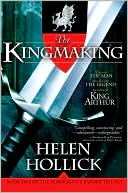
Below I am doing a mini reviewing of each of the books in the trilogy, and showing the covers that I had on the books I had. Two of them were from the library, whilst the second book was sent to me for review from Sourcebooks (yes, I might be a bit late with the review)


The year is 450AD. Uthr Pendragon's ship arrives at Gwynedd, kingdom of his old ally Cunedda: together, Uthr and Cunedda intend to oust the tyrant Vortigern.

But when tragedy strikes, the British are left at Vortigern's mercy in a country in chaos. It is a boy, Arthur, who is destined to lead them from this darkness into a new age of light. Protected since birth by a false identity, he is revealed as the new Pendragon.

But Arthur must serve a hard apprenticeship in the army of his enemy before he can lead his country and his goal, to regain his kingship and win the hand of Cunedda's daughter Gwenhwyfar in marriage, seems to become ever more distant. And the beautiful and spirited Gwenhwyfar, pledged to Arthur since childhood, finds herself a pawn in political games controlled by powerful figures. Ever a fighter as a tomboy child, as a woman she must call once again on her strength of spirit to defend herself against her adversaries.

Full of the romance and excitement of Arthurian Britain, and a throng of colourful characters, The Kingmaking brings alive in all its glory and splendour an era long shrouded in the mists of myth and mystery.
I wasn't 100% sure what to expect when I started reading this book. Vaguely I was expecting the story that we have heard before - Arthur, Guinevere and Lancelot, Merlin and the Knights of the Round Table. What I got was so much more.

When the reader meets this Arthur, he is a young boy who believes that he is a servant to the powerful lord Uthr who comes to Britain as part of a campaign to reclaim his throne. Uthr's mistress is the evil Morgaine, who doesn't understand Uthr's attachment to the young boy, but who is nonetheless jealous of the relationship. When Uthr is killed, the truth is revealed and Arthur's true identity is revealed. The antagonism between Arthur and Morgaine continues, but now he has an ally in the daughter of his host Gwenhwyfar, and he is coming into a position of power.

After initially not liking each other at all, Arthur and Gwenhwyfar forge a strong emotional bond. However before they can be married, Arthur must learn how to lead men, how to fight in battle. In short, he must learn how to be a king.  To some degree the legends about Arthur show him to be the ultimate in honour, but the Arthur that Hollick brings us is one who is far from perfect. He drink too much, enjoys the women a little too much, is brash and abrasive and determined to be the King of Britain at almost any cost. Yet he also is extremely brave, strong and charismatic, and it is these qualities that leap off of the page.

The intervening years are not kind to Arthur and Gwenhwyfar. She is a political pawn, and finds herself in betrothed to a man not of her choosing. Misunderstandings ensue and Arthur finds himself manoeuvred into a marriage with Winifred, daughter of his chief rival. The marriage is doomed from the start, with the young couple barely able to be civil to each other, and when Gwenhwyfar reenters the picture it is only a matter of time before the marriage is over.

I have mentioned some of Arthur's qualities, so it is only fair that we spend a little time on his fair lady. Gwenhwyfar has grown up among a passel of brothers, the indulged sister and daughter, and is something of a tomboy. That grounding forms the basis of a warrior like princess, one who will literally stand by her man regardless of the danger that might place her in. Like Arthur, she is written with flaws - impatient, easily angered, and her relationship with Arthur is definitely volatile. She does also inspire great loyalty from many of the secondary characters.

If there is one small flaw in this novel it is that the bad guys are a little bit one dimensional, but it is a small issue in an otherwise excellent novel.

Rating 4.5/5

Three years have passed since the mists cleared to reveal the Pendragon Banner triumphant. Arthur is king. but the crown, once one, must be defended.

He is a man about whom legends will be told. With his loyal and fiercely valiant wife Gwenhwyfar by his side, and three sons to his name, twenty-four-year-old King Arthur takes on the burden of a country battling for its very soul.

But before the harpers sing of glory, before the tales of brave daring and skill, a young man must win his place as the greatest warrior of all Britain...and the greatest king of all time.

As soon as I started reading The Kingmaking, I knew there was no way that I was going to be able to not finish this trilogy. Usually when I finish a book, I will start a post in draft and write a few thoughts about the book which will be the basis of my review if I ever actually get around to writing it. When I finished this book, I wrote only one word, which isn't overly helpful as I try to write this review now, but I do believe it probably conveys my thoughts about this book fairly well. What was the word?

Wow!

Arthur is now king of Britain, but that does not mean that he is living a settled life. As head of the Artoriani, he needs to be constantly on the move dealing with any security threats from their enemies, making peace with some of them, constantly on the move. He is always manoeuvring politically. For his wife Gwenhwyfar and their children, this means that they too are in effect without a home to call their own.

In other domestic matters, Arthur is also under pressure. His ex wife Winifred is still doing her best to undermine both Arthur himself, and the peace and security of the country in order to manipulate the political situation to her own advantage. If she cannot be the wife of a King then she will be the mother of a king. She is therefore doing everything in her power to ensure that her son, Cerdic is declared the rightful heir to Arthur despite the fact that he has children with Gwenhwyfar.

Between those lords who oppose Arthur because they have their own ambitions, his scheming ex wife and those who would like to return the country to Roman ways, Arthur has a lot on his plate. For a man who is at his best when leading his warriors in battle, this can be a difficult day to day existence.

Once again, there is no whitewashing of the kind of man that Hollick's Arthur is for modern sensibilities. He continues to cheat with various women, he can still be bad tempered, impatient and impetuous, and his relationship with Gwenhwyfar continues to be volatile. When tragedy strikes, it could bring the royal husband and wife together, or it could tear them even further apart.

This Arthur is a warrior king, and the author does not spare the reader when describing the battles, verbal and physical, that are portrayed within the novel.

Once again, the writing is compelling, the story is one that keeps your attention, and the book is an excellent read as a result.

Rating 4.5/5


Britain lies uneasily at peace, and Arthur Pendragon, King of Britain, is secure in his stronghold in the heart of the Summer Lands. Ever the fighter, he defies the advice of his wife Gwenhwyfar to sail for Gaul to defend his territories in Less Britain, leaving his country vulnerable and leaderless.

When word comes that the Pendragon has fallen in battle, Gwenhwyfar, at Caer Cadan with their small daughter, faces overthrow by the powerful council headed by Arthur's uncle, anxious to reassert Roman ways. She must struggle to assure a future for herself and her daughter, opposed also by Arthur's ambitious ex-wife Winifred, keen to advance her own son, Cerdic, as the rightful heir.

But, unknown to Gwenhwyfar, events abroad mean a far mightier battle for the Pendragon throne - and the very future of Britain itself - lies ahead.

In this final part of the Pendragon's Banner trilogy, Britain has been enjoying a period of relative stability under the guiding hand of Arthur. Even at home  he and Gwenhwyfar are happy, that is until Arthur agrees to travel over to Gaul to fight against the Gauls. With Gwenhwyfar and their young daughter agreeing to remain in England, and with Arthur's uncle at the head of the governing body, Arthur travels over the sea in good faith, not realising that he has been duped into a confrontation that is far more than just one battle, and that will take him far from home for a very long time.

With his army bolstered by large numbers of inadequately trained men, Arthur faces battle in unfamiliar territory. When he is critically injured in battle, his men return to Britain believing him to be dead, leaving a grief stricken Gwenhwyfar to pick up the pieces.

Here a face from the past returns and is the person who looks after Arthur, nursing him back to health, but it is not the Arthur of old. His injuries are so severe that he can not remember exactly who he was or the position he held, to the point of even not remembering his wife.

Gwenhwyfar refuses to believe that Arthur could be dead, but her position of Queen without him by her side is tenuous to say the least. Arthur's uncle Ambrosius wants to be the next leader of the country, but also jockeying for position is Arthur's former wife Winifred and their son Cerdic. For Gwenhwyfar, it seems the only option available for her is to move on. She needs a new man in her life to safeguard her own position and also that of her young daughter. But moving on is difficult when you don't quite believe that you have to.

During the part of the novel where Arthur had lost his way, it also seemed to me that the novel lost a little direction too, but once a somewhat humbler Arthur returned to his home the pace picked up once again

Even after the return of Arthur the jostling for position of heir continues, and it is inevitable that strong feuds, betrayals, and
Once again, the events portrayed in the novel can be violent and disturbing, and yet at other times, moving and powerful. The one thing that I couldn't do was read any of the books in the trilogy without being emotionally involved.

Rating 4/5

As you can see from the images I have used, the covers of the editions that I have read were from different eras, so just for fun I thought I would share the US covers for the recently released editions from Sourcebooks:


And the newly redesigned covers for the UK:


If I have to give a one sentence summary for the trilogy as a whole, I would say "For all that I thought I knew the vague details of the Arthurian legend, the Arthur that I met in the pages of this trilogy was a very human man, and it is a telling that I will not forget any time soon."

Thursday, July 22, 2010

Alphabet in Historical Fiction: O is The Oak Apple by Cynthia Harrod-Eagles

Actually O is also for the Other books I have read in the Morland Dynasty, as I have read the first four books now, but haven't reviewed any of them. So here are some mini reviews for the series so far, ending with the latest book I read, The Oak Apple.

The Morland Dynasty is a series that is currently 32 books long, and follows one family through from the War of the Roses, until the 20th century. Along the way there is triumph and tragedy, war and peace, birth and death, and glimpses into major historical events through the eyes of the fictional Morlands.


1434: the Wars of the Roses are the backdrop for the founding of the MORLAND DYNASTY.

Power and prestige are the burning ambitions of the domineering, dour Yorkshireman Edward Morland. He sets out to secure his family's future by arranging a marriage between his son Robert, more poet than soldier, and Eleanor, a ward of the influential Beaufort family. Eleanor is appalled at having to marry a mere 'sheep-farmer', but despite her passion for Richard, Duke of York, she has to obey. Yet this apparently ill-matched union becomes both passionate and tender, and their life together promises prosperity and success - though all too often mangled with tragedy as they are embroiled in the civil strife which has divided families and set neighbour against neighbour.

This remarkable marriage truly lays the foundations for the MORLAND DYNASTY.

Eleanor Courtney may be an orphan with very little in the way of dowry, but that doesn't mean to say that she doesn't have high hopes for an excellent marriage. When she finds her husband is to be a sheep farmer, albeit a very large and prosperous sheep farmer,  from the North she isn't best pleased. Eleanor is nothing but pragmatic and she is determined that she and her husband are going to start a dynasty, and that their home, Morland Place, is going to become a show home, to be passed through the generations.

The only thing that threatens the stability of these ambitions is the unrequited romantic leanings that Eleanor has towards Richard, Duke of York. With the War of the Roses raging, the Yorkist Morland's must do their part, and struggle to hold onto their growing business interests, including their new found connections to the cloth industry.

Eleanor is a strong and dominating character both within her family, and in the pages of the book, but it is really the placement of the lesser characters within the well known events that provides the most interesting facets of the story.

When we first found out about Eleanor's feelings for Richard, I just assumed that it was the future Richard III that we were talking about. It was only a bit later that I realised that it was a generation earlier, and Richard's father, that had captured her heart. I guess that assumption shows more about me than it did about the book. The events in this book cover from the mid 1430's to around the 1480's, when Richard III lost his kingdom to the usurper who we know now as Henry VII.

One of the things that I have been glad of in all of the books in this series so far is that there is a family tree at the beginning of the book, as it is easy to occasionally get a lost as you try to keep track of all the children, grandchildren, and which cousin married which cousin.

I originally read this for the Chunkster Challenge of 2009. Whilst it did qualify for that challenge, at 527 pages it didn't feel like a chunkster, and I breezed through it in 2 days.


1501: the turbulence of Henry VIII's reign brings passion and pain to the Morlands as they achieve ever greater wealth and privilege.

Paul, great grandson of Eleanor Morland, has inherited the Morland estates, and his own Amyas is set to be his heir. But Paul fathers a beloved illegitimate son, and bitter jealousy causes a destructive rift between the two half-brothers which will lead to death. Paul's niece, Nanette becomes a maid-in-waiting to Anne Boleyn, and at the court of Henry VIII she becomes embroiled in the King's bitter feud with Rome.

Through birth and death, love and hatred, triumph and heartbreak, the Morlands continue proudly to claim their place amongst England's aristocracy.
As I am sure she will do more and more, Cynthia Harrod-Eagles places the characters from the Morland family right in the midst of the action. There is a gap between the end of the last book, and the beginning of this one, and so we skip from the end of the War of the Roses, until we are firmly in the Tudor court.

The major female character in this novel is Nanette, and it is she who gives us the greatest insight into life at the court of Henry VIII, when she is appointed as lady in waiting to Catherine of Aragon. She is also close friends with Anne Boleyn and Katherine Parr, and therefore we get to witness the rise and fall of the most infamous of Henry's queens, and the aftermath. The time at court is nicely balanced by the time that Nanette spends at home with her family, despite the fact that it features a highly unlikely and somewhat shocking relationship. In the end, love prevails, but that relationship, which I am not going to reveal, is probably the thing that I remember most from this whole book.

The religious struggle that Henry becomes embroiled in is well covered in this book, with the opinions of the family split. I would say that this does seem to be something that the author does very well, both in this and  and in the future novels that I have read in the series.

The head of the Morland family is Paul, and he does seem to be something of a cold fish. He is jealous of his brother, he is unable to show his own children affection, and in turn they become fierce rivals, with tragic consequences.


The Princeling is the third volume in the Dynasty series which follows the fortunes of the Morlands, a Yorkshire wool family, from the Wars of the Roses to World War II. A story which began in The Founding and continued in The Dark Rose.

The Princeling is set in the adventurous reign of Elizabeth I. The Catholic Morlands are threatened by the upsurge of Protestantism and are forced to seek new spheres of influence, through marriage.

John, heir to Morland Place, rides north to bring back the daughter of Black Will Percy, the Borderland cattle lord. But proud Mary will not have him, and John stays in Redesdale, to live the strange, savage life of the Borders, and learn through blood and battle how to win her heart.

Lettice, the second Morland, enters the court of Mary, Queen of Scots and weds the harsh, ambitious Lord Robert Hamilton. In a hostile world of treachery and tragedy, the wolfish lord teaches her how to survive and triumph.

In The Princeling, Cynthia Harrod-Eagles, with her sweeping style and authoritatively researched background, has written another powerful chapter in the history of the mighty Morland Dynasty, which grows to encompass three great estates - in Yorkshire, Northumberland and Scotland.
Having survived the courts of Henry VIII our story moves forward into the Elizabethan era. Once again, love and marriage play a significant part in this novel. Paul and Nanette are back, with the latter once again taking her place at Court. This time it is the court of Elizabeth I, daughter of the woman who was once Nanette's close confidante and friend.

Paul is trying to expand the influence of the Morland family and so marriages are sought, with John trying to wed the daughter of Black Will Percy, and Lettice sent to the court of Mary, Queen of Scots. I have to say that Mary Percy was one of my favourite characters in this novel in that she was different from most female characters in the novel with her skills in fighting and hunting, possibly a little bit anachronistic, but oh so much fun.

Not all of the characters that we meet are fun to read about, and there are a fair share of unlikeable characters, but the book is once again very readable.
The Oak Apple is the fourth volume in the Dynasty series which follows the fortunes of the Morlands, a Yorkshire wool family, from the Wars of the Rose to World War II.

The Oak Apple is set in the reign of Charles I, when England has prospered under long years of peace. But peace is suddenly and violently shattered by the advent of brutal civil war between King and Parliament.

Edmund Morland seeks to steer a middle course between the opposing factions, but the family is split when his eldest son Richard, brings home a Puritan bride, while his second son Kit, rides to join Prince Rupert and the dashing Royalist cavalry.

As bitterness and disillusionment replace the early fervour, the war grinds on, severing husband from wife, brother from brother, and Edmund struggles grimly to preserve the Morland fortune intact, estranged from his sons, alienated at last, even from his beloved wife Mary.

A blazing panorama of love and death, grief and triumph, The Oak Apple sees the Morlands at war, struggling for the survival of their loyalties, and their values.

I have written before about how much I enjoy reading about Charles II, particularly his return to the English throne, but I can't remember reading anything about the events that led up to his exile to Europe, and the battles that his father, Charles I had with Parliament that led to the English Civil War. This book covers many of those events.

Edmund Morland is a throwback to earlier generations. Once again a seemingly cold man is at the head of the family, and once again, it is rivalries between brothers, and other family members, that sets in motion a series of events that once started seem to gain momentum of their own.  His eldest son Richard feels like he has been deprived of the same opportunities as his young brother Kit. When it is time for him to take his chance to attend Oxford, the last thing that anyone expects is that Richard will come back to Morland Place with a strictly Puritan bride. With the high

Edmund is conscious that his main aim has to be to preserve Morland Place for future generations, and so he treads a fine line by trying to keep in good both with the Royalists and the Roundheads. Those decisions leave no one satisfied, especially not his children and their spouses,  and drive a wedge between him and one of the few people who understand him, his devout wife Mary Esther.

Like previous heads of the family, Edmund also has his eye firmly on the expansion of the Morland landholdings, and this time his eye is on the New World. Conscious that in order to provide all of his children with land he would have to break up the current holdings, he sends one of his younger sons, who has married one of his cousins, to the new colonies of America where life is much harder than they expected.


The most fascinating character for me was one that I only recall hearing about in passing - Prince Rupert of the Rhine. He was viewed as one of the most dashing and for a long time, the most successful, of the King's Cavaliers. It was at one of his first defeats that the Morland's toll was highest.


One of the more memorable Morland characters for me from this book will be Kit, who is the second son of Edmund. When he returns home from Oxford, he is a dashing young man, and he is quickly smitten with his beautiful cousin Hero, not at all concerned about the limp that so many others cannot see beyond. When the war starts he enlists with the Royalists, and finds himself in close proximity with Prince Rupert at battle after battle and skirmish after skirmish.

The portrayal of the initial enthusiasm, which in time changes to a battle weariness that infects his whole attitude was very moving, and left me hoping that some how he would find a way back to his young family.

One of the things about this book, as easily as Harrod-Eagles introduces new characters, she is equally not afraid to kill of minor and major characters. At times this is heart breaking to read, but also helps to give the books a grittiness and realism that is not necessarily always present in novels.

Just a quick note on the cover that I have used above. When I do a review I like to use the actual cover that I had, but I looked for ages online to find an image of this one, without success. In the end I had to scan it in to be able to use it. Probably shows how long this book has been in my library system more than anything!

So there we have it. Brief reviews of the first four books in the Morland series. Now I just have to keep up with them as I read each book. I have already requested The Black Pearl, the fifth book in the series, from my library. I am looking forward to reacquainting myself with the Morlands.

By the way, Sourcebooks is in the process of rereleasing the early books in the Morland series (and I hope that they will continue to do so). If you are looking for them, then here are the covers of the first three books that have already been reissued.

Thursday, July 08, 2010

Alphabet in Historical Fiction: Beverly Swerling's New York

New York is one of the places on my one day list - one day I will get there! I have been to other parts of America but I haven't made it to the east coast at all yet.

I was looking at the books that I had out from the library and was tossing up between reading a couple of novels, when I realised that City of God by Beverly Swerling would be a perfect choice for the letter N for the Alphabet in Historical Fiction challenge hosted by Historical Tapestry - N for New York!

The main characters of these novels are the Turners and the Devreys - originally descended from a brother and sister, this is a family that is intrinsically linked to New York from its early days, and who are intensely divided over the years by any number of differences of opinion!

New York is as much a character in the novels of Beverly Swerling as any of the people who live their lives through the pages of her novels and we follow the growth and expansion from a small colony known as Nieuw Amsterdam during the 1660s and beyond in City of Dreams: A Novel of Nieuw Amsterdam and Early Manhattan, to northern New York State on the frontiers in Shadowbrook: A Novel of Love, War, and the Birth of America, to New York in 1814 when the city is being blockaded by the British in City of Glory: A Novel of War and Desire in Old Manhattan, and now to 1833 as the city is in the grip of religious fervour in City of God: A Novel of Passion and Wonder in Old New York.

The scope of Swerling's novels is pretty big. We get to meet many famous names - like the Astors for example - and the author covers not only the development of the city itself, but also medical advances, major historical events, development of New York institutions like Wall Street and Tiffany & Co, the issues around various waves of immigration and so much more!

You can read my reviews of the first three books at the following links:

City of Dreams
Shadowbrook
City of Glory

And you can have a look at trailers for each of the books at Beverly Swerling's website.

In the meantime, here are my thoughts about City of God: A Novel of Passion and Wonder in Old New York, the latest instalment in this excellent series.


City of God, the latest installment in Beverly Swerling's gripping saga of old New York, takes readers to Manhattan's clamorous streets as the nation struggles to find a compromise between slave and free, but hears the drums of war. This is New York when one synagogue is no longer adequate for thousands of Jewish immigrants, when New Evangelicals rouse complacent Protestants with the promise of born-again salvation, and when it first sees Catholic nuns and calls them whores of Satan. It is New York when ships bring the fabulous wealth of nations to its wharves and auction houses, while a short distance away rival gangs fight to the death with broken bottles and teeth filed to points.

Into this churning cauldron comes young Dr. Nicholas Turner. Nick knows that the discoveries of antisepsis and anesthesia promise medical miracles beyond the dreams of ages. He learns that to make such progress reality he must battle the city's corrupt politics and survive the snake pit that is Bellevue Hospital, all while resisting his love for the beautiful Carolina Devrey, his cousin's wife. Sam Devrey, head of the shipping company that bears his name and a visionary who believes the future will be ushered in by mighty clipper ships spreading acres of sail, battles demons of his own. The life he lives with Carolina in the elegant brownstone on newly fashionable Fifth Avenue is a charade meant to disguise his heart's true home, the secret downtown apartment of the exquisite Mei-hua, his Chinese child-bride. The worlds of all four are imperiled when Sam must rely on Nick's skills to save the woman he loves, and only Nick's honor guards Sam's secret. On a night when promises of hellfire seem to become reality and the city nearly burns to the ground, Carolina and Mei-hua confront the truth of their duplicitous marriages. Rage and revenge join love and passion as driving forces in a story played out against the background of the glittering New York that rises from the ashes, where Delmonico's and the Astor House host bejeweled women and top-hatted men, both with the din of commerce in their ears and the glint of gold in their eyes.

As always, Swerling has conjured a dazzling cast of characters to people her city. Among those seeking born-again salvation are Addie Bellingham, befriended by the widow Manon Turner but willing to betray her, and Lilac Langton, who confesses her sins but avoids mentioning that she's a skilled abortionist in a city that has recently made abortion a crime. Ben Klein, a brilliant young physician, must balance devotion to his mentor and dedication to research with duty to the Jewish community. Wilbur Randolf, Carolina's father, indulges her in everything but fails her when she needs him most. Jenny Worthington, Wilbur's longtime mistress, is driven by avarice to make common cause with Fearless Flannagan, a member of a New York police force as corrupt as the city it serves. Ah Chee, Mei-hua's devoted servant, struggles through Manhattan's streets on bound feet and burns incense to the kitchen god in this place of foreign devils. They are all here, heroines and saints, villains and victims, and a vanished New York made to live again in an intricate tale of old debts and new rivalries.

This is the fourth book I have read by Beverly Swerling, and I have to come to expect a number of things from them. One is that there will be strong focus on medical procedures, one is that there will be a further development in the Turner-Devrey rivalry, that there will be a strong willed woman who comes to the fore, and that we will get to see some of the key events in American history through the course of the pages. This book is no exception. We get all of that and more.

The book spans a period of around 20 years prior to the start of the Civil War. At this time, there has been a sharp influx in the number of people who call New York home with many of the new immigrants being either Jewish or Catholic, particularly of Irish descent. With them comes a level of religious diversity that is not necessarily integrated into the life of the city, particularly as there is a religious revival movement occurring at the same time. The city struggles to deal with the growth, particularly the unprecedented levels of poverty. For the revivalists, poverty seems to be the price of sin, so any attempts to help the poor are rebuffed, and any attempts at scientific improvements are actively discouraged.

The main characters at the start of the novel are Samuel Devreys and Nicholas Turner. Samuel is head of Devreys Shipping, answerable only to Jacob Astor. He spent many years in the Orient as a youngster and in his heart would love to return there. Nicholas Turner is a doctor who has recently moved back to New York and wants to start his work at the hospital that his grandfather worked at before him. Nicholas hopes to improve the atrocious conditions at Bellevue but on all sides is surrounded by corruption and bribery. His big passion though is research. When he hears of a new substance that promises pain free surgery, he is very excited but when his display of the new technology is sabotaged he finds himself instead in private practice.

Samuel is a man with divided priorities. He wants to reclaim his birthright from the Astors, and he is working on a design for the fastest ships known to man, to try and exploit the links that he has to Chinese traders, specifically within the opium trade. He is unhappily married to a lovely young woman, Caroline Randolph, but his heart belongs to his Chinese wife Mei-Hua. In his drive to reclaim his shipping company, he over strives and miscalculates, and finds his life in a downward spiral, particularly once he starts to sample the wares.

Samuel and Nicholas's paths cross on numerous occasions, and as a result he is one of the few who knows of Samuel's secret life after he saves Mei-Hua following a botched abortion and later delivers their daughter Mei-Lin. Nicholas has his own cross to bear though, for he is in love with Caroline. The relationships are unorthodox and to an extent must be hidden in this time when appearances matter more than anything.


The themes and subplots within this novel are numerous, and there are a couple of strands at least that do seem to get a little bit lost in the mix. For example, Lilac Langton's role in the novel could have been key without having quite so much time spent on it. Either that, or she needed to be more of a major character and had more of a major role. What we had instead was pages dedicated to her but the actually thread of story for her seemed rather superfluous to the story as a whole.  In addition to the medical achievements of the age, the coming age of steam shipping,  and the conflict between the old ways and the new (from a Jewish and a Chinese perspective), there is also discussion of slavery (in particular the underground railway), of the growth of the ever expanding city (including references to the plan to start Central Park, the start of Tiffany and Co, for example), the influence and control of criminals in the developing city, and so much more.

For me, this book didn't quite reach the same stellar reading experience of City of Dreams and City of Glory, but I enjoyed it enough to still be pleased at the news of of another book featuring the Turners and the Devreys and I can't wait to read it! Just in the last few pages, there was something that happened that makes me hope that Caroline's son Zachary plays a prominent role in the next book as he has the capacity to be a multi faceted character.

This was also my July read for the Year of the Historical Challenge.

Rating: 4/5
TEMPLATE CREATED BY PRETTYWILDTHINGS