Showing posts with label Art History. Show all posts

Thursday, September 03, 2026

Blog Tour: The Secret Diary of Rome by M A McLaughlin


What makes you decide to try a new author? Sometimes it will be the blurb, sometimes it might be the cover and other times it might be the title. In the case of this book, it was all three!

Since her mother died, book restorer Emilia Rinaldi has been a bit lost, but she is now getting herself back together, thanks in part to her engagement to dashing Englishman Oliver after a whirlwind romance. While cleaning out her mother's house, she finds an antique music box which includes a page from a diary and an old photo. When she gets a phone call from Rome telling her that she is the sole recipient of her grandmother's estate, which includes a villa, she knows that she must go to Rome immediately, much to her fiancé's annoyance.

Emilia's mother and grandmother had had a falling out years before, and so Emilia never met her. Once in Rome, she is given a diary (the same one that the torn-out page had come from). It turns out that the diary was by Lizzy Siddal, wife and muse to Dante Gabriel Rossetti. In her own right, Lizzy was a model and an artist herself, but her relationship with Rossetti and his family was volatile, so she was often in low spirits.

As we progress through the story, Emilia begins to understand her mother's story and what drove her to move to America, and then as she does some restoration of the diary, she learns about Lizzy's life, her love with Rossetti, her concerns about dubious characters who take advantage and more. She also finds out about the other parts of her inheritance which include some paintings, as well as a priceless collection of antique books.

I do love a book about art history, and I have to admit I didn't really know much about Rossetti's art. I had heard both his and Lizzie's names before but I learnt a lot through this book, and have since found myself going down the rabbit hole of pre-Raphaelite art.

The majority of the book is set in 1960s Rome but there were quite a few references to events that happened during the WWII, given that it was only 15 years previous. Via the diary, we are taken back to the 1860s where we watched Lizzy in her triumphs but also in her despairs

Now I am keen to pick up the author's previous book which also has a connection to the famous Rossetti family.

I am sharing this review with New Release Challenge hosted at The Chocolate Lady's Book Review Blog, the Bookish Books challenge hosted at Bloggin'Bout Books and the Historical Fiction Reading Challenge which I host here. Thanks to the publisher and Zooloo's Book Tours for the review copy. Be sure to check out other stops on the blog tour below.

Rating 4/5


About the book

A hidden diary. A story thatʼs waited a hundred years to be told . . . 

1960, New York. 

Emilia Rinaldi restores broken books for a living. She knows how to bring lost stories back to life. 

The one story she cannot repair is her own. 

Then an unexpected gift from her late mother arrives — an antique music box containing a faded photograph and a torn page from the diary of Lizzie Siddal, the tragic Pre-Raphaelite muse and wife of Dante Gabriel Rossetti. 

Emilia follows the clues to Rome. To an abandoned villa left by a grandmother she never knew. To a collection of rare and beautiful books, hidden in a church crypt through the war . . . 

And a secret buried for generations. 

As Emilia pieces together her own past, Lizzieʼs diary reveals another story. Two Rossetti paintings. One genuine. One a flawless forgery. 

Separated by a century, the two mysteries are bound together. 

And when Emilia finally discovers the truth, she must decide whether some stories are meant to be preserved . . . or buried forever.


About the author

Marty Ambrose-McLaughlin is an award-winning, multi-published author of four historical mysteries set mostly in Italy, drawing on her background in nineteenth-century literature. Marty completed her M.Phil. at the University of York, England) and teaches creative writing at Florida Southwestern State College. She has also given numerous workshops in the U.S. and abroad on all aspects of creating/publishing a novel; her new novel, The Secret Diary of Rome will be published by Joffe Books in 2026.

Socials

 Instagram

 Facebook

Website


Thursday, March 05, 2026

Blog Tour: The Strawberry House by Rachel Burton


When journalist Henry Aldridge is sent to write a story about the renovations at Montagu Manor, he is initially reluctant. The year now is 1952 and he would rather write about the ascension to the throne of the young new Queen Elizabeth. His reluctance has rather a lot to do with the fact that he spent some time at the manor prior to the outbreak of WWII, and he was caught up in events with tragic consequences.

It is the summer of 1938 and the world is holding it's breath as it waits to see what is going to happen in Europe. The aristocratic Kerrigan family live at Montagu House. Each year, the extended family descend on the house. This year though, there are going to be some additional guests. 

Henry has just finished his degree at Oxford. When he is invited to Montagu House by his friend Anthony, he takes the opportunity. It means that he can buy some time before he has to return to his family's meat canning factory. He doesn't want to spend his life working in the family business but he might not have a choice.

Henry is immediately attracted to Camilla, the no fuss, somewhat overlooked eldest daughter. Camilla would love to have the opportunity to go to Oxford to study but her conservative, aristocratic father will not allow it. Instead, she is expected to be the sensible daughter, the one who everyone relies on and takes for granted.

Also visiting the manor is a group of artistic types that call themselves the Kensington Circle, lead by charismatic artist Leonard Lombard who wants to paint beautiful Mabel Kerrigan. As the summer wears on, tensions rise in both the outside world and within the walls of Montagu Manor, culminating in the destruction of the incomplete portrait.

I really enjoyed this book. I enjoyed the almost mystery like feel of the latter timeline as Henry suddenly finds himself investigating exactly what did happen in that summer and is reacquainted with people he never thought to see again, including Camilla. Nothing is quite as it seemed at the time, and once again, lives will be changed by what is uncovered.

Whilst the artist and his group are made up, one of the interesting aspects of the story is the connection to famous Arts and Crafts movement leader William Morris, which is where the inspiration for the title of the book comes from. 

A compelling read about a world on the edge of war and great social change, with strong characters and an interesting series. This is the second book I have read from Rachel Burton. I enjoyed the previous book I read but this one was even better! I am already looking forward to seeing what comes next from this talented author!

I am sharing this review with New Release Challenge hosted at The Chocolate Lady's Book Review Blog and the Historical Fiction Reading Challenge which I host here.  Thanks to the publisher, Netgalley and Rachel's Random Resources for the review copy. Be sure to check out other stops on the blog tour below.

Rating 4.5/5


About the Book

The Strawberry House

1938: For Camilla Kerrigan, life at her family's Oxford manor is a delicate balancing act – between duty to her family and a yearning for something more. When her brother Anthony returns for the summer, bringing with him a new friend, Camilla recognises a kindred spirit. Like her, Henry is thoughtful, restless and uncertain of his future.

But the arrival of four strangers – among them a gifted artist determined to paint Camilla’s sister Mabel – soon shatters the fragile peace of the manor. In the shimmering heat, desires are stirred and one impulsive act will set in motion a tragedy that echoes for decades.

1952: Haunted by war and the memory of that long-ago summer, the last thing Henry wants is to return to Montagu Manor. But when a photograph arrives, showing the painting he thought destroyed – the portrait that ruined so many lives – he is drawn back into the past.

Now, Henry and Camilla must face the secrets that shaped them, and the love that refuses to fade.

One unforgettable summer. One devastating secret. A love that time could not erase.


Purchase Link - https://mybook.to/StrawberryHouse


About the Author

Rachel Burton is the bestselling author of historical timeslip novels and romantic comedies. Rachel was born in Cambridge and studied Classics and English Literature before starting a career in law. She lives in Yorkshire with her husband, a variety of cats and far too many books.

Social Media Links –

Facebook: @RachelBurton74

Twitter: @RachelBWriter

Instagram: @RachelBWriter

Newsletter Sign Up: https://bit.ly/RachelBurtonNews

Bookbub profile: @RachelBurton


Sunday, September 28, 2025

Three mini reviews for The Historical Fiction Reading Challenge

Every month when I share the statistics for The Historical Fiction Reading challenge I go around and look at the books that everyone has been reading. In my post I inevitably say I have added several books to my TBR, and today I bring you evidence of that! Two of these books are ones that I learned about through the challenge. 


The Mad Women's Ball by Victoria Mas

Set in 1885 in Paris, The Mad Women's Ball is a short but engrossing read that I thoroughly enjoyed. 

The Mad Women's Ball tells the story of the women of the Salpêtrière Asylum. It wasn't a place that you wanted to find yourself as for most of the year it is a very grim place where the women that no one wants in society are hidden behind the locked doors and high walls. Whilst there were some genuinely mentally disturbed people in the asylum, there are also some women who are there because they dared to defy their families, fell in love with someone inappropriate or behaved in some other non-typical way. 

Eugenie comes from a well to do family, and she should be living a protected, sheltered life but she mistakenly trusts her grandmother with her secret - she can see ghosts. It is the last straw for her father and she is taken to the asylum to be locked up with a diagnosis of hysteria. 

Keeping firm control of the asylum is the Matron, Genevieve. Whilst she is stern, she also does her best to care for the women, especially those who are used as living subjects of Jean-Martin Charcot, a French doctor who is credited with doing ground breaking work about hypnosis and hysteria, although I am not sure he would get away with doing the same living experiments these days

The only time that Eugenie will be seen again is on the occasion of The Mad Women's Ball, an annual event where the patients get the chance to get all dressed up and the brightest lights of Paris come to the ball to watch them dance. 

I heard about this book over at Carpe Librum when Tracey reviewed it here. It's a fascinating read. 

Victoria Mas is a French author and the translator was Frank Wynne. This books counts for the Books in Translation challenge hosted at Introverted Reader.

Rating 4.5/5


The Florence Sisters by Tessa Harris


The idea of packing up and living in Italy for a while has long been attractive. In Florence in 1940 there are a group of British women who live in the city. They are known as the Scorpioni although they prefer to think of themselves of the English Ladies Art Appreciation Society. However, this is a time when the British are at war with Italy and so they find themselves targeted by the authorities.

Angelina is one of the ladies' half English-half Italian nieces, who also happens to be an expert in art, with a particular fascination for the work of Lucas Cranach. When she first meets art dealer, Edoardo Bernini she doesn't like him. She knows that he can't be trusted. After all, his father was convicted of an art related con and Edoardo is working for the fascists.

When he asks her to verify the authenticity of a recently found Cranach painting she knows that if she says that it is genuine it will disappear over the border to Germany, but if she falsely declares it to be a fake she will put the herself and all of the ladies in danger. 

This was my first Tessa Harris and it was an interesting read. I did go down a bit of a rabbit hole regarding the damage done to Venice during WWII and also in looking at the work of Cranach who was an artist that I was unfamiliar with!

I am sharing this review with the New Release Challenge hosted at The Chocolate Lady's Book Reviews.

Rating 4/5


Glorious Exploits by Ferdia Lennon

This is almost a wildcard entry in my reading because it is well and truly outside my normal choices. This book is set in Syracuse in Sicily in the year 412 BC in the days following an unsuccessful Athenian invasion. The Athenians who survived the battle are being held in a disused quarry outside town. The conditions are harsh, the food is scarce and there is no compassion from the locals. After all, these are the men who killed their husbands, brothers and sons. 

Our two main characters, Gelon and Lampo, are unemployed potters, who come across as being a bit dodgy, particularly Lampo who sees himself as a wheeler dealer but money just flows through his fingers like sand. They come up with a scheme to use the prisoners to put on a for one night only production of the latest play by Euripides. The scale of the production gets larger and larger involving more and more of the locals. But the big question is, will the crowd come?

This was such a fun read. Ferdia Lennon is an Irish author who has achieved quite a lot of success with this book, including being shortlisted for the Walter Scott Prize for Historical Fiction in 2025. One of the fun aspects is the language. Lennon chooses to give his main characters Irish voices, using words that are so overtly anachronistic that it doesn't matter. It probably shouldn't work, but it does!

There are, however, serious subjects covered in the book including the impact of war, of love, of redemption and so much more.

I first heard about this book when Cathy from What Cathy Reader Next reviewed it. I was very surprised to find it at my local library, but I am so glad that I got to read it!

Rating 4/5


I am sharing all of these reviews with the Historical Fiction Reading Challenge which I host. 


Friday, July 25, 2025

Paris in July: The Paris Novel by Ruth Reichl


I am pretty sure that I heard about this book as part of last year's Paris in July. I bought it and then patiently waited for the right time to read, which ended up being last week!

We meet New Yorker Stella in Paris in 1983, her mother having just passed away. Stella's relationship with Celia St Vincent was difficult. Where Celia was flamboyant, Stella was quiet. Where Celia was the centre of society, Stella was a studious copy editor who preferred to live alone quietly. Needless to say, they clashed on many issues. When Celia dies, she leaves a small amount of money and an instruction. Go to Paris.

Usually she doesn't do what her mother says, but in this case she agrees and that is why she is in Paris. On her first day in Paris she is attracted to a small dress shop. The shop owner greets her as if she has been waiting for her and instructs her to buy a specific dress, which fits her as if it is made for her. However, when she hears the dress is 6000 francs she leaves the store. Eventually, however, she returns to the store where the owner gives her a deal. She can take the dress but she must then walk through the Tuileries to the Seine and then to the Pont des Arts, have champagne and oysters at Les Duex Magot an then go to the Musee du Jeu de Paume. After that, if she then wants to return the dress she can.

And so begin a series of events which change Stella's life in ways she can never imagine. She meets an older man called Jules who helps open her eyes to the joys of Paris, the sights, the sounds, the food and wine, the art and introduces her to many influential people, many of whom are real people from history.  Along the way he sets her on a search for someone she never expects to find...her father.

One of the places that Stella finds herself is at the legendary bookstore, Shakespeare and Co and she soon becomes a Tumbleweed, someone who lives in the bookstore in exchange for helping out occasionally. She first went to the store as she became interested in the life of Victorine Meurent and was looking for a book about her. Victorine was originally a model to many famous artists including Edouard Manet. She then disappeared from history which in itself an injustice given that she has become a painter and had her worked displayed at the famous Salon something which was extremely difficult to achieve as a women. Despite this success, it was believed that none of her paintings survived.  Now Stella is on the hunt to see if she can find any of Victorine's works. Being set in 1983 meant that Stella has to do old fashioned research like going to churches to find records, going to National archives etc. None of this just looking everything up on the internet.

As you might expect given that Reichl is a renowned cookbook writer, an editor, a restaurant critic and more, the food and wine related passages shine throughout this book, and there are a lot of them. Here's just one


Jules's wines were opened, decanted, fussed over. They both watched Olney take the first sip of the 1945 Romanee-Conti, his eyes growing wide as he held the liquid in his mouth. Then he took another, closing his eyes in pleasure. If he were a cat, she thought, he would be purring

She took a sip. And understood. She was drinking liquid rubies.

But they did not discuss the wine. When she remarked on it later, Jules shrugged. "What would we say? The wine spoke for itself. We were drinking time, drinking history, tasting the past. You can't talk about that, and only idiots would try."

Instead, they cooked. 


Stella goes from being someone who doesn't even think of food to someone who is brave and loves the experience of trying new things, some of which are probably outside the realms of what I would like to try myself. It turns out that, of course, she has an exceptional palette and food begins to becomes a huge part of her future. 

This is a bit of a kitchen sink book. If you think about any of the things that France is famous for it is in the book. Food and wine...check. Art...check. Literature...check. Iconic locations...check. 

So what stopped this from being a more enjoyable experience to me. It comes down to one chapter early in the book. In chapter 2 of the book, we hear about some childhood experiences that Stella had, and having read to the end, I am not sure why it needed to be there. Whilst I think it was meant to show that those experiences shaped the way that she lived her life in New York, just her difficult relationship with her mother would have been enough to explain it. It felt a bit manipulative to me, although I do acknowledge that this particular subject is something that I am a bit sensitive too.

So this was a bit of a mixed bag of a read for me. I enjoyed a lot of the book, but it was soured a little by some of the choices that the author made. 

I am sharing this review with Paris in July, with Weekend Cooking which I host, Bookish Books Reading Challenge hosted at Bloggin' 'Bout Books, with the Historical Fiction Reading Challenge which I host and with Foodies Read hosted at Based on a True Story. This is the eighth book I have read this year with the word Paris in the title!

Rating 3.5/5

Sunday, September 19, 2021

The Riviera House by Natasha Lester

Sometimes, if I think about things too much, it surprises me where the gaps in my reading are. For example, take Natasha Lester. This book is her ninth book (I think), she's a bestselling author, she is Australian, she writes historical fiction, and several of her books are set during WWII. Oh, and Paris!! This should make her an autobuy for me. And yet, this is the first book I have read by her.


"Art reminds us that there's a world opposite to the one we live in."


Eliane and her brother Luc both love art. He spends time fraternising with other artists whereas Eliane attends art school in the morning, works in the Louvre in the afternoon and then works in the family restaurant at night. As rumours of an imminent invasion of Paris by the approaching German army intensify, they both assist with the removal of many of the treasures of the Louvre. Many pieces were evacuated to secret locations to keep them from falling into the hands of the Germans.


Once the Germans do arrive in Paris, they may not be able to confiscate art owned by the State, but the art that is owned by influential and wealthy German families is fair game, with the most famous pieces being sent to Hitler, as long as they met his standards of decency, and other powerful leaders.


Thanks to Eliane's art knowledge, she is perfect to assist with the cataloguing the art. What the German officers in charge don't realise is that she understands German, and together with others performing similar work she is able to record the information about where these masterpieces have ended up. This was vital work which helps reunite owners and their art after the war. It is dangerous work. She has to maintain her detached manner so as to not draw attention to the dangerous work that she is involved in. One person who can betray her is her former love Xavier Laurent who is closely working with the Germans, much to Eliane's disgust.


In the modern storyline we meet Remy. She has retreated to the house that she inherited after suffering a terrible tragedy in her life. She just wants to be left alone in the glamourous house and to work on her lookbook for her successful vintage fashion business. Unfortunately, the family next door intrudes on her solitude. Luckily, Adam Henry-Jones is a fashion photographer, albeit one that Remy has no interest in working with, but fate has other plans.


When she finds a mysterious catalogue of art she is shocked to find that the painting that has always hung on her wall at home in Australia is included. Remy and Adam therefore need to find out who the artist is and what the connection is to the Riviera house and to Remy herself.


Whilst I enjoyed both parts of the book, it won't be that much of a shock to know that it is the WWII section of the book which I enjoyed more. Part of the reason for that is that I am not really that interested in fashion, unlike the author who has a background in fashion, and so if you describe a Pucci or a whoever dress or a 1940s bikini I am not that great at picturing it in my mind. 


There are so many great passages in this book about art and fashion, love and betrayal, sacrifice and more. I thought I would share one. I have left a little bit out so that there are no spoilers


"Do you remember, " Eliane said quietly, "when we stood at the bottom of the staircase at the Louvre and watched the Winged Victory of Samothrace carried downstairs?"


She pressed on, seizing the small advantage. "Do you remember that everyone held their breath in case she fell? Why did we do that? What does it matter if we lose a hunk of stone, or chip a piece of marble? What would Paris be without her Winged Victory, xxx? Think what Paris is now with only the grey of the Nazi uniforms, the brown of their boots, the never-ending shout of their Heil Hitlers. When Victory descended the staircase, we were scared but we were hopeful too - hopefuly that she would make it unscathed. If she'd broken, every one of us there would have cried."
And then

"Didn't Schiller say that Art is the daughter of freedom? When we stood together watching the Winged Victory we were all connnected by something beyond ourselves. Art is all we have when words fail us, when mankind fails us and when we each fail each other. If we don't save these works, we can't save ourselves."


At the beginning of this review I suggested that Natasha Lester should be an autobuy author for me, so I thought I would finish by asking the question that no one else is really asking....yes, I will be reading more from Natasha Lester. Maybe I can learn a bit about fashion from reading her books. Who knows.


Rating 4/5


The New York Times bestselling author of The Paris Secret weaves a lush and engrossing novel of World War II inspired by a true story and perfect for fans of Kate Quinn and Pam Jenoff.

Paris, 1939: The Nazis think Éliane can't understand German. They’re wrong. They think she’s merely cataloging art in a Louvre museum and unaware they’re stealing national treasures for their private collections. They have no idea she’s carefully decoding their notes and smuggling information to the Resistance. But Éliane is playing a dangerous game. Does she dare trust the man she once loved with her secrets, or will he only betray her once again? She has no way to know for certain . . . until a trip to a stunning home on the French Riviera brings a whole new level of peril.

Present Day: Wanting to forget the tragedy that has left her life in shambles, Remy Lang heads to a home she’s mysteriously inherited on the Riviera. While working on her vintage fashion business, she discovers a catalog of the artworks stolen during World War II and is shocked to see a painting that hung on her childhood bedroom wall. Who is her family, really? And does the Riviera house hold more secrets than Remy is ready to face?

Natasha Lester brilliantly explores the impossible choices ordinary people faced every day during extraordinary circumstances, weaving fact with fiction and celebrating women who push the boundaries of their time.

Sunday, August 25, 2013

Melbourne Writers Festival: Enquire Within (Friday)

This weekend was the start of one of my favourite times in Melbourne. Melbourne Writers Festival officially started on Thursday night and continues until next weekend and, for book lovers, there is plenty to see and do.

One year I will go to the keynote addresses, which this year were Boris Johnson and Tavi Gevenson, and I will consider doing some of the Melbourne walks or even some of the workshops, but for this year my focus is on attending some of the fantastic sessions that are available to festival goers (it was unintentional that there were so many authors named Sarah in my choices). I am going to seven sessions, with most of those being this weekend. Today I will tell you about the sessions I attended on Friday and then at some point in the next week I will post about my sessions on Saturday, today and next weekend.

My first session of this year's festival was located at the auditorium at the National Gallery of Victoria Art Galley (NGV) and it was a perfect venue to host Sarah Dunant, author of books like The Birth of Venus and her latest book Blood and Bloody, and Carl Villis, paintings conservator at the NGV talking about Lucrezia Borgia and Italian Art.

The session started with Sarah Dunant talking about Lucrezia Borgia, about how the Borgia name has been slandered through history and how if you look past the gossip at what evidence there truly is about her life, you will see a picture of a very different woman than that we usually equate with her name. As part of her talk she showed a picture of a very young Lucrezia Borgia which until recently was thought to be the only known image of her in a painting.

Dunant talked us through how she first became interested in writing about Lucrezia Borgia. Her first three novels, during which she wanted to answer the question of what it would have been like to be woman in the Renaissance, had taken her on a journey from Florence (The Birth of Venus) to Venice (In the Company of the Courtesan) and then to Ferrara. It was at this point that I realised that I had completely missed reading her novel Sacred Hearts. Whilst researching in Ferrara, she came across a tomb slab dedicated to Lucrezia Borgia and praising her piety. Knowing that the woman had ended her life in a convent and was generally considered by her contemporaries (not her enemies) to be both beautiful and pious, how was it that her name is synonymous with poison, murder and incest 500 years later.

In giving us some background to the Borgia family, Dunant explained part of the reason for the level of vitriol against the Borgia family is that they were outsiders, a Spanish family that was trying to infiltrate a world that is dominated by powerful Italian clans. When Rodrigo Borgia was made pope, he was ambitious, determined and had four marriageable children which he was happy to use to build alliances with these families, including 12 year old Lucrezia who is married into the Sforza family. It is when that alliance is no longer necessary and the pope needs to marry Lucrezia into another family that the incest story starts after an annulment is granted on the grounds of impotence, something that the husband vehemently denies. A comment made by a man scorned soon wings it's ways all through the courts of Europe and it takes very little time for the story of Lucrezia being a whore and in incestuous relationships with her father and brother makes it into common usage. Mud sticks.

Sarah Dunant
A second marriage follows, once again for political reasons,  in which Lucrezia gives every appearance of being happy, but once again political alliances shift and her family wants Lucrezia to be married elsewhere, but she fights it. Given that she will not give up the marriage, her husband is murdered, leaving the still young woman to marry again, this time into the court at Ferrara.

Lest it sounds as though Dunant is a Borgia fan through and through, she does make it clear that there is no doubt that Rodrigo is an unashamed womaniser, comparing him to former Italian prime minister Sylvio Berlusconi during the question and answer section of the presentation, and that Cesare was pretty much a sociopath, but that the evidence just doesn't add up to support Lucrezia's vile reputation.

The second part of the session was focused on a painting that is housed at the NGV (click on the link to see the painting) which was for many years the subject of much speculation around who painted it, when it was painted and who the sitter was including whether they were female or male After many years of painstaking research and analysis, Carl Villis has been able to identify exactly who the painter was, and more importantly for the purposes of this talk, that the sitter was in fact Lucrezia Borgia.

Villis talked us through the evidence that he has found to suggest that the painting was done by Dossi Dossi, court painter only at the court of Ferrara during the years that Lucrezia was Duchess, including the type of preparation he used on the canvas, and the shape of the painting which is very unusual for that time in art history. In addition, there were the clues in the painting itself - the hairstyle which identifies the sitter as female, the dagger which seems to be representative of the Roman story of Lucrezia, the myrtle bushes in the background which are symbolic of virtue and beauty as well as the inscription on the painting.

One of the most fascinating aspects of Villis' talk was when he talked about the facial recognition technology that was undertaken by Victoria Police to compare the painting to a bronze medal which was cast for her second wedding. By comparing various points in the faces on the painting and the medal, the evidence confirmed that there was a very high probability that the two faces were portraying the same person. Fascinating, fascinating stuff! Whilst I wouldn't normally buy a non fiction book on the identification of a painting, the presentation was so interesting I will most likely be keeping an eye out for Carl Villis' book on this painting when it comes out.

During the question and answer section that followed, there were correlations made between the bad PR or spin that the Borgias received and the idea of modern celebrity where we love someone until we don't any more and how it is difficult to rehabilitate a personality once the mud slinging starts, about the Borgias TV series (which Dunant isn't a fan of), about how authors have to make a psychological decision on a character based on the evidence they have available and more. I seriously could have listened to these two speak for another hour quite easily and there was so much more content in what they did say that I haven't even touched on yet in this post!

Of course, after hearing this absolutely fascinating talk I had to go and look at the painting for myself, housed in a part of the gallery that I didn't previously know existed even though I have visited the building many times before.

Sarah Wendell
The next session I attended was Digital Women, which featured Jane Caro and Sarah Wendell from Smart Bitches Trashy Books. Whilst this was a very different topic from the session I have recounted above, it was again very interesting, focusing on the power of digital women specifically as it relates to women and how it gives women a voice.

Part of the reason that the digital world is so empowering for women in particular is that it removes the gatekeepers that are still present in many traditional media environments whereas digitally women, and other outsiders, can directly access, participate and influence the conversation. Jane Caro gave examples of appearing on panel discussions where there are so often a token woman, but very unusual to have more than one. Statistics reveal that once there is more than about 30% women representation then the males begin to feel quite nervous.

Sarah Wendell was able to talk about the idea of shaming by relating it to the offline experience of many romance readers who are told that they shouldn't read romance, that there is something to be ashamed off or hidden, mainly because it relates to emotions, relationships and, yes, sex. What the online experience for romance readers, who have long been early adopters of social media tools, is that once a voice and community becomes strong is that shame is able to bounce back, not least of which is because the individual reader is no longer alone, and they know this. She also talked about how, for people outside of the romance community, writing the two books that provide commentary on romance gave the Smart Bitches more legitimacy but to those within the community they were just an added bonus.

It was interesting to hear of examples of when social media shows the force it has become. Jane Caro has recently compiled a book called Destroying the Joint which came about from the furore late last year when a radio shock jock here basically said that putting women into positions of power in Australia was basically "destroying the joint". The backlash on social media was pretty much immediate and led to boycotting of the advertisers on the radio program. It was also a time which proved that when both men and women talk about something being unacceptable then it is enormously powerful.

Jane Caro
The conversation then moved onto the power of social media to reach other people with a common interest and often that can be quite subversive. As an example the panel talked about the It Gets Better Youtube campaign that reached out to young gay people who were feeling suicidal about being outsiders. Because the message was on social media and so could be received without being filtered through school teachers or parents who might have made their own moral judgements against homosexuality and therefore blocked that kind of emotional reinforcement that the young person required.

During the question and answer section of the session topics that were touched on included things like how to make money in the digital world as well as the more negative aspects of being active online, including the dramas which envelop different parts of the blogosphere on a semi regular basis. In response, Jane Caro talked about the fact that whether it be online or not, people don't often attack those that have more power than themselves, it is usually people who are their equals or lessers who they feel threatened by and therefore need to attack. In order to stop the dramas,  people need to feel more confident within themselves so that they are not threatened. One thing that I found interesting was that both Jane and Sarah talked about the need to engage with people who have different opinions (not trolls who shouldn't be engaged with) but not because you are necessarily trying to change the other person's mind but mainly because other people will be watching and listening who could benefit or be influenced. We should also remember that women are not an amorphous lump with only one thing to say, but many individual voices.

Stay tune for my recap of Saturday's session which includes more from Sarah Dunant, another Sarah (this time Sarah Turnbull) and more.


Currently Reading:

How to Get Filthy Rich in Rising Asia by Mohsin Hamid

Up Next

The Garden of Happy Endings by Barbara O'Neal

What I Wish I Had Time to Read Next

Blood and Beauty by Sarah Dunant


Saturday, January 01, 2011

November and December Reading Reflections

It is that time of year (ie the end) where I need to share the stats for my reading year in 2010 or I will never actually get around to doing it!

Before I do that however, I didn't get around to sharing my books read for November, and then I should share December's reads and then I can start reflecting on the year that was, and the upcoming year!

Wicked Appetite by Janet Evanovich 3/5
Clockwork Angel by Cassandra Clare 4.5/5
Wicked Intentions by Elizabeth Hoyt 4/5
The House on the Strand by Daphne du Maurier 4/5
Outback by Aaron Fletcher 4/5
Mr Rosenblum's List by Natasha Solomons 5/5
Hot Under Pressure by Kathleen O'Reilly 4/5
The Third Day, the Frost by John Marsden 4/5
The Summoning by Kelley Armstrong 4/5
A Kiss At Midnight by Eloisa James 4/5
The Double Comfort Safari Club by Alexander McCall Smith 4/5
Wedding of the Season by Laura Lee Guhrke 4/5
Scandal of the Year by Laura Lee Guhrke 4/5
Christmas with her Boss by Marion Lennox  4/5
Revolution by Jennifer Donnelly 5/5
Dream Chaser by Sherrilyn Kenyon 4/5


Wicked Intentions was my read for the Year of the Historical Reading Challenge

By reading the third book in John Marsden's Tomorrow series I have also completed the Aussie Authors Challenge for 2010. This is one challenge that I am definitely signing up for again next year!

For December (or perhaps I should call it Robyn Carr month), my reads were:

Whispering Rock by Robyn Carr 4/5
A Virgin River Christmas by Robyn Carr 4/5
The Memorist by M J Rose 4/5
Unholy Ghosts by Stacia Kane 3.5/5
Christmas Eve at Friday Harbor by Lisa Kleypas 4/5
The Perfect Love Song by Patti Callahan Henry 2.5/5
Second Chance Pass by Robyn Carr 3.5/5
Outback Station by Aaron Fletcher 4/5
Temptation Ridge by Robyn Carr 4/5
Pigeon English by Stephan Kelman 3.5/5
Paradise Valley by Robyn Carr 4/5
Forbidden Falls by Robyn Carr 4/5
Angelique in Revolt by Sergeanne Golon 4/5
Angel's Peak by Robyn Carr 4/5
Cake: A Global History by Nicola Humble 4/5
Moonlight Road by Robyn Carr 4/5
Sheltering Hearts Robyn Carr 3/5
Dash and Lily's Book of Dares by Rachel Cohn and David Levithan 4.5/5
Season of Storms by Susanna Kearsley 4/5

Outback Station was my Year of the Historical reading challenge for December. Thanks to Kmont from Lurv a la Mode for hosting this challenge!


When I signed up for the Support Your Local Library Challenge, I said I would attempt 100 library books for this year. There was no way I thought I would make that target, but I did! Here's the list of books that I read for this challenge during 2010.

As for the challenges I didn't meet. I didn't manage to read any books for the Tudor Book Challenge, which I must confess kind of surprised me. Maybe I am a bit Tudor'd out?

One challenge that I knew I wouldn't meet (because it was one book every month) was In Death Reading Challenge. I did however expect to read more than one book in the series this year.  At this stage J D Robb is writing the books in the series quicker than I am reading them, and that is before we talk about her books under the name Nora Roberts!

For the second year running I managed to not complete the Art History Reading Challenge. I did read two books, when the minimum requirement was three books.

The final challenge I didn't finish was the Ireland Reading Challenge. I read one book, and I had several here to read that would have qualified but I didn't quite make it. I think I have already signed up for the 2011 version of the challenge.

Thursday, September 02, 2010

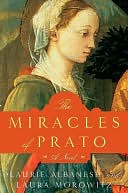
Miracles of Prato by Laurie Albanese and Laura Morowitz

Italy, 1456. The Renaissance is in glorious bloom. A Carmelite monk, the great artist Fra Filippo Lippi acts as chaplain to the nuns of the Convent Santa Margherita. It is here that he encounters the greatest temptation of his life, beautiful Lucrezia Buti, who has been driven to holy orders more by poverty than piety. In Lucrezia's flawless face Lippi sees the inspiration for countless Madonnas and he brings the young woman to his studio to serve as his model. But as painter and muse are united in an exhilarating whirl of artistic discovery, a passionate love develops, one that threatens to destroy them both even as it fuels some of Lippi's greatest work.
One of the things I love about reading Art History novels is that it takes just a short search engine query before you can not only read about the lives of the characters in the book you are reading, but you can see the images that are described in the pages.

I can't say that I had heard of Fra Filippo Lippi before, but I did enjoy reading about his life. In fact, it was something of a surprise to me how much I actually enjoyed this book. You see, I had seen it mentioned around the place and thought that sounds interesting, but it was only when I was offered the chance to participate in the blog tour that I really sat down and looked at what it was about, and I would have missed out on a really nice read.

Our novel opens with a young woman giving birth, attended by a nun from a convent. We then backtrack a short time and find out exactly how this young woman, who originally joined the convent along with her sister as a novitiate. Shortly after arriving there, Lucrezia catches the attention of Fra Filippo Lippi who is not only chaplain to the Santa Margherita convent, but also a famous artist who is particularly favoured by the prominent de Medici family.

Fra Lippi is a man who has more commissions than he can possibly handle, and also who is suffering from a lack of inspiration in that he hasn't seen the face that he needs to represent the Madonna - until he meets Lucrezia. She is however not meant to leave the convent, but with a word in the right ear, a relationship begins that will have to face many challenges, that will suffer at the hands of gossips, corruption and politics, not to mention the pressure on Lippi to finish some of the commissions that he has already received at least partial payments for. It will also provide the painter with badly needed inspiration, happiness and perhaps even tragedy.

The portrayal of Lucrezia was quite interesting in that she seemed quite passive, and yet she was compelling to read about. That passiveness though was more a reflection of the social restrictions for young women rather than her personality. So much of what happens in her life happens to her, as opposed to her making her own decisions. At the beginning, she is sent to the convent due to the circumstances that occur to her family. She is instructed to start working with Sister Putreza who plays a pivotal role in the novel, she is at the mercy of other important characters, and then tries to evade them. Even towards the end, decisions affecting her are made around her.

The relationship between Lippi and Lucrezia is extremely well written, and feels very organic, and really is the central image of the novel. Filling in the rest of the canvas of the novel are details of the lives of a Renaissance painter and cleric, of childbirth in a much different time, of faith, of religion, politics, corruption and power. The end result is a fascinating portrayal of an unconventional love story.


I need to mention the ending, because to be honest I felt a little bit let down by it. The events in the last chapter felt very rushed, and somewhat under-developed. It also went a long way towards undoing some of the book which I didn't quite get.

Thanks so much to TLC Book Tours for sending me this book for review. I probably wouldn't have read it without this, and I would have missed out on a really nice read.

Rating: 4/5

See other reviews at the blog tour stops listed below:

Tuesday, August 10th: Peeking Between the Pages
Wednesday, August 11th: The Tome Traveller
Thursday, August 12th: English Major’s Junk Food
Monday, August 16th: The Whimsical Cottage
Wednesday, August 18th: Bookalicio.us
Tuesday, August 24th: Passages to the Past
Wednesday, August 25th: Lit and Life
Thursday, August 26th: Life in the Thumb
Monday, August 30th: Rundpinne
Tuesday, August 31st: Drey’s Library
Thursday, September 2nd: The Adventures of an Intrepid Reader

You can also find out more about the book including seeing more of Lippi's art at Laurie Albanese's website.

This is my September read for the Year of the Historical challenge, and also counts as a read for my Art History challenge. It would seem remiss of me not to include at least one painting from Fra Lippi, so here is The Madonna della Cintola with Saints Margaret, Gregory, Augustine, and Raphael with Tobias from Wikipedia. Had to pick this one because of the reference to saint Margaret!

Sunday, February 14, 2010

Alphabet in Historical Fiction: Leonardo's Swans by Karen Essex

At the end of last year I was chatting with Allie from Hist-fic Chick and we agreed to set each other a book to read. This book was the book that she chose for me. In many ways I was quite lucky because Allie chose a book for me that was set in an era that I already know I enjoy! It is also a perfect choice for the letter E in Historical Tapestry's Alphabet in Historical Fiction

Here's what Allie has to say about why she chose this book for me.

Back in September during Book Blogger Appreciation Week, I was interviewed by Marie of The Burton Review. During the interview, I was asked all sorts of questions about my preferences in historical fiction, one of which asked "What are some of the periods/eras that you have yet to read about but are very interested in?" Part of my response indicated that, while I am fascinated by The Wars of the Roses, I have yet to actually read any historical fiction that takes place during that action-packed period. So Marg issued a friendly "challenge" to me: to read the epic 944 page volume The Sunne in Splendour: A Novel of Richard III by Sharon Kay Penman. In return, I was to choose a book for her to read. But this proved to be a daunting task, as Marg has been blogging about historical fiction and books in general for much longer than I have, and has thus already read many of the recommendations I came up with! My go-to recommendation is usually the Josephine Bonaparte trilogy by Sandra Gulland, and sure enough, she'd read it! So I thought back further through history a little bit and recalled another one of my favorite subjects, Leonardo da Vinci.

Readers who aren't as familiar with Renaissance Italy are usually surprised to learn that Leonardo was the quintessential Renaissance man; not only an incredibly talented painter, but also a philosopher, engineer, scientist, inventor, and mathematician, patronized by the greatest rulers of his day not just for his artwork, but for his genius war machines that were centuries ahead of their time. Back in the 15th century, he was even mapping out sketches of "flying machines" (helicopters) and submarines! Needless to say, Leonardo da Vinci has always been a fascination of mine. And I knew that Marg had enjoyed Robin Maxwell's Signora da Vinci, which told a fictionalized account of da Vinci's mother Caterina. So I had to recommend that she read Leonardo's Swans by Karen Essex, a book that takes place later on in his life and tells of Leonardo's time at the court of the Duke of Milan, delving a bit further into Leonardo's obsessive nature as an artist and thinker who sought perfection and beauty in everything he applied himself to. I really learned a lot about history and about da Vinci's character by reading this book, and it encouraged me to research and find out more about him. I hope reading this book has inspired Marg in a similar way!

You can read Allie's review of this book here. Thanks Allie for challenging me to read this book.

Worldly and ambitious, Isabella d'Este is a legendary beauty and when she weds the Marquis of Mantua all her dreams seem to come true. Superior in looks and intellect to her sister, Beatrice, Isabella believes she is destined to rule the courts of Italy. But when Isabella meets her sister's betrothed - Ludovico, the Duke of Milan - she finds herself unaccountably drawn to this charismatic, dangerous man. The two sisters fight for Ludovico's affections and to be immortalised by his court painter, Leonardo da Vinci. But in a treacherous political climate, immortality through art becomes a luxury, and the two sisters must choose between loyalty and survival.

Over the last few years, I have read a few novels that are set in the Renaissance and feature some of the more interesting names from history - Leonardo da Vinci, the Borgias, the de Medicis, the priest Savaronola to name a few. It is interesting to read each novel which are usually featuring different main characters and have them comment on the same events.

In this book, the main characters are Isabella d'Este, her sister Beatrice and her husband Ludovico Sforza (known as Il Moro), as well as many appearances by Leonardo. Isabella is the oldest daughter of the Duke of Ferraro, one of the key families of Renaissance Italy. She is widely acknowledged to be one of the most beautiful and intelligent young women of the day. Her younger sister Beatrice is a spirited and impulsive tomboy, nowhere near as charming or attractive, especially in Isabella's eyes. Both girls are engaged to be married. Isabella is thrilled to be engaged to Francesco Gonzaga, Marquess of Mantua, whilst Beatrice is not quite so eager to be married to the much older Ludovico Sforza (known as Il Moro), destined (kind of) to be Duke of Milan. Isabella has fallen in love with her husband and she is determined to propel Mantua to the forefront of the political and cultural landscape. It is only when she actually meets Ludovico that she realises that her sister has made the better match in terms of power and influence, even though Beatrice is unhappy, unable to draw her reluctant husband away from his mistresses.

Whilst Isabella covets her sister's husband, and there is a definite mutual attraction that is acted upon, Isabella desires one thing above all else, one thing that her sister's husband has the power to give her - she wants her portrait painted by Leonardo da Vinci.The two sister's vie for the attention of Ludovico, and Isabella constantly tries to influence the Duke to allow Leonardo to paint her. Beatrice however is reluctant to agree as she knows that this is an honour that her husband has bestowed on his mistresses and she doesn't want her husbands feelings for her sister to be so openly acknowledged for all the world to see.

Over time though, Beatrice comes into her own, forcing her husband to treat her as his duchess and not just as a young girl for whom he only needs as mother of his heirs, but at the same time Isabella becomes increasingly disenchanted with her own lot in life. With the French King threatening to invade, Italy's political landscape also undergoes rapid changes with friends becoming enemies, loyal soldiers betraying their lords, and betrayal between allies, not to mention a terrible tragedy for the two sisters.

It is hard for me to imagine having such enmity between sisters. When we were younger, it is fair to say that my sister and I didn't really get along, but the older we got, the closer we become. Then again, given how little I like to have my photo taken, it's hard to imagine being so desperate to have my portrait painted! To be fair, it did seem as though the relationship between Isabella and Beatrice did evolve over time, and after some very rocky periods.

The portrayal of Leonardo daVinci was one of the more interesting parts of this book. He seemed to be a distracted genius - constantly juggling various commissions, and spending months studying just one aspect of an object so that when he did come to paint or sculpt, he would have a perfect understanding. I think it is easy for us to not realise that da Vinci was involved in so many different projects. He was responsible for the entertainment at major events hosted by his sponsors, painted and sculpted, and had many ideas about military defenses, and still had time for his own private studies. He did sketch Isabella (see image above), but never did paint her portrait.

Given the rivalry between the two sisters, it seems only fair to allow Beatrice some images as well.  Click here to see images of Beatrice's tomb.


I did find some of the use of tense and memories to be a bit off, and at times a bit distracting, and there were times, particularly in the second half of the book where the book floundered a little bit in terms of pace. The strange thing is that that is when the historical action heated up! Despite this statement, I would definitely say to other Renaissance fans to give this one a go.


I also counted this book towards my participation in the Art History Reading Challenge, the Historical Fiction Reading Challenge and the Tournament of Reading (although it did only just fit into the time period given!). Have to love these multi challenge books!


Rating: 4/5

Friday, January 01, 2010

December Reading Roundup

Whilst it is really time to do some kind of summary of my whole 2009 reading year, first I am going to do my regular monthly round up.

In December, I managed to read 13 books. I think my days of reading 18-20 books in a month are gone, mainly because of the reduction in my commute time, so I am pretty happy with 13 books. I think it is more like my new normal than anything. Here's what I read:

Black Hills by Nora Roberts 4/5
Bed of Roses by Nora Roberts 4.5/5
Bones of the Hills by Conn Iggulden 4.5/5
These Old Shades by Georgette Heyer 4.5/5
City of Glass by Cassandra Clare 4/5
The Conquest by Elizabeth Chadwick 4.5/5
The Temptation of the Night Jasmine by Lauren Willig 4/5
To Desire a Devil by Elizabeth Hoyt 4/5
This Duchess of Mine by Eloisa James 4/5

Hmm, lots of romance in there! Definitely was feeling the need for comfort reads during December apparently.

So how did I go on reading challenges for December then? How many challenge fails?

As I mentioned in last month's roundup, I didn't complete the Art History Reading Challenge. The idea was that I was supposed to read 6 books during 2009. In the end I managed to read 3. Of course, failing at it this year hasn't stopped me from signing up for the challenge again this year!

I am thinking that I am probably not going to finish the Harry Potter Reading Challenge either. There's still 7 months to go, but I haven't read anything. I will leave it for another month or two before officially declaring

I finally have the first book in the Vampire Diaries series out from the library, so I might actually be able to start that challenge.

You may note that there are no Pratchett books in that list! That's right, I didn't manage to read any books for my own challenge!


The one challenge that I did make progress on this month was the Period Drama Challenge. The other night I watched Sense and Sensibility with Emma Thompson, Kate Winslet, Hugh Grant, Alan Rickman etc, and I enjoyed it very much! I don't know why but I haven't seen many of the favourite classic adaptations over the year. For instance, I have never seen all of Pride and Prejudice with Colin Firth. I know, it's a travesty. Almost as much of a travesty as the fact that I have never read any of the Austen books either.

I have to say though that the big romantic scene in Sense and Sensibility was not quite as romantic as it might have been if I had not recalled this scene from the Vicar of Dibley so clearly. It's hard not to remember so clearly given how many of times I have seen these particular episodes. And, no this is not just and opportunity for gratuitous Richard Armitage. Really!


Of course, now that I have showed that scene, I really have to show this scene as well:


This one is just for a gratuitous Richard Armitage video! It's the promo for Strike Back which is going to be on in the UK later this year!


Now I need to go and work on my end of year post, my beginning of year post, and you know, maybe do some blog tidying up or some cleaning or reading, or maybe I will just watch these videos again because they make me happy.

Friday, December 11, 2009

Another new challenge for 2010

Despite saying that I wasn't going to finish this year's Art History Reading Challenge, I have already signed up for next year!


You can see the full details butThis year there will be four levels of participation:


Curious - Read at least 3 books about art, either fiction or non-fiction.
Fascinated - Read at least 6 books about art, either fiction or non-fiction.
Enamored- Read at least 9 books about art, either fiction or non-fiction.
Utterly enchanted - Read at least 12 books about art, either fiction or non-fiction.

My plan is to sign up at the Curious level. I am planning to start with Sunflowers by Sherry Bundrick and then I will see what else catches my eye after that!

Tuesday, December 08, 2009

November reading round up

Before we get too much further into December, I really should do my November round up! At first I thought that I had had a pretty good month when it comes down purely to numbers but I might have been a bit wrong.

This month I managed to read 11 books. One of those, Night Play, was a reread. I don't often do rereads, but in this case I had gone to my friend's house for a cocktail party and was up at 6am despite the late night we had had the night before. I actually didn't take a book with me, but I have been lending my friend quite a few vampire romances so this one was at her house. I couldn't help but to keep reading once I had started! Mmmm....Vane.

Here are the books that I read in November.

A Guide to the Birds of East Africa by Nicholas Drayson 4.5/5
Her Fearful Symmetry by Audrey Niffenegger 4.5/5
Grave Goods by Ariana Franklin 4/5
Dreamfever by Karen Marie Moning 4/5
Heart of the Sea by Nora Roberts 4/5
When the Duke Returns by Eloisa James 4/5
The Food of Love by Anthony Capella 4/5
The Golden One by Elizabeth Peters 4/5
Everything Beautiful by Simmone Howell 4.5/5
Night Play by Sherrilyn Kenyon 4.5/5
Painting Mona Lisa by Jeanne Kalogridis 4/5

Do you have a scientific method for grading your books. For me, the grading is purely a gut reaction, and not really something that I can define enough to say well I gave this book 4 out of 5 and this one 4.5 out of 5 and these are the differences between the two books. The reason I mention this is that there is at least one book in there that I would probably have graded differently if I was to assign a grade to it now.

As far as challenges go, the year is coming to an end, and I think I have been pretty good at finishing most of the challenges I signed up for. The other thing that the end of the year means is that next year's challenges are all being announced, and it is fair to say that I have been signing up for more than I have been finishing!


One challenge that I don't think I will be completing this year is the Art History Challenge, although I did manage to finish one book for it during November. Painting Mona Lisa gives us a story behind one of the most famous faces in the world. It was a pretty good read. In order to complete the challenge you need to read 6 books, but I think this is only my third one so far.

The Harry Potter Reading Challenge doesn't finish until the middle of next year, but there is a fair chance that I am not going to finish that one either. When I originally signed up it was because my brother had told me that he had bought me all of the audio books narrated by Jim Dale so my plan was to listen to them. So far, I have not yet sighted those audio books, and I am not sure if I am really going to any time soon.

I have been waiting for what seems an eternity for the first book in the L J Smith series, The Vampire Diaries. It has just come into the library so I am planning to go and pick it up in the next week or so.

So, have you started thinking about the challenges you are going to sign up for next year? I have been signing up to a few. I am particularly partial to challenges for lovely buttons.


The first new challenge that I have signed up for this month is the Historical Fiction Reading Challenge which is being hosted by Royal Reviews. I will be going to aim for the top level which is Obsessed and read 20 novels. Full details of the challenge can be found here.

Another challenge being hosted by Royal Reviews is the Romance Reading Challenge. Again, I will be aiming for the highest level, Obsessed, and try and read 20 romances during the year.

There are at least two challenges that I am waiting for announcements on so that I can formally sign up for. Of  course, there is also my own Terry Pratchett challenge which I will also be trying to read for as well!

I can't help but feel that there is another challenge somewhere that I said I would particpate in, but at the moment I can't think what it is. It will come to me eventually.

Monday, March 02, 2009

January and February reads

I am no longer as good as I used to be at writing reviews of everything I read. I have loads and loads of half written reviews sitting in draft. Some of them may see the light of day at some point, but others will languish there in draft form forever! So, it seems like a good idea to do some kind of monthly round up of the books that I have read. This month I will post both January and Februarys reads but going forward it will be just one month. I will link where I have actually posted a review. If there are any books that you would really like to hear my thoughts on, leave a comment and I will do my best to complete the reviews and post them.


The books I read in January were:

The Bleeding Dusk by Colleen Gleason 4/5
The Lace Reader by Brunonia Barry 4/5
Naughty Neighbour by Janet Evanovich 4/5
Great Expectations by Charles Dickens 4.5/5
The Leopard Unleashed by Elizabeth Chadwick 4/5
The Last Queen by C W Gortner 4.5/5
To Seduce a Bride by Nicole Jordan 3.5/5
Secrets of Surrender by Madeline Hunter 4.5/5

February reads were:

His Wicked Kiss by Gaelen Foley 4.5/5
The Water Horse by Julia Gregson 4.5/5
Signora da Vinci by Robin Maxwell 4/5
It by Stephen King 4/5
The Founding by Cynthia Harrod-Eagles 4.5/
Foul Play by Janet Evanovich 3.5/5
Grimspace by Ann Aguirre 4/5
Snowy Night with a Stranger anthology 4/5
Portrait in Death by J D Robb 4.5/5
Victory of Eagles by Naomi Novik 4/5
Briar Rose by Jane Yolen 4.5/5
Tulip Fever by Deborah Moggach 4/5
Life as we knew it by Susan Pfeffer 4.5/5
Moon Called by Patricia Briggs 4.5/5
A Fool's Tale by Nicole Galland - DNF


As part of the I Suck at Challenges challenge, it is time for the February update.

February was actually a pretty good month for challenges. I finished the Bang Bang book challenge and the 2009 Sci-fi Experience and the Medieval Challenge.

I also read one book for the Chunkster Challenge (The Founding at 527 pages), two books for the Art History challenge (Tulip Fever and Signora da Vinci), one book for the War Through the Generations challenge (Briar Rose by Jane Yolen), one for the Pub 2009 challenge (Signora da Vinci by Robin Maxwell). So far for the 100+ Reading challenge I am up to book number 19 for the year, and in the Library Challenge I have already read 14 out of the 50 books that I set as a target for the year.

I am currently reading Silent in the Sanctuary by Deanna Raybourn and that one fits for two challenges so I already have a bit of a head start for March. .
TEMPLATE CREATED BY PRETTYWILDTHINGS