




Showing posts with label Year of the Historical. Show all posts

Tuesday, May 24, 2011

The Confessions of Catherine de Medici by CW Gortner

The truth is, none of us are innocent. We all have sins to confess.

So reveals Catherine de Medici in this brilliantly imagined novel about one of history’s most powerful and controversial women. To some she was the ruthless queen who led France into an era of savage violence. To others she was the passionate savior of the French monarchy. Acclaimed author C. W. Gortner brings Catherine to life in her own voice, allowing us to enter into the intimate world of a woman whose determination to protect her family’s throne and realm plunged her into a lethal struggle for power.

 The last legitimate descendant of the illustrious Medici line, Catherine suffers the expulsion of her family from her native Florence and narrowly escapes death at the hands of an enraged mob. While still a teenager, she is betrothed to Henri, son of François I of France, and sent from Italy to an unfamiliar realm where she is overshadowed and humiliated by her husband’s lifelong mistress. Ever resilient, Catherine strives to create a role for herself through her patronage of the famous clairvoyant Nostradamus and her own innate gift as a seer. But in her fortieth year, Catherine is widowed, left alone with six young children as regent of a kingdom torn apart by religious discord and the ambitions of a treacherous nobility.

Relying on her tenacity, wit, and uncanny gift for compromise, Catherine seizes power, intent on securing the throne for her sons. She allies herself with the enigmatic Protestant leader Coligny, with whom she shares an intimate secret, and implacably carves a path toward peace, unaware that her own dark fate looms beforeher—a fate that, if she is to save France, will demand the sacrifice of her ideals, her reputation, and the passion of her embattled heart.

From the fairy-tale châteaux of the Loire Valley to the battlefields of the wars of religion to the mob-filled streets of Paris, The Confessions of Catherine de Medici is the extraordinary untold journey of one of the most maligned and misunderstood women ever to be queen.

There are certain figures from history whose lasting legacy seems to be a bad reputation in some way, usually deservedly so. If a novelist chooses to write about them it can be difficult for them to walk the fine line between writing the history or trying to rehabilitate their reputation or to be apologist.

CW Gortner has chosen to write about Catherine de Medici, a woman known through history as a someone who would do whatever she could to maintain her grip on power, including meddling in the dark arts, poisoning her enemies, inciting religious disharmony and so much more. In doing so, he tries to bring a balance to the stories we think we know about Catherine and presents her as a wife and mother trying to do everything she can to maintain her family's grip on power, a stranger in a foreign land, a woman whose husband loves another. For the most part, Gortner manages to tell this woman's story without straying too far into sentimentality or being too apologetic.

Catherine is a member of the de Medici family, but they are no longer the all powerful family they once were. Spirited away from a dangerous situation at home, Catherine is married off to a French Prince - Henri. He is however destined to become King Henri II.  This Catherine is innocent, full of hope that she may find love and fulfilment within her marriage, but she is also determined and after all a Medici. Packed in her trousseau - a vial of poison. Her husband has, however, already given his love to another - the beautiful and powerful Diane de Poitiers, and the French Court does not like the young Catherine. Not only is she lonely in her marriage, but she is dealing with new customs she must learn to fit in in the French Court, but even if she does she will always be seen as an outsider.


Diane is not content with taking Catherine's husband's affections, she also wants to usurp her role at court, to find a place in Catherine's children affection, and her house! I remember reading years ago that Diane de Poitiers was a forebear of Princess Diana. If ever there was another case of 'there were three people in this marriage' then this would be it!
 
As Catherine's hopes of happiness fade, she eventually finds power the one way that she can - through her children, but even then there are obstacles. Widowed at 40, she becomes regent for her sons, and finds herself part of a struggle for power between the de Guise family and the ruling family, and so she must make the hard decisions to protect her children's legacy. At the same time, there is religious upheaval and rebellion.

The narrator is Catherine herself, looking back over her life from the relative distance of old age. She shares with us her hopes and dreams, her loves,  her disappointments, the meetings with influential people of the age including Nostradamus, and yes, her regrets.

Whilst this wasn't quite a warts and all look at the life of Catherine de Medici, the author certainly didn't gloss over the terrible consequences of the decisions that were made, whether they were the intended consequences or not.

As much as I liked CW Gortners previous book The Last Queen, this was a step up. Now I am eager to read his next book on Isabel of Castile. I am expecting a very readable and enjoyable look at another fascinating female character from history.

This review is part of the blog tour for The Confessions of Catherine de Medici being run by Historical Fiction Virtual Blog Tours. You can follow the blog tour by visiting the tour schedule here. Also, if you head over to Historical Tapestry, I have cross-posted this review, but there is also a chance to win a copy of the paperback release of the book.

Saturday, January 01, 2011

November and December Reading Reflections

It is that time of year (ie the end) where I need to share the stats for my reading year in 2010 or I will never actually get around to doing it!

Before I do that however, I didn't get around to sharing my books read for November, and then I should share December's reads and then I can start reflecting on the year that was, and the upcoming year!

Wicked Appetite by Janet Evanovich 3/5
Clockwork Angel by Cassandra Clare 4.5/5
Wicked Intentions by Elizabeth Hoyt 4/5
The House on the Strand by Daphne du Maurier 4/5
Outback by Aaron Fletcher 4/5
Mr Rosenblum's List by Natasha Solomons 5/5
Hot Under Pressure by Kathleen O'Reilly 4/5
The Third Day, the Frost by John Marsden 4/5
The Summoning by Kelley Armstrong 4/5
A Kiss At Midnight by Eloisa James 4/5
The Double Comfort Safari Club by Alexander McCall Smith 4/5
Wedding of the Season by Laura Lee Guhrke 4/5
Scandal of the Year by Laura Lee Guhrke 4/5
Christmas with her Boss by Marion Lennox  4/5
Revolution by Jennifer Donnelly 5/5
Dream Chaser by Sherrilyn Kenyon 4/5


Wicked Intentions was my read for the Year of the Historical Reading Challenge

By reading the third book in John Marsden's Tomorrow series I have also completed the Aussie Authors Challenge for 2010. This is one challenge that I am definitely signing up for again next year!

For December (or perhaps I should call it Robyn Carr month), my reads were:

Whispering Rock by Robyn Carr 4/5
A Virgin River Christmas by Robyn Carr 4/5
The Memorist by M J Rose 4/5
Unholy Ghosts by Stacia Kane 3.5/5
Christmas Eve at Friday Harbor by Lisa Kleypas 4/5
The Perfect Love Song by Patti Callahan Henry 2.5/5
Second Chance Pass by Robyn Carr 3.5/5
Outback Station by Aaron Fletcher 4/5
Temptation Ridge by Robyn Carr 4/5
Pigeon English by Stephan Kelman 3.5/5
Paradise Valley by Robyn Carr 4/5
Forbidden Falls by Robyn Carr 4/5
Angelique in Revolt by Sergeanne Golon 4/5
Angel's Peak by Robyn Carr 4/5
Cake: A Global History by Nicola Humble 4/5
Moonlight Road by Robyn Carr 4/5
Sheltering Hearts Robyn Carr 3/5
Dash and Lily's Book of Dares by Rachel Cohn and David Levithan 4.5/5
Season of Storms by Susanna Kearsley 4/5

Outback Station was my Year of the Historical reading challenge for December. Thanks to Kmont from Lurv a la Mode for hosting this challenge!


When I signed up for the Support Your Local Library Challenge, I said I would attempt 100 library books for this year. There was no way I thought I would make that target, but I did! Here's the list of books that I read for this challenge during 2010.

As for the challenges I didn't meet. I didn't manage to read any books for the Tudor Book Challenge, which I must confess kind of surprised me. Maybe I am a bit Tudor'd out?

One challenge that I knew I wouldn't meet (because it was one book every month) was In Death Reading Challenge. I did however expect to read more than one book in the series this year.  At this stage J D Robb is writing the books in the series quicker than I am reading them, and that is before we talk about her books under the name Nora Roberts!

For the second year running I managed to not complete the Art History Reading Challenge. I did read two books, when the minimum requirement was three books.

The final challenge I didn't finish was the Ireland Reading Challenge. I read one book, and I had several here to read that would have qualified but I didn't quite make it. I think I have already signed up for the 2011 version of the challenge.

Sunday, October 31, 2010

Sunday Salon: October Reading Reflections

I am pretty happy with my October reading! 16 books completed, some good reads, some were ebooks, and a couple were a bit outside my normal reading range. Wait until you see my post tomorrow of the books that I received during the month of October though. Despite a good reading month, my TBR got a lot bigger instead of smaller!

Here are my reads for October:

Lady of Hay by Barbara Erskine 3/5
The Exile by Diana Gabaldon and Hoang Nguyen 4.5/5
The Amazing Maurice and his Educated Rodents by Terry Pratchett 3/5
Adrien English Mysteries by Josh Lanyon 4/5
The Confessions of Catherine de Medici by CW Gortner 4.5/5
The Accidental Mistress by Tracy Anne Warren 4/5
Gobsmacked by L B Gregg 4/5
Shelter Mountain by Robyn Carr 4.5/5
Dark Road to Darjeeling by Deanna Raybourn 4.5/5
Maybe This Time by Jennifer Crusie 3.5/5
Ravishing in Red by Madeline Hunter 4/5
Seducing an Angel by Mary Balogh 3.5/5
The Princess Bride by William Goldman 4/5
The Sharing Knife: Horizon by Lois McMaster Bujold 4.5/5
The Passionate Brood by Margaret Campbell Barnes 4.5/5
The Cinderella Deal by Jennifer Crusie 4.5/5


I thought I would mention a couple of things. Gosbmacked was a m/m romance, and the Adrien English Mysteries are erotic mysteries featuring gay bookseller/amateur detective Adrien English. It is actually the first two books in the series, and I have the next couple waiting here to be read.

The Exile is the graphic novel version of the first half or so of the Outlander novel by Diana Gabaldon. I liked it a lot, but I do think it is a book for the existing fans, not necessarily for new fans of the series.

I was so pleased that I finished reading The Princess Bride because I decided to read it as part of a readalong hosted by Chrisbookarama. I have done attempted a couple of readalongs before but I tend to get lost along the way. For example, the first book in the Lord of the Rings trilogy is still sitting by the side of my bed despite the fact that I started a readalong early this year.

The book that I read for the Year of the Historical was the excellent Confessions of Catherine de Medici by CW Gortner and this book also counts as my final read for the French Historical Challenge as well.

The two books by Pratchett counted for the Terry Pratchett challenge.

As at the end of October, I have read 88 books of the 100 that I was aiming for in the Support Your Local Library challenge, so it looks like I will make that target.

There are still a number of challenges that I am not making a lot of progress on, but that doesn't mean that I won't be starting to think about next years challenges soon.

Thursday, September 02, 2010

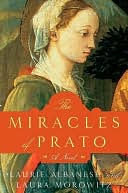
Miracles of Prato by Laurie Albanese and Laura Morowitz

Italy, 1456. The Renaissance is in glorious bloom. A Carmelite monk, the great artist Fra Filippo Lippi acts as chaplain to the nuns of the Convent Santa Margherita. It is here that he encounters the greatest temptation of his life, beautiful Lucrezia Buti, who has been driven to holy orders more by poverty than piety. In Lucrezia's flawless face Lippi sees the inspiration for countless Madonnas and he brings the young woman to his studio to serve as his model. But as painter and muse are united in an exhilarating whirl of artistic discovery, a passionate love develops, one that threatens to destroy them both even as it fuels some of Lippi's greatest work.
One of the things I love about reading Art History novels is that it takes just a short search engine query before you can not only read about the lives of the characters in the book you are reading, but you can see the images that are described in the pages.

I can't say that I had heard of Fra Filippo Lippi before, but I did enjoy reading about his life. In fact, it was something of a surprise to me how much I actually enjoyed this book. You see, I had seen it mentioned around the place and thought that sounds interesting, but it was only when I was offered the chance to participate in the blog tour that I really sat down and looked at what it was about, and I would have missed out on a really nice read.

Our novel opens with a young woman giving birth, attended by a nun from a convent. We then backtrack a short time and find out exactly how this young woman, who originally joined the convent along with her sister as a novitiate. Shortly after arriving there, Lucrezia catches the attention of Fra Filippo Lippi who is not only chaplain to the Santa Margherita convent, but also a famous artist who is particularly favoured by the prominent de Medici family.

Fra Lippi is a man who has more commissions than he can possibly handle, and also who is suffering from a lack of inspiration in that he hasn't seen the face that he needs to represent the Madonna - until he meets Lucrezia. She is however not meant to leave the convent, but with a word in the right ear, a relationship begins that will have to face many challenges, that will suffer at the hands of gossips, corruption and politics, not to mention the pressure on Lippi to finish some of the commissions that he has already received at least partial payments for. It will also provide the painter with badly needed inspiration, happiness and perhaps even tragedy.

The portrayal of Lucrezia was quite interesting in that she seemed quite passive, and yet she was compelling to read about. That passiveness though was more a reflection of the social restrictions for young women rather than her personality. So much of what happens in her life happens to her, as opposed to her making her own decisions. At the beginning, she is sent to the convent due to the circumstances that occur to her family. She is instructed to start working with Sister Putreza who plays a pivotal role in the novel, she is at the mercy of other important characters, and then tries to evade them. Even towards the end, decisions affecting her are made around her.

The relationship between Lippi and Lucrezia is extremely well written, and feels very organic, and really is the central image of the novel. Filling in the rest of the canvas of the novel are details of the lives of a Renaissance painter and cleric, of childbirth in a much different time, of faith, of religion, politics, corruption and power. The end result is a fascinating portrayal of an unconventional love story.


I need to mention the ending, because to be honest I felt a little bit let down by it. The events in the last chapter felt very rushed, and somewhat under-developed. It also went a long way towards undoing some of the book which I didn't quite get.

Thanks so much to TLC Book Tours for sending me this book for review. I probably wouldn't have read it without this, and I would have missed out on a really nice read.

Rating: 4/5

See other reviews at the blog tour stops listed below:

Tuesday, August 10th: Peeking Between the Pages
Wednesday, August 11th: The Tome Traveller
Thursday, August 12th: English Major’s Junk Food
Monday, August 16th: The Whimsical Cottage
Wednesday, August 18th: Bookalicio.us
Tuesday, August 24th: Passages to the Past
Wednesday, August 25th: Lit and Life
Thursday, August 26th: Life in the Thumb
Monday, August 30th: Rundpinne
Tuesday, August 31st: Drey’s Library
Thursday, September 2nd: The Adventures of an Intrepid Reader

You can also find out more about the book including seeing more of Lippi's art at Laurie Albanese's website.

This is my September read for the Year of the Historical challenge, and also counts as a read for my Art History challenge. It would seem remiss of me not to include at least one painting from Fra Lippi, so here is The Madonna della Cintola with Saints Margaret, Gregory, Augustine, and Raphael with Tobias from Wikipedia. Had to pick this one because of the reference to saint Margaret!

Friday, August 06, 2010

A Murderous Procession: A Mistress of the Art of Death Novel by Ariana Franklin

Adelia is back in this thrilling fourth installment of the Mistress of the Art of Death series

In 1176, King Henry II sends his ten-year-old daughter, Joanna, to Palermo to marry William II of Sicily. War on the Continent and outbreaks of plague make it an especially dangerous journey, so the king selects as his daughter’s companion the woman he trusts most: Adelia Aguilar, his mistress of the art of death. As a medical doctor and native of Sicily, it will be Adelia’s job to travel with the princess and safeguarding her health until the wedding.

Adelia wants to refuse—accompanying the royal procession means leaving behind her nine-year-old daughter. Unfortunately, Henry has arranged for the girl to live at court, both as a royal ward and as a hostage to ensure that Adelia will return to the king’s service. So Adelia sets off for a yearlong royal procession. Accompanying her on the journey are her Arab companion, Mansur, her lover, Rowley, and an unusual newcomer: the Irish sea captain O’Donnell, who may prove more useful to Adelia than Rowley would like.

But another man has joined the procession—a murderer bent on the worst kind of revenge. When people in the princess’s household begin to die, Adelia and Rowley suspect that the killer is hiding in plain sight. Is his intended victim the princess . . . or Adelia herself?
Having spent a couple of years living in relative obscurity, happily raising her daughter, sharing her home with her friends and when possible spending time with her lover, Rowley, Adelia Aguilar is not best pleased when she is summoned by King Henry II. He has a task for her. She has been chosen to accompany the King's young daughter Joanna from England to her wedding in Sicily. Also in the party is Rowley and her Arab companion Mansur but her daughter is going to be lodging with Queen Eleanor, both for her development, but also as surety that Adelia will return to England.

The journey itself is dangerous. The procession goes through France, to Aquitaine, through the Languedoc region where the Cathar heresy is spreading and so is the Church's eagerness and enthusiasm in squashing that faith, and then onto Sicily. Along the way the young princess is accompanied by a large party. There are her servants, her ladies in waiting, the requisite churchmen, a few knights and soldiers. For different parts of the journey we also get glimpses of her brothers, Young Henry and Richard, who is now most famously known as Richard the Lionheart. We also spend time in the court at Aquitaine, famous for courtly love and also in the inhospitable mountains of the Languedoc region of France where Adelia comes into contact with two Cathar women and very nearly finds herself being treated as one.

In keeping with the attitudes of the time, Mansur and Adelia are mistrusted by many of their travelling companions, especially after some of their travelling companions begin to be murdered. It isn't clear though exactly who it is that is the target. Is it the princess? Is it someone who is hoping to steal the priceless treasure that is travelling with the party, or is it someone who is targeting Adelia herself?

I never thought I would find myself saying this about a Ariana Franklin/Diana Norman novel, but I didn't really enjoy this one that much.There are a number of reasons why.

The first is that the author used quite an unusual technique in that where ever we were inside the thoughts of the characters then those thoughts were italicised. No great drama there, except that we spent the majority of time inside the thoughts of Scarry, who is the villain of the piece but then we were following Adelia's thoughts, and then back to Scarry. At one point, I was waiting for us to get a glimpse into the thoughts of the dog. And yes, we know the whole time through the book who the villain is. What we don't know is who he is disguised as and what role he has within the travelling party. That mystery in itself is not too badly handled.

The second is that I didn't like Rowley as much as I usually do. I have liked Rowley in the previous books with his unusual mix of knight and churchman sensibilities. Here is a man who is in love with a woman but is restricted from being able to be with her because he was appointed to a role within the church and because of her occupation and beliefs. In this book he has morphed into a jealous and domineering lover (and yes, you are reminded repeatedly that he and Adelia are lovers). It is difficult for Adelia and Rowley because he is a church man and therefore can not be seen to have a lover and so they are forced to stay away from one another during the procession, but at one stop on their journey he hires a room for them, and basically on arrival he walks in and says " Renting this hovel is costing me a fortune. Now get your clothes off."  Yes, he was always a man's man with man's needs but it just didn't feel to me as though this is the way that Rowley would have spoken to Adelia in the previous books.

Adelia was also a bit more petulant than she normally seemed to be to me, often being angry with Rowley and Mansur and not speaking to them etc. Admittedly everyone around her seemed to know what was happening to her and they did their best to make sure that she didn't know which annoyed  her, but still. I didn't like this aspect of her character.

I am not sure if it is that I am not remembering this from the previous books but it seems to me that this book was a lot coarser than the earlier books in the series. For example, at one point the Bishop of Avergnon is imagining the burning at the stake of a Cathar woman and the description given is:

When Gerhardt had gone, his lord poured himself another glass of the vintage from his vineyard near Carcassonne and sipped it while he engineered a new vision of Ermengarde his black-clad tauntress, this time tied to a stake with faggots laid around her feet.

He saw himself thrusting a torch into the wood like a penis into her parts and sighed because, alas, that pleasure must be left to the executioner. One day, though, yes, yes, one day, the flames he'd light would consume them all...men, women, and children.

This really was most excellent wine.

There were also a number of new characters introduced from a new maid named Boggart, and the charismatic, charming, almost swashbuckling captain O'Donnell. I am not sure what the purpose of introducing O'Donnell was really. I liked O'Donnell a lot, and I would be happy to read more about him, but without giving too much away it almost seemed as though it was an unfulfilled attempt at a love triangle. I suspect though that we will see more of O'Donnell in future books in the series, which may give us more insight into what the author was trying to achieve.

In no way am I suggesting that I am giving up on this author, because I have enjoyed far too many of her books over the last few years to let one disappointment get in my way. I might be a little more wary though when I start the next book.

This book is my August read for the Year of the Historical, and I am also potentially counting it as a read for the French Historical challenge, simply because a lot of the book was set in France, and we see the beginnings of one of the major events for France - the persecution of the Cathars that led to the only crusade on European soil.

Rating: 3/5

Thursday, July 08, 2010

Alphabet in Historical Fiction: Beverly Swerling's New York

New York is one of the places on my one day list - one day I will get there! I have been to other parts of America but I haven't made it to the east coast at all yet.

I was looking at the books that I had out from the library and was tossing up between reading a couple of novels, when I realised that City of God by Beverly Swerling would be a perfect choice for the letter N for the Alphabet in Historical Fiction challenge hosted by Historical Tapestry - N for New York!

The main characters of these novels are the Turners and the Devreys - originally descended from a brother and sister, this is a family that is intrinsically linked to New York from its early days, and who are intensely divided over the years by any number of differences of opinion!

New York is as much a character in the novels of Beverly Swerling as any of the people who live their lives through the pages of her novels and we follow the growth and expansion from a small colony known as Nieuw Amsterdam during the 1660s and beyond in City of Dreams: A Novel of Nieuw Amsterdam and Early Manhattan, to northern New York State on the frontiers in Shadowbrook: A Novel of Love, War, and the Birth of America, to New York in 1814 when the city is being blockaded by the British in City of Glory: A Novel of War and Desire in Old Manhattan, and now to 1833 as the city is in the grip of religious fervour in City of God: A Novel of Passion and Wonder in Old New York.

The scope of Swerling's novels is pretty big. We get to meet many famous names - like the Astors for example - and the author covers not only the development of the city itself, but also medical advances, major historical events, development of New York institutions like Wall Street and Tiffany & Co, the issues around various waves of immigration and so much more!

You can read my reviews of the first three books at the following links:

City of Dreams
Shadowbrook
City of Glory

And you can have a look at trailers for each of the books at Beverly Swerling's website.

In the meantime, here are my thoughts about City of God: A Novel of Passion and Wonder in Old New York, the latest instalment in this excellent series.


City of God, the latest installment in Beverly Swerling's gripping saga of old New York, takes readers to Manhattan's clamorous streets as the nation struggles to find a compromise between slave and free, but hears the drums of war. This is New York when one synagogue is no longer adequate for thousands of Jewish immigrants, when New Evangelicals rouse complacent Protestants with the promise of born-again salvation, and when it first sees Catholic nuns and calls them whores of Satan. It is New York when ships bring the fabulous wealth of nations to its wharves and auction houses, while a short distance away rival gangs fight to the death with broken bottles and teeth filed to points.

Into this churning cauldron comes young Dr. Nicholas Turner. Nick knows that the discoveries of antisepsis and anesthesia promise medical miracles beyond the dreams of ages. He learns that to make such progress reality he must battle the city's corrupt politics and survive the snake pit that is Bellevue Hospital, all while resisting his love for the beautiful Carolina Devrey, his cousin's wife. Sam Devrey, head of the shipping company that bears his name and a visionary who believes the future will be ushered in by mighty clipper ships spreading acres of sail, battles demons of his own. The life he lives with Carolina in the elegant brownstone on newly fashionable Fifth Avenue is a charade meant to disguise his heart's true home, the secret downtown apartment of the exquisite Mei-hua, his Chinese child-bride. The worlds of all four are imperiled when Sam must rely on Nick's skills to save the woman he loves, and only Nick's honor guards Sam's secret. On a night when promises of hellfire seem to become reality and the city nearly burns to the ground, Carolina and Mei-hua confront the truth of their duplicitous marriages. Rage and revenge join love and passion as driving forces in a story played out against the background of the glittering New York that rises from the ashes, where Delmonico's and the Astor House host bejeweled women and top-hatted men, both with the din of commerce in their ears and the glint of gold in their eyes.

As always, Swerling has conjured a dazzling cast of characters to people her city. Among those seeking born-again salvation are Addie Bellingham, befriended by the widow Manon Turner but willing to betray her, and Lilac Langton, who confesses her sins but avoids mentioning that she's a skilled abortionist in a city that has recently made abortion a crime. Ben Klein, a brilliant young physician, must balance devotion to his mentor and dedication to research with duty to the Jewish community. Wilbur Randolf, Carolina's father, indulges her in everything but fails her when she needs him most. Jenny Worthington, Wilbur's longtime mistress, is driven by avarice to make common cause with Fearless Flannagan, a member of a New York police force as corrupt as the city it serves. Ah Chee, Mei-hua's devoted servant, struggles through Manhattan's streets on bound feet and burns incense to the kitchen god in this place of foreign devils. They are all here, heroines and saints, villains and victims, and a vanished New York made to live again in an intricate tale of old debts and new rivalries.

This is the fourth book I have read by Beverly Swerling, and I have to come to expect a number of things from them. One is that there will be strong focus on medical procedures, one is that there will be a further development in the Turner-Devrey rivalry, that there will be a strong willed woman who comes to the fore, and that we will get to see some of the key events in American history through the course of the pages. This book is no exception. We get all of that and more.

The book spans a period of around 20 years prior to the start of the Civil War. At this time, there has been a sharp influx in the number of people who call New York home with many of the new immigrants being either Jewish or Catholic, particularly of Irish descent. With them comes a level of religious diversity that is not necessarily integrated into the life of the city, particularly as there is a religious revival movement occurring at the same time. The city struggles to deal with the growth, particularly the unprecedented levels of poverty. For the revivalists, poverty seems to be the price of sin, so any attempts to help the poor are rebuffed, and any attempts at scientific improvements are actively discouraged.

The main characters at the start of the novel are Samuel Devreys and Nicholas Turner. Samuel is head of Devreys Shipping, answerable only to Jacob Astor. He spent many years in the Orient as a youngster and in his heart would love to return there. Nicholas Turner is a doctor who has recently moved back to New York and wants to start his work at the hospital that his grandfather worked at before him. Nicholas hopes to improve the atrocious conditions at Bellevue but on all sides is surrounded by corruption and bribery. His big passion though is research. When he hears of a new substance that promises pain free surgery, he is very excited but when his display of the new technology is sabotaged he finds himself instead in private practice.

Samuel is a man with divided priorities. He wants to reclaim his birthright from the Astors, and he is working on a design for the fastest ships known to man, to try and exploit the links that he has to Chinese traders, specifically within the opium trade. He is unhappily married to a lovely young woman, Caroline Randolph, but his heart belongs to his Chinese wife Mei-Hua. In his drive to reclaim his shipping company, he over strives and miscalculates, and finds his life in a downward spiral, particularly once he starts to sample the wares.

Samuel and Nicholas's paths cross on numerous occasions, and as a result he is one of the few who knows of Samuel's secret life after he saves Mei-Hua following a botched abortion and later delivers their daughter Mei-Lin. Nicholas has his own cross to bear though, for he is in love with Caroline. The relationships are unorthodox and to an extent must be hidden in this time when appearances matter more than anything.


The themes and subplots within this novel are numerous, and there are a couple of strands at least that do seem to get a little bit lost in the mix. For example, Lilac Langton's role in the novel could have been key without having quite so much time spent on it. Either that, or she needed to be more of a major character and had more of a major role. What we had instead was pages dedicated to her but the actually thread of story for her seemed rather superfluous to the story as a whole.  In addition to the medical achievements of the age, the coming age of steam shipping,  and the conflict between the old ways and the new (from a Jewish and a Chinese perspective), there is also discussion of slavery (in particular the underground railway), of the growth of the ever expanding city (including references to the plan to start Central Park, the start of Tiffany and Co, for example), the influence and control of criminals in the developing city, and so much more.

For me, this book didn't quite reach the same stellar reading experience of City of Dreams and City of Glory, but I enjoyed it enough to still be pleased at the news of of another book featuring the Turners and the Devreys and I can't wait to read it! Just in the last few pages, there was something that happened that makes me hope that Caroline's son Zachary plays a prominent role in the next book as he has the capacity to be a multi faceted character.

This was also my July read for the Year of the Historical Challenge.

Rating: 4/5

Thursday, July 01, 2010

June Reading Reflections

After a slow reading month in May, unfortunately things didn't really pick up all that much for me in June. Last month I attributed the slow month to the fact that I was reading Brothers of Gwynedd. This month I am still reading that book, and have added War and Peace into the mix as well, and so yes, not that many books finished! The sense of accomplishment will be so worth it when I finish both of those books! So what did I finish?

Emma Vol 3 by Kaoru Mori 4/5
A Cottage by the Sea by Ciji Ware 4/5
Belong to Me by Marisa de los Santos 5/5
The Making of a Duchess by Shana Galen 3.5/5
The Shadowy Horses by Susanna Kearsley 5/5
The Yellow House by Patricia Falvey 4/5
Mort by Terry Pratchett 4/5
For the King by Catherine Delors 4/5
Fire by Kristin Cashore 4/5

Less books read means less progress on challenges as well unfortunately!

PhotobucketLet's start with the Period Drama Challenge. When I signed up for it, I said that I would watch 4 movies/series etc in one year. Shouldn't have been that difficult really. In the end I managed to watch one whole movie which was Sense and Sensibility and started to watch North and South (the US mini-series starring Patrick Swayze not my normal North and South). I think I watched the first disc but I definitely didn't finish it!

The book that I read for the Year of the Historical in June was Emma Vol 3 by Kaoru Mori, and that was one of my final reads for this years Historical Fiction Reading Challenge, along with Yellow House by Patricia Falvey. I have now finished this challenge!

I haven't been reading very many romances over the last few months, and I actually am beginning to feel like I NEED to read one. The only book that I read this month that counted for the Romance Reading Challenge was The Making of a Duchess by Shana Galen.

I finally got to read books for challenges that I hadn't previously started. For the King counts for the French Historical Reading Challenge, and The Yellow House counts as one book read for the Ireland Reading Challenge.

In addition Burned counts for the Vampire Reading Challenge, and Mort was a book that I read for the Terry Pratchett Reading Challenge.

I also joined in a new challenge this month - the Amy Einhorn Perpetual Reading Challenge. I have got my next read from the library for this one.

The final challenges to update are the 100+ Reading Challenge, of which I have now read 69 books, and for the Support Your Local Library Challenge I have now read 47 books.

Friday, June 04, 2010

Alphabet in Historical Fiction: Emma series by Kaoru Mori

The Alphabet in Historical Fiction challenge being hosted by Historical Tapestry continues and this time I want to focus on a manga series that is set in Victorian England - the Emma series by Kaoru Mori. So far I have read three of the books in this series, so I thought I would do mini reviews of those three books.

I have read very little manga, but when I heard about this series, I was interested enough to give it a go, mainly because it was a way of being introduced to manga but without going too far out of my comfort zone given the historical setting.

One of the interesting things about this series is that in a way it seems to be a series of entertaining vignettes within an apparently slow moving storyline, and yet there is humour, there are historical details and there are  amazing images that convey a very colourful storyline, all in black and white. The class distinctions between our two main characters might not always at the very forefront of the storyline, but it is always bubbling away in the background, none more so when the two characters are portrayed in their own individual environments.

The characters are all visually appealing and very much fit into the setting of the novels, without losing the 'manga' style.

I have only read the first three in the series so far, but I have every intention of reading more. Below are the covers and synopses, and just a couple of highlights from each novel that I have read.


An upstairs gentlemen and a downstairs servant share a secret love.

The saga begins. In Victorian England, a young girl named Emma is rescued from a life of destitution and raised to become a proper British maid. When she meets William, the eldest son of a wealthy family, their love seems destined. But in this world, even matters of the heart are ruled by class distinctions.

Emma is the maid to the former school teacher of a young gentleman, William. They meet when he comes to visit his former teacher, and there is an immediate attraction. Like the setting, the courtship such as it is, is very understated and gradual, that is until William's friend arrives from the continent complete with his entourage of dancers and elephants, and he too is attracted to Emma.


London's elite society places great importance on class differences, unlike William Jones. He regards Emma as a beautiful, charming young woman and not merely a servant. After their first real date, things seem to be going in a positive direction for them. But the leisurely pace of the growing relationship between them ends suddenly when disaster strikes at home.

Whilst in the previous book, the class differences between the two characters were present, it is in this book that the consequences of going against societal norms come to the fore.

A chance meeting leads Emma to a new situation ... and new challenges

One the train back to her hometown, Emma meets Tasha, a maid working at a wealthy family's mansion in the country. This fateful encounter leads leads to Emma finding employment with the family as well. But despite her years of experience as a maid for Mrs Stownar, living in a mansion filled with servants is something for which she is not prepared.

Circumstances have changed for Emma,and it is only as a result of a fortuitous meeting on a train that Emma finds herself employed in a large house, part of a large group of household servants, and that we therefore get to see more of life downstairs, including a really fun scene where the servants get to celebrate with a party.

Meanwhile William is trying his hardest to meet his family's expectations.

Here are the remaining covers from the original series. There have now also been a further 3 books released which tell the background stories of some of the secondary characters.


For other opinions on this series check out the following links. A couple of them includes some examples of the art.


Things Mean a Lot
In Spring it is the Dawn
Bold. Blue. Adventure
The Written World

The third volume also counts as my read for the Year of the Historical Challenge.

Wednesday, March 17, 2010

Classics Circuit: Those devilish Alastairs

Today I am glad to be participating in the Classics Circuit for Georgette Heyer.  When I signed up for the blog tour, I was asked what I was going to be post about, and because I had just borrowed it, I said that I would post about The Devil's Cub. I then realised that I hadn't actually reviewed the book that comes before it which is These Old Shades, so I thought I would do a post about my experience of reading Georgette Heyer, and a comparison of the two books. In addition, I am also using this post as my entry for the letter H in the Historical Tapestry challenge, Alphabet in Historical Fiction.

Up until a few years ago I hadn't read any Georgette Heyer novels, which in some ways was quite surprising given that I love both romance and historical fiction. Georgette Heyer is often creditted with creating the Regency Romance sub-genre, and over the years I have read quite a lot of those types of romances. I am not really sure what it as that I was waiting for. Since I started reading this author, I have read one of her straight historical fiction novels, one of her mysteries, and now three of her romances. I liked the first romance I read, but I didn't really know what to expect when I picked up These Old Shades. It was therefore a pleasant surprise when I enjoyed it as much as I did!

Here is the synopsis for These Old Shades (the recent Sourcebooks rerelease)


A notorious duke with a devilish bent...

Justin Alastair, Duke of Avon, is called "Satanas" by enemy and friend alike. In the aristocratic circles of both London and Louis XV's Paris he has a reputation as a dangerous and debauched rake.

A cast off urchin with a secret past...

Late one evening, the Duke stumbles upon Leon, a red-headed urchin fleeing a certain beating at his brutal brother's hands. On a whim, Avon buys the boy and makes him his page. But it soon becomes clear that Leon is not what he seems...

When the grubby Leon turns out to be the enchanting Leonie, the Duke is not prepared for the breathtaking transformation or the tender emotions she awakens in him, or the unconditional love she has for the man who saved her.

One of the issues with being a pioneer of a genre, is that in the 80 plus years of subsequent imitators, many of the tropes used in the novel have become pretty standard tropes of the regency romance sub-genre. In this one alone there is the cold, distantly aloof aristocrat, the girl dressing as a boy and the suspense subplot, and yet, despite the fact that these are all storylines that have been reproduced numerous times over the years, there is still a freshness to them in Heyer's writing.

Justin Alastair is in Paris when he comes across a young boy being accosted by others, and decides on a whim to make the boy his page. He very quickly realises that his page is actually a girl and sets out to find out more about her. It seems that she is most definitely something more than a young peasant, and soon Justin finds himself plotting and scheming to unveil a villain of the French Aristocracy.

I really enjoyed that this book was partially set in pre-revolutionary France.

When I rated These Old Shades, I gave it 4.5/5. Some times though the gut reaction rating that I initially apply isn't what I would have rated it a couple of weeks later. I will leave it at 4.5, but having now read The Devil's Cub, I would probably amend that to 4/5, not because I didn't still think I had enjoyed it immensely, but rather because when I put the two books together and compare my reading reaction, then These Old Shades is left in the shadows.


In this novel Miss Heyer has woven 'affairs' of lovely ladies and handsome, if some times wicked, men into a design as intricate as old lace. Love and desire, abductions and escapes, gaming and duelling are inevitable incidents in this full-blooded eighteenth-century story. The many thousands of admirers of Miss Heyer's These Old Shades will meet familiar friends again in Devil's Cub

The main male character in The Devil's Cub is Dominic, Marquis of Vidal, and son of Justin and Leonie, the Duke and Duchess of Avon. Dominic shares many of the same traits that his father possessed. They are both dark and broody, cold and aloof, but where were told that Justin is a man with a deserved reputation as a rake, it is really with Dominic that we see this for ourselves. Dominic is a man who trifles with young women with little thought for the consequences for the lady concerned, the man who fights in duels with the slightest of provocation, and the man who takes on the most ludicrous wagers, and to my mind, he is more overtly amusing than his father.

As a result of an illegal duel, Dominic is hustled out of the country to France, but not before he makes arrangements to have his current young lady, Sophia Challoner, accompany him. When her older, and much more sensible, sister inadvertently finds out about the plan, she is determined to save her sister from certain ruin, and therefore shows up at the rendezvous in her place. Mary expects that she will be able to be back before most people realise that she is gone, but she had not counted on Dominic's temper, and determination, to travel onto Paris urgently. When she wounds him, Dominic begins to realise that Mary is not as dull as he thought she might be, and that he may have at last found a woman who could live up to his mother in terms of spirit, and her sense of adventure.

There was only one scene very early in the book where I didn't like Dominic, and I must confess that I was a bit concerned that I was not going to be able to connect to him as a reader as a result of those actions. Whilst not forgivable, it was not repeated and I got no sense that it would be in the future, and I was therefore able to move on from.

I must confess that there were times that Mary came awfully close to making stupid decisions, but she was saved from being a TSTL (too stupid to live if you aren't sure what that acronym means) heroine by the fact that for most of the time she is no simpering young woman (something that Leonie had down pat in the previous book). In fact, I often found myself wondering what exactly it was that Mary was supposed to be living up to!

It was an absolute delight to watch the chemistry between Dominic and Mary leap from the pages, and to watch a rake whose family members despair of ever reforming (not counting his devoted parents of course) fall in love with a woman that no one would have thought would have been attracted to, and to do so with the utmost care for her reputation once he started to fall for her.

All through both of these books there is a superb cast of supporting characters. Justin's brother and sister, and their respective children in the later book, provide colour, vibrancy, depth and humour, meaning that The Devil's Cub in particular, is an incredibly balanced and readable novel. Leonie and Justin also worked better for me in this novel, having been married for many years now. I still found it a bit hard to connect with Leonie, but I did enjoy that no matter how well she thought she had managed to conceal Dominic's doings from her husband, Justin was almost omnipotent - always having ways of knowing exactly what his firebrand of a son had been up to!

As an aside, the edition of The Devil's Cub that I read was printed in the late 1970s, and it is very interesting to look at the differences between the synopsis and the covers! The other thing that I didn't realise until I was writing this post, is that Barbara from An Infamous Army is a member of the Alastair family! Given that An Infamous Army was the first Heyer I read, I feel as though I have come full circle, and in fact I think if I was to reread her book, I would appreciate more fully Barbara's character. I can totally see myself picking up These Old Shades and beginning my adventures with the fantastic Alastair family again, and this time reading through Devil's Cub and onto An Infamous Army.

In the end I rated The Devil's Cub 5 out of 5.

Thanks to Sourcebooks for the review copy of  These Old Shades.

If you are interested in reading more posts from the Classics Circuit, here are the other stops on the Georgette Heyer tour this week:

March 15, 2010 Booklust Review: Penhallow
March 16, 2010 Carol’s Notebook Review: Cotillion
March 16, 2010 Musings Review: These Old Shades
March 17, 2010 Reading Adventures Review: Devil’s Cub
March 18, 2010 Blog Jar Review: Royal Escape
March 19, 2010 Reading, Writing and Retirement Review: Friday’s Child
March 20, 2010 Staircase Wit Review: The Grand Sophy or Devil’s Cub
March 21, 2010 Medieval Bookworm Review: Cotillion

Thursday, February 25, 2010

Alphabet in Historical Fiction: F is for French

Not F for French as in someone from France, but F for French, as in Jackie French, who is a very prolific Australian YA author! She writes all sorts of novels, including some adult novels, YA historical fiction, straight YA novels, non fiction and picture books. And that adds up to good news for me as I work my way slowly through at least some of her backlist!

I am going to post about my impressions of The Night They Stormed Eureka by Jackie French.


Here is the book blurb:


It's 1854 and, on the Ballarat goldfields, men are willing to risk their lives to find freedom and make their fortunes in the mine.

Sam, a homeless teenager, is called back to the past to join the Puddlehams, who run 'the best little cook shop on the diggings'. The Puddlehams dream of buying a hotel with velvet seats, while others dream of freedom from the government with its corrupt officials and brutal soldiers.

As the summer days get hotter, and the miners' protests are ignored with catastrophic results, Sam experiences first-hand the power of a united stand, which will change her life forever.

Jackie French's fresh look at an event entrenched in our nation heritage will touch and surprise every reader.

First an introduction. I had heard of Jackie French, but must confess that I often would get her confused with an Australian actress called Jackie Weaver. Last year, I participated in Book Smugglers YA Appreciation month, and asked for recommendations for YA historical fiction, and for YA by Australian authors. It must have been while I was visiting other participants that I discovered that Jackie French who met both criteria, and so I had to request a book from the library catalogue by her!

What I didn't realise when I first requested the book, is that this was actually a time travel novel. When we first meet Sam, she is a very unhappy, lonely teenage runaway. She is hiding in the cemetery and finds herself curled up on a gravestone of a couple called the Puddlehams. When she wakes up, she finds herself in a very different time and place - the Victorian Goldfields during the 1850s.

The goldfields are no place for a young girl, and Sam soon finds herself pretending to be a boy, and being taken under the wing of Mr and Mrs Puddleham. Mr Puddleham used to be a butler for Queen Victoria before he followed Mrs Puddleham to Australia. They quickly realised that they wouldn't make their fortune by panning for gold, but rather that they could make enough money to follow their dreams by running a cookshop on the diggings, or rather, the best cookshop on the diggings.

Sam is soon drafted in to help in the cookshop, and soon begins to make friends - not only with the Puddlehams, but also with the eccentric former professor, and a local half-caste boy. She finds it difficult to equate some of the things that happen to her friends with her 21st century experience.

The goldfields were a very volatile place with corruption and violence rife, and with tensions rising, it was only a matter of time before there would be trouble. Sam knows what tragedy is coming, and she hopes to keep those that she loves from being caught up. With the principles of freedom and justice at stake though, it is difficult and Sam finds herself at the encampment as the time approaches for the confrontation between the miners and the authorities.

The Eureka Stockade is one of the iconic events of Australian history. Whilst the actual stockade wasn't a success, the events that occurred there were the catalyst for change that helped build the foundations of Australian society particularly in terms of the right for non land owners to vote (just the men at this point). It was also where the Eureka flag was used for the first time as a banner to rally around. Even today, the Eureka flag is used by some of the trade unions as a symbol.

Whilst Sam brings us a bird's eye view of the events that lead up to the Eureka Stockade, she is also learning valuable life lessons like being able to ask for help when you need it, and about learning to love, and to accept love from others, but not without having to deal with sorrow along the way.

I definitely intend to read more from Jackie French. I am starting with a series about animals being present at major events in history. The first book in that series, The Goat Who Travelled the World is on my TBR pile to get to soon, and is about a goat that travels with the First Fleet to Australia (or New South Wales as it was known then).

Not only does this book qualify as my read for this letter in the Alphabet in Historical Fiction, it also qualifies as one of my reads for the Aussie Author Challenge, the Year of the Historical Challenge, and the Historical Fiction Reading Challenge.

Rating: 4/5

Sunday, November 01, 2009

October reading roundup

October wasn't the best reading month for me, so I am relieved to have made it to 10 books read for the month. It didn't look like I would make it into double figures for a while there. I can't remember the last time I read less than 10 books in a month. The big reason for not reading as much is the fact that I have changed jobs and therefore have a lot less commuting time. Whereas I could read a standard sized book in two days previously, now it seems that it will take me the best part of a week. This is going to play havoc with my reading! It may well settle down a bit once I am not so mentally drained every day trying to implement new ideas and learn how things work at the new job. Hopefully anyway.

The books I did manage to read during October were:

The Sweet Far Thing by Libba Bray 4/5
Winston's War by Michael Dobbs 4/5
Love Walked In by Marisa de la Santos 4.5/5
Kissing Sin by Keri Arthur 4/5
3 Willows: The Sisterhood Grows by Ann Brashares 4/5
The Lost Symbol by Dan Brown 3.5/5
Devil May Cry by Sherrilyn Kenyon 3.5/5
Emma Volume 1 by Kaoru Mori 4/5
The Kingmaking by Helen Hollick 4.5/5
Pendragon's Banner by Helen Hollick 4.5/5

I am pretty impressed with myself. This month I wrote 5 reviews! It has been months since I have written that many reviews, and two of those were even current reviews! Go me! Hopefully I can keep that up in November.


Not quite so much cheering when it comes to challenges, but we are getting there slowly!

Before I talk about reading challenges I just want to briefly mention three things. Kailana and I will once again be joining forces and hosting the Blog Advent Tour this year. We are planning to have all the details of how to sign up and the ways you can participate within the next couple of weeks! We hope that we have lot of repeat participants, but we are always looking for new participants as well! If you haven't participated before, you can have a look at some of last year's posts by clicking on this link.

The other thing is more a request for assistance. I am looking for someone who is good with graphics who can create a button for me for a challenge I have in mind. Can anyone help the graphically challenged? If yes, please send me an email to ozdiamondlil at gmail dot com. Thanks in advance.

Has anyone else changed to the updated editor for Blogger. I do like it, but I cannot find the Spellcheck button anywhere! If anyone else can find it please let me know.

Onto my reading challenge update.

I still didn't get anything read for the Art History Challenge, although I did receive a book that qualifies. I did have two books out from the library which would have qualified, but I had to take one of them back unread. I see more of this disturbing behaviour in my future due to my reduced reading time!


Almost without realising it, I have completed the War Through the Generations challenge this month by reading Winston's War. The other books I read to complete this challenge were Briar Rose by Jane Yolen, Night of Flames by Douglas W Jacobson, The Piano Teacher by Janice Y K Lee and The Wedding Officer by Anthony Capella.


I also finished the reading for the Reliquiae reading challenge this month having finished Kissing Sin by Keri Arthur and Devil May Cry by Sherrilyn Kenyon.

Whilst I haven't finished watching anything for the Period Drama Challenge, I have watch the first two episodes of North and South (the one based on the books by John Jakes, not the BBC version). I think I also recorded something to watch the other week. I wonder if I did or not.

I have already signed up for a challenge for next year. Kmont from Lurv a la Mode is hosting the Year of the Historical reading challenge for 2010. The idea is to read either historical fiction or historical romance.

I am planning to do a RIP reading challenge update separately a bit later today.
TEMPLATE CREATED BY PRETTYWILDTHINGS