Showing posts with label Autobiography. Show all posts

Thursday, January 10, 2008

East of Time by Jacob G Rosenberg

Jacob G Rosenberg was born in Lodz, Poland, the youngest member of a working-class family. After the Germans occupied Poland, he was confined with his parents, two sisters, and their little girls in the Lodz Ghetto, from which they were eventually transported to Auschwitz. Except for one sister (who committed suicide a few days later) and himself, all the members of his family were gassed on the day of their arrival. He remained in Auschwitz for about two months, then spend the rest of the war in other concentration camps. In 1948 he emigrated to Australia with his wife Esther; their only child, Marcia, was born in Melbourne. Rosenberg has published three books of poetry in English, including My Father's Silence and Twilight Whisper, as well as three earlier volumes of prose and poetry in Yiddish: Snow in Spring, Wooden Clogs with Snow, and Light-Shadow-Light.


I first heard of this book when it was book of the month for The First Tuesday Book club, which is on our public broadcaster here once a month. The book itself sounded interesting, but something very unusual happened when the four reviewers on that show discussed this book - they all pretty much agreed that it was a worthy read, which isn't something that is guaranteed to happen!

There is no synopsis on the back cover of this book, so I have instead posted the blurb about the author, because, as this is a memoir, it does still give a fair idea of what this book is about.

In lesser hands this book could quite easily have become nothing more than a list of names of the people that the author knew that didn't make it out of the aftermath of WWII. Instead, we have a series of poignant vignettes about the people that a young Jacob Rosenberg knew, stories about how they influenced him then, and how some of them continue to influence him now. They are short glimpses into the life of a teenage boy as he experiences love and lust and fear and living a life that I am sure very few of us could actually imagine.


There are many heartbreaking tales - men and women of talent and passion and potential who either ended up in the gas chambers, or shot, or who just disappeared. As an example. one of the stories is of a family friend who has come around to share what little the Rosenbergs have (eating soup made with potato peel). Realising that it is getting late, they encourage the man to stay the night, so that he cannot be caught breaking the heavily monitored curfew. At daybreak, he leaves...and is never seen or heard of again.

The author is very clear in his introduction - this is definitely a memoir as opposed to an actual autobiography. As he says in the opening sentence of the preface:

East of Time is a rendezvous of history and imagination, of realities and dreams, of hopes and disenchantments.
Regardless of where the lines are blurred between what actually happened and the parts that are imagined, the story of loss and pain are very vibrant and real, and all too heartbreaking, and are definitely written in a very readable style.

This is the first book I have read by this author, and I will read more once his next book comes out here some time this year. I would love to know more about how he came to survive the concentration camps and how he came to live in Australia.

Tuesday, May 15, 2007

The Measure of a Man by Sidney Poitier

"I have no wish to play the pontificating fool, pretending that I've suddenly come up with the answers to all life's questions. Quite that contrary, I began this book as an exploration, an exercise in self-questing. In other words, I wanted to find out, as I looked back at a long and complicated life, with many twists and turns, how well I've done at measuring up to the values I myself have set." —Sidney Poitier

In this luminous memoir, a true American icon looks back on his celebrated life and career. His body of work is arguably the most morally significant in cinematic history, and the power and influence of that work are indicative of the character of the man behind the many storied roles. Sidney Poitier here explores these elements of character and personal values to take his own measure—as a man, as a husband and a father, and as an actor.

Poitier credits his parents and his childhood on tiny Cat Island in the Bahamas for equipping him with the unflinching sense of right and wrong and of self-worth that he has never surrendered and that have dramatically shaped his world. "In the kind of place where I grew up," recalls Poitier, "what's coming at you is the sound of the sea and the smell of the wind and momma's voice and the voice of your dad and the craziness of your brothers and sisters...and that's it." Without television, radio, and material distractions to obscure what matters most, he could enjoy the simple things, endure the long commitments, and find true meaning in his life.

Poitier was uncompromising as he pursued a personal and public life that would honor his upbringing and the invaluable legacy of his parents. Just a few years after his introduction to indoor plumbing and the automobile, Poitier broke racial barrier after racial barrier to launch a pioneering acting career. Committed to the notion that what one does for a living articulates to who one is, Poitier played only forceful and affecting characters who said something positive, useful, and lasting about the human condition.

Here is Poitier's own introspective look at what has informed his performances and his life. Poitier explores the nature of sacrifice and commitment, price and humility, rage and forgiveness, and paying the price for artistic integrity. What emerges is a picture of a man in the face of limits—his own and the world's. A triumph of the spirit, The Measure of a Man captures the essential Poitier.


My journey toward blogging pretty much started with joining Oprah's Book Club, and that is where I originally 'met' Kailana, and so it is somewhat apt that we do a joint review of this book, which was an Oprah pick earlier this year. Kailana's thoughts are in black and mine are in blue. It took a while for me to read this book because I am not really of the generation which was a big Sidney Poitier fan, so I read it because I have read most of the Oprah books over the years. It was also fitting to finally buddy review an Oprah book with Marg.

I will start off by saying that Sidney Poitier stars in one of my favourite movies ever, Guess Who's Coming to Dinner....yes, the original version, not the Ashton Kutcher version, but other than the fact that he was generally regarded as one of the major Hollywood stars during the 60s I didn't really know all that much about him. I had heard of Sidney Poitier before, but I have never seen any of his movies before. One of these days I will have to because I have of course heard of his movies before. Most of my knowledge of him comes from my grandmother and mother who both were happy to see me reading his memoir.

In some ways this book wasn't actually what I expected. I think I expected more of a traditional autobiography following a chronological order, but instead this book was more a series of reflections on some of the issues that people face in life. One of the major focuses of the book was racism, and the discrimination that Poitier faced throughout his career, and also the opposition that he faced as a man who was seen to be typecast as a good guy, and not necessarily someone who fought against the racist Hollywood system. I thought it was interesting to hear what Poitier went through to get where he is. It is really an amazing story, even if we know that it would have had to been hard considering the time that he grew up in. Growing up in a white, middle-class home, it is always helpful to see other sides of the picture and to know what other people had to get through to become the people that they are today.

Along the way there was also reflections on the current generation of kids who need everything now, particularly material goods, and on near death experiences that he had.

In terms of the writing style, there were occasions throughout this book where I could just hear the voice of Sidney Poitier, with his distinct accent, coming through on the pages. It wasn't however consistent, and there were definitely other times when that voice was indistinct. I was interested to see how he sees the society today, though.
We are from very different generations and from different societies, so it is always interesting to see what society is like from a different point of view. I do think that I would have liked this book more if I really knew who Poitier is, because while I have heard him talk, it is not enough that I heard his accent in my head while reading it. I did reflect on how he talks about his education and how he went for years with little education and yet was able to write such a reflective book.

After reading books like this, I am reminded that I really should read more non fiction....one of these days! I have actually been reading a reasonable amount of non-fiction lately, so this just adds to the ranks.

Marg's Rating 4/5
Kailana's Rating 3.5/5

Thursday, December 07, 2006

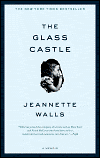
Joint review of The Glass Castle by Jeannette Walls

Occasionally Kailana and I like to do joint reviews on books that we are both intending to read at roughly the same time! Her thoughts are in black, and mine are in purple. I hope you enjoy this one!


THE GLASS CASTLE is a remarkable memoir of resilience and redemption, and a revelatory look into a family at once deeply dysfunctional and uniquely vibrant. When sober, Jeanette's brilliant and charismatic father captured his children's imagination, teaching them physics, geology, and how to embrace life fearlessly. But when he drank, he was dishonest and destructive. Her mother was a free spirit who abhorred the idea of domesticity and didn't want the responsibility of raising a family.


The Walls children learned to take care of themselves. They fed, clothed, and protected one another, and eventually found their way to New York. Their parents followed them, choosing to be homeless even as their children prospered.

THE GLASS CASTLE is truly astonishing - a memoir permeated by the intense love of a peculiar, but loyal, family. Jeanette Walls has a story to tell, and tells it brilliantly, without an ounce of self-pity.
I have to admit, this book has been recommended to me several times, but I avoided it. Following all the uproar following A Million Little Pieces, I was very wary about memoirs. Then, I started to really be told that I would like it, and I should read it, so I broke down and bought it. It was a very worthwhile read! During November, when I first had a reading lull and then was too busy to read, I read this book in a few short days.

The reason why I read this book is that it was selected as Book of the Month in one of the groups I was in. I didn't end up reading it with the group, but it's selection had piqued my interest enough to make me go out of my way to find it. I have definitely read more autobiographies and other non fiction books this year than I have in previously years, and this one is definitely one of the better ones!

The memoir captures your attention from the beginning. The novel opens with this paragraph:

I was sitting in a taxi, wondering if I had overdressed for the evening, when I looked out the window and saw Mom rooting through a Dumpster. It was after dark. A blustery March wind whipped the steam coming out of the manholes, and people hurried along the walks with their collars turned up. I was stuck in traffic two blocks from the party where I was heading.
So begins the story of Jeanette Walls and her family. An amazing story it is too. It makes your appreciate your warm beds, that's for sure. In one of the Jeanette's earliest memories, she is cooking for herself and catches her clothes on fire. She's three. That is just the beginning of the adventures that this family goes through. They cannot pay Jeanette's health bills, so they steal her from the hospital one night and make a run for it.

In many way the early years of Jeannette's childhood were idealised a lot. Dad was always convinced that he was on the brink of discovering the next big thing, and yet somehow they managed to skedaddle from one town to the next, keeping one step ahead of the law and debtors and goodness knows who else. And yet for the children, they had an almost idyllic childhood, in terms of being allowed to basically do what they wanted, in environments that ranged from an old railway station being used as a house, to a house in Phoenix, to a ramshackle, almost falling down dump in coal country.

The images of Jeannette's early memories are the themes to her life. She has a family where her mother gets depressed if she has to go to a regular job. She has a father who can only hold a job as long as he can stay sober. The children are allowed to do pretty much whatever they want. If they seriously injury themselves, many times they are just treated at home and sent back out to play. They are also almost always running from something. They have lived in countless houses during the course of the memoir.

The most telling quote for me from the book is relating to the mother - many times Jeannette and her siblings are basically starving with the money for food being spent by dad down at the pub, and quite often they have to prepare what little meals they have on their own, because their mother's philosophy is "Why should I cook a meal that will be gone in an hour when I can do a painting that will last forever?" As the children get older it falls to them to in effect be the parents. When their mother is employed for brief periods of time, it is the older kids who make sure that she is up in time to go to work, it is the kids who assist with the grading of papers and what have you. As they get older it becomes clearer to them that actually their life isn't ideal, and yet, the older three in particular end up being very responsible, and quite successful in their chosen fields. It was interesting to think about the dynamics of how some people can escape from the poverty trap, and what drives those people to become the people they are.

The interesting thing about Jeanette's family is that even though her parents have breaks where they are actually living with food and a roof over their house, they often get bored and go somewhere else. And then in New York, the children are making a name for themselves and their parents choose to be homeless. Her mother likes adventure, she is always saying. A safe home and food on the table is too save for her, she would rather live more dangerously, which happens many times during Jeannette's life.

Jeannette's mother interested me. She was a trained teacher, who married a man who basically rocked her world, despite the fact that she was often reliant on her family to keep what little food her children had. Whilst she was a passionate artist, she couldn't make a living from it, and she certainly struggled with holding down a normal job. She then made decisions, that lead to her ultimately being homeless, and yet, whilst she was cash poor, she was actually quite a wealthy woman. How is it that some people are completely materially focussed and yet others have wealth, and yet cannot seem to provide for themselves - there are lots of little things to contemplate as you read through this book!

I remembered hearing something about this woman when I started reading the book. I must have seen it somewhere or heard her story on the television because as I was reading it I found the story familiar. (I hadn't heard of her at all until I started hearing about this book). I think it is a very brave thing to tell people about your past. It is often something that you would just like to forget, and there are many times where she does just that; tries and pretends that she lived a different life.

It is an interesting thing about life. People wonder why the news is full of bad news and memoirs cover depressing topics, but it is really that they sell better that way. People would rather hear the bad things so that whatever is happening in their own lives does not look that bad in comparision. Some people may have bad childhoods, but the Walls children spent nights sleeping in the desert. For them though, sleeping in the desert was not a hardship - it was an adventure. Whilst they were young I think the family had a "life is what you make it" kind of theme. It was only as they grew older that they began to realise how different their family was, about how they needed to work hard to give them the means to escape from their world to something much better. I also think that the title is a very fitting one. Although, Jeannette's father always claimed he would one day build a glass castle, in truth the words go well to describe the life that Jeannette and her siblings lived through. Glass is fragile, and for many instances in their childhood, things were very likely to be broken.

This really is a book that should be read!

Kailana's rating: 4.5/5
Marg's rating: 4/5

Other Blogger's Thoughts:

B&B Ex Libris

Friday, November 03, 2006

The Glass Castle by Jeannette Walls


Dad drove through the dark slowly so as not to alert anyone that we were, as he liked to put it, doing the skedaddle....Once on the road, to distract us kids, Mom got us singing songs like 'Don't fence me in' and 'This land is your land'.

'Where are we going, Dad?' I asked.

'Whereever we end up,' he said.

Later that night, Dad stopped the car out in the middle of the desert, and we slept out in the middle of the desert, and we slept under the stars. We had no pillows, but Dad said that was part of his plan. He was teaching us to have good posture. The Indians didn't use pillows either, he explained, and look how straight they stood. We did have our scratchy army surplus blankets, so we spread them out and lay there, looking up at the field of stars. I told Lori, my sister, how lucky we were to be sleeping out under the sky like Indians.

'We could live like this forever,' I said.

'I think we're going to,' she said.

While Jeannette Walls was living on Park Avenue, covering the Academy Awards and attending black-tie parties at the Metropolitan Museum of Art, her parents were living in an abandoned building on the Lower East Side.

Rex Walls, her father, was an ingenious adventurer and a hopeless alcoholic. Her mother was an artist who abhorred domestic routime and the chores of motherhood: "Why should I cook a meal that will be gone in an hour when I can do a painting that will last forever?"


When I finish a book I always come in and at least start the post by putting a title in. I had no idea that I finished this one so long ago!

Click here to read the joint review that Kailana and I have done....

Tuesday, October 17, 2006

La Prisonniere: Twenty Years in a Desert Gaol by Malika Oufkir and Michele Fitoussi

This book is published under the title Stolen Lives: Twenty Years in a Desert Jail in most countries, but the copy I read was a Canadian version, with the title La Prisonniere.


Malika Oufkir was born into a proud Berber family in 1953, the eldest daughter of the King of Morocco's closest aide. She was adopted by the king to be a companion to his little daughter, and at the royal court of Rabat, Malika grew up locked away in a golden cage, among the royal wives and concubines.

But when Malika was eighteen, in 1972, her father was arrested after an attempt to assassinate the king. General Oufkir was swiftly and summarily executed. Malika, her beautiful mother and her five younger brothers and sisters were seized and thrown into an isolated desert jail. For fifteen years, they had no contact with the outside world, and lived in increasingly barbaric and inhumane conditions.

Like a modern Scheherazade, Malika kept up the spirits of her younger siblings by telling them stories every night about an epic world of her own invention. Then, after fifteen endless years of imprisonment, the Oufkir children managed to dig a tunnel with their bare hands, and made an audacious escape. Although they were recaptured after five days, the ensuing public outrage resulted in house arrest rather than a return to prison. In 1996, Malika was finally permitted to leave Morocco to begin a new life in exile.

La Prisonniere is a heart-rending account of resilience in the face of extreme deprivation, of the courage and even humour with which one family faced their tormented fate. A shocking true story, it is hard to comprehend that it could have happened in our own times.


This book was the July or August book (I think - whichever month it was I am behind!) for one of the groups that I am in. Or more precisely, I probably skirt around the edges of this group now. I used to be fully involved in it, but I find myself not keeping up with all the reading that I need to do for all the different groups I have attached myself to, and this seems to be one that is going by the wayside.

As a read, this was very interesting. It was set in a country that I know very little about, with very different religious and cultural experience to my own, and thankfully much different life experiences to mine.

Malika Oufkir lived a very comfortable life - as a very young girl she was even adopted by the King of Morocco so that she could be a playmate for his young daughter. However, Malika's opulent lifestyle was very often tinged with loneliness as she missed her parents, and the brothers and sisters that she barely knew. Her early life is portrayed as a gilded prison.

When she was in her late teenage years her father lead a coup against the King, and was executed. As a result of his actions, the Oufkir family were all arrested and then transported to a variety of different prisons across the country - each feature terrible living conditions, incredible isolation. In some cases they were kept in their cells 24 hours a day, unable to see or touch there loved ones who were kept in separate cells, but they found ingenious ways to keep in communication with their family members, and to not let their spirits be defeated by their oppressors.

When several of the family escape after many, many years of incarceration, and manage to get their story out, things begin to change. The family is released from prison into house arrest, allowing for some freedom, but it is a hard adjustment for them to make, and then ultimately to freedom outside of Morocco. Her youngest brother was just 3 years old when he was imprisoned, so for him to come out into the world having been incarcerated for so many years, through his childhood, and teenage years, must have been terribly overwhelming.

As a life story Malika Oufkir's is certainly very dramatic, and very interesting to read, and for the most part it was very well written. There were occasional times through the book that felt a little stilted, but for the most part, it was quite good. I am also not sure how much of that "stiltedness" would come from the fact that the book was not only an autobiography, but it was also translated from French to English for publishing. I noted with interest that she has a new book out called Freedom: The Story of My Second Life, which I will definitely read if I can find it.

I think that writing an autobiography would actually be pretty hard - details that certain people find fascinating would bore others to tears, needs to be well written without being monotonous, need to portray your life story in a variety of shades in several ways. For example, whilst you are telling your story there would presumably still be parts of yourself that you want to keep private. Sorry, just random musings there!!

Rating 4/5

Tuesday, September 05, 2006

Persepolis 2 by Marjane Satrapi

In Persepolis, heralded by the Los Angeles Times as "one of the freshest and most original memoirs of our day," Marjane Satrapi dazzled us with her heartrending memoir-in-comic-strips about growing up in Iran during the Islamic Revolution. Here is the continuation of her fascinating story.

In 1984, Marjane flees fundamentalism and the war with Iraq to begin a new life in Vienna. Once there, she faces the trials of adolescence far from her friends and family, and while she soon carves out a place for herself among a group of fellow outsiders, she continues to struggle for a sense of belonging.

Finding that she misses her home more than she can stand, Marjane returns to Iran after graduation. Her difficult homecoming forces her to confront the changes both she and her country have undergone in her absence and her shame at what she perceives as her failure in Austria. Marjane allows her past to weigh heavily on her until she finds some like-minded friends, falls in love, and begins studying art at a university. However, the repression and state-sanctioned chauvinism eventually lead her to question whether she can have a future in Iran.

As funny and poignant as its predecessor, Persepolis 2 is another clear-eyed and searing condemnation of the human cost of fundamentalism. In its depiction of the struggles of growing up--here compounded by Marjane's status as an outsider both abroad and at home--it is raw, honest, and incredibly illuminating.


I read Persepolis a while ago, and it was always my intention to read the follow up to it. And this week I did!

This book picks up where Persepolis left off. Marjane has moved to Austria to go to school, but she struggles over a long period of time to deal with the fact that she is an outsider there. She has to deal with prejudices and loneliness, and find herself drawn to the fringes of society, to the point that she eventually finds herself homeless.

Upon returning to Iran, she once again finds herself the outsider - she is seen as too Western, and eventually finds herself conforming to the expectations of Iranian society.

As a study of young girl trying to find her way in two different cultures, two completely different worlds, this is a very touching and emotional read. Having said that there were some true laugh out loud moments!

Highly recommended...but start with Persepolis first!

Rating 4.5/5

Other Blogger's Thoughts:

Things Mean A Lot
B & b Ex Libris
Katrina Reads
The Daily Pugle (The Complete Persepolis)

Wednesday, August 23, 2006

The Storyteller's Daughter by Saira Shah

Saira Shah grew up in Britain, but she was always told she came from somewhere else: a fairytale land of orchards and gardens, a place where even the water had magical qualities.

The country was Afghanistan, the storyteller her father and the tales were embellished with every telling. Then, at the age of twenty-one - with her father's tales as her guide - Saira set out to find the truth about her family's homeland.

Instead of finding a paradise, she was plunged into a country at war. It was the beginning of a journey spanning more than fifteen years. Whether extricating herself from an arranged marriage, walking through minefields with the mujahidin, or slipping clandestinely into the Taliban's Kabul, Saira learnt the bitter limits of the stories she loved. But, in the process, she discovered the reality of a country more complex and challenging than anything she could have imagined.

I don't read a lot of non-fiction but I do love to read books about other times, places and cultures. I know of a group where they are trying to go "Around the World in 80 books", and when this was their first book I was sufficiently interested to go and get it from the library and read along with them. There are several other books on their journey that I am hoping to read along with as well.

Saira Shah was been heavily involved with a couple of documentaries (Beneath the Veil and Unholy War) that went into Afghanistan and showed life as it really was in the Afghanistan that was ruled by the Taliban. These were not, however, her first journeys into this strife torn land. Her first harrowing journeys had been made years before by foot through the mountains during the time that the mujahadeen had been fighting against the Soviets.

As Saira travels into and out of Aghanistan, living in the volatile border town of Peshawar in Pakistan, she strives to try and work out her identity - is she an Afghanistani who has grown up in Britain, or is she British of Afghanistani heritage? Is she more Easterner than Westerner, and if so how can she make her life meaningful and help the women and children in her homeland. She is also trying to reconcile the men of the mujahadeen for whom honour means everything, with the same men who would sell Stinger missiles on to Iran, and for whom the fact that she questions them is more dishonourable than the actual deed itself.

There are moments of good humour within this book, so it is not all gloom of doom. There are times when it appears that the order of the stories is not quite right, and it sometimes seems like we have got a little off track, but for the most part this is quite an eye opening and entertaining look at the life of a woman who has taken quite amazing risks to bring the story of life in Afghanistan into our living rooms.

Because I don't normally read non-fiction, there were some questions that I did want more information on. For example, when she left Peshawar under threat of death for revealing some details that several sides of the conflict did not want revealed, how was she able to reestablish her life with her husband, is she still drawn to Afghanistan etc...but I think that that is because I like to have a happy ever after and know that the story is over. Having done a little googling, it seems that she has gone on to cover stories in more trouble spots including Gaza.

Overall, this was a very interesting read about a fascinating subject, and I am glad that I read it!

Rating 4/5

Thursday, July 06, 2006

Persepolis by Marjane Satrapi

A friend of mine originally read this book several months ago and loved it, and I intended to read it eventually, but it slipped my mind. When Heather reviewed it more recently, it jogged my memory and I went and borrowed it and actually got around to reading it this time!


Originally published to wide critical acclaim in France, where it elicited comparisons to Art Spiegelman's Maus, Persepolis is Marjane Satrapi's wise, funny, and heartbreaking memoir of growing up in Iran during the Islamic Revolution. In powerful black-and-white comic strip images, Satrapi tells the story of her life in Tehran from ages six to fourteen, years that saw the overthrow of the Shah's regime, the triumph of the Islamic Revolution, and the devastating effects of war with Iraq. The intelligent and outspoken only child of committed Marxists and the great-granddaughter of one of Iran's last emperors, Marjane bears witness to a childhood uniquely entwined with the history of her country.

Persepolis paints an unforgettable portrait of daily life in Iran: of the bewildering contradictions between home life and public life and of the enormous toll repressive regimes exact on the individual spirit. Marjane's child's-eye-view of dethroned emperors, state-sanctioned whippings, and heroes of the revolution allows us to learn as she does the history of this fascinating country and of her own extraordinary family. Intensely personal, profoundly political, and wholly original, Persepolis is at once a story of growing up and a stunning reminder of the human cost of war and political repression. It shows how we carry on, through laughter and tears, in the face of absurdity. And, finally, it introduces us to an irresistible little girl with whom we cannot help but fall in love.


A graphic novel, the story is quite simple, telling the story of Marjane's childhood in Iran, particulary focussing on her life between the ages of 10 and 14, at an incredible turbulent time in her country's history. A young girl, Marjane is trying to understand the changing political and religious landscape, including the loss of freedom and the imposition of the veil, and then the war with Iraq.

I was so surprised by the emotions that this book generated. Whilst I was expecting to like this book, it really touched me in ways I did not expect. I was tearing up on the train, I physically cringed as I saw and read about her uncle, and I laughed at the idea of her parents smuggling in Kim Wilde posters.

Very powerful, and highly recommended.

I can't wait to pick up Persepolis II!

Rating 4.5/5

Other Blogger's Thoughts:

Hidden Side of a Leaf

Things Mean A Lot
B & b Ex Libris
SomeReads
The Bluestockings
Katrina's Reads
TEMPLATE CREATED BY PRETTYWILDTHINGS