




Showing posts with label Victor Hugo. Show all posts

Tuesday, July 22, 2025

Top Ten Tuesday: Historical Fiction Novels set in France

 Welcome to this week's edition of Top Ten Tuesday which is hosted by That Artsy Reader Girl. This week's theme is Books Set in/Take Place During X (Pick a place, time, era, etc. Examples: Books set in Europe/Italy/Australia/Chicago, books set in Regency England, books that take place during the 1900s, books set in imaginary worlds/post-apocalyptic/dystopian worlds, books set on the ocean, books set it castles, books that take place during WW2, etc.)

On a recent post Deb from Readerbuzz asked me to do a post on historical fiction set in France. Challenge accepted Deb!

When I read books set in France, they are most often either contemporary stories about people moving to France (usually from the UK) or they are set during WWII. For the purposes of today's exercise I am going to mostly books avoid set during WWII as I could probably do multiple TTT posts on that theme. The books I have chosen are mostly shown in chronological order. There are some relatively old books on the list too!

Let's get started.


The Summer Queen by Elizabeth Chadwick - Eleanor of Aquitaine is a woman who I have read quite a bit about. I find her completely fascinating. Did you know that she is the only woman who was queen of both France and England and a major landowner in her own right? This is the first book in a trilogy about her life and it starts in 1137

The Confessions of Catherine de Medici by C W Gortner - Catherine de Medici is another fascinating woman from history, although her life and actions are much darker. A member of the famous Italian Medici family, Catherine married the man who became Henri II. This books starts in 1527 and charts the tumultuous reigns of both her husband and her son. We visited the beautiful chateau at Chennonceaux when we went to France a couple of years ago. This was one of her homes after she confiscated it from her husband's lover following his death. (My review)

The Dark Queen by Susan Carroll - This is the first in the Faire Isle trilogy which is set in the 1570s during Catherine de Medici's reign. In theory, this is a romance, but it is firmly based in history, albeit with a bit of witchcraft thrown in. This whole trilogy is excellent and I was obsessed with them for a while. (My review)

Angelique by Sergeanne Golon - If you want to read a rip roaring, huge and epic novel try this series which was originally published in 1957. This book starts in 1648 and Angelique gets into all sorts of adventures throughout the series. At various times she is welcomed at the highest levels of court, at others she lives with the poorest of the poor. At one point later in the series she is even captured by pirates. Towards the end of the series it all gets a bit silly but the early books are spectacular.  (My review)

An Astronomer in Love by Antoine Laurain - Antoine Laurain is the first of three French authors I have in this list. In this book Antoine Laurain tells the story of Guillaume Joseph Hyacinthe Jean-Baptiste Le Gentil de La Galaisiere, astronomer to the Academie Royale des Sciences who is chasing the first of two Transits of Venus which occurred during the 1760s.  (My review)


The Many Lives and Secret Sorrows of Josephine B by Sandra Gulland - This book is the first in a trilogy that tells the story of the woman who we now know as Josephine Bonaparte. This story starts 1777 when we first meet young Rose, a planters daughter from Martinique in the Carribean. This author has also written about a couple of other infamous women who were mistresses of kings (My review)

Champagne Widows by Rebecca Rosenberg  - This story starts in the late 1790s and tells the story of a young woman called Barbe-Nicole Ponsardin, who we now remember more famously as Veuve Cliquot - the widow Cliquot. This tells the story of how this remarkable woman revolutionised the champagne industry. (My review)

For the King by Catherine Delors - Set in 1800, this book tells the story of an assassination plot against Napoleon. Delors is a French author. I read a couple of her books and really liked them but apparently never reviewed them! 

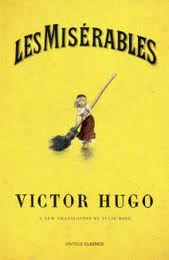
Les Miserables by Victor Hugo - What a huge book this is! It took me a good couple of months to gt through this story that starts in 1815 and follows the political upheaval through to the 1830s. This story would be as well known through the musical and movies as it from the book, but I am glad that I took the time to read it a few years ago. (My thoughts)

A Bakery in Paris by Aimie K Runyan - This is the most recent historical novel that I have read set in France (as at the time when I am writing the post any way). This is a dual timeline set in the 1870s and in the immediate aftermath of WWII in 1946. I did say I was going to avoid WWII but I really wanted to include this book because of the 1870s storyline which is about the Prussian siege of Paris and the subsequent uprising of the Communards. (My review)

I am sure that there are lots of other books I could have included on this list. What books would you add?

I am also sharing this post as part of Paris in July, hosted by Emma at Words and Peace.


Sunday, February 02, 2025

Six Degrees of Separation: Dangerous Liaisons to Tomorrow When the War Began

Welcome to this month's edition of Six Degrees of Separation, which is a monthly meme hosted by Kate from Books Are My Favourite and Best. The idea is to start with a specific book and make a series of links from one book to the next using whatever link you can find and see where you end up after six links. I am also linking this post up with The Sunday Salon, hosted by Deb at Readerbuzz.


This month's starting point is Dangerous Liaisons by Pierre Choderlos de Laclos. I looked and thought yay! An opportunity to choose some books set in France. And then I looked at last month's post and realise that the majority of them were set in France! Let's see where the chain takes us this month. 


Another French classic is  Les Miserables by Victor Hugo. I read this a long time ago now.  I just bought tickets to see this in an arena show in May. Should be interesting to see it in a crowd of around 10000 people, presumably singing along in some parts. Will have to watch the movie version to refresh my memory between now and then.

I have seen a number of plays and shows that were originally based on a book. A while ago now we went to see Dictionary of Lost Words by Pip Williams, and I also saw her live at Melbourne Writers Festival. 

Recently, I read There Are Rivers in the Sky by Elif Shafak. I saw her online at Adelaide Writers Festival a few years ago. In There Are Rivers in the Sky, there were a couple of paragraphs musing over the nature of numbers and words, something I end up overthinking about myself on occasion. I tend to think more about who was the first person who called something it's name and why did they choose that, or how did the words evolve in the first place, because some words just look a little odd. I couldn't fit the passage into my review but I thought I would share it here instated. 

Sniffling, the boy pulls up his collar and rubs his hands. It is not good. The wind pierces through his frayed garments, chilling his bones. He does not mind the cold as much as the hunger. Hunger is a beehive in his abdomen, one that has been stirred with a stick, buzzing day and night, jostling, irritated and frantic. He reckons the bees need a distraction, something to keep them busy and out of mischief. So he seeks help from mathematics. Whenever he feels worried, he does sums and multiplications in his head. He takes a gander at a lady with a parasol strolling along the park or a gentleman in a top hat sprinting across the square, and he sets himself the task of calculating how many ruffles are on her skirt or how many lines pattern his frock-coat. Numbers, with their unwavering reliability, comfort him and make him forget the pangs in his belly.

Hearing the snap of a whip now, Arthur instinctively recoils. As he has reached a busy high street, he needs to be extremely watchful. Last winter on this very spot a man was trampled to death by a hansom cab. The horses slipped in a rut in the road, pulling the carriage a full tilt even as they charged on over human flesh and bones. No sooner does the boy reflect on that day than the word 'accident' flashes through his mind, leaving a curious taste in his mouth Words always come to him with their distinctive flavours. 'Accident' is gamey, like burning fat and stale sausages, bags o'mystery, whose ingredients no one really knows. 'School' has a pungency that lingers on the tongue, like licking old boots. And 'mother' is buttery, warm and sweet, though with an acidic undertone, reminiscent of an apple pie gone sour. For years, Arthur assumed it must be the same for everyone, that other people also experienced similar associations, until he realized this was not the case. Since then he has been careful not to mention it to anyone. A quiet boy by nature, there are lot of thing she keeps to himself.


Keeping with the idea of words, my next choice is The Beautiful Words by Vanessa McCausland. I still need to read her latest book.

I recently bought a new book called Pipsworth by Simon Van Booy. The only book I have read by him previously is Everything Beautiful Began After so I am using the word beautiful to create this link.

I am finishing this month using the word began as my link. I am choosing Tomorrow When the War Began by John Marsden, who recently passed away. Vale John Marsden. 


Next month, the starting point is the 2023 Booker Prize winner, Prophet Song by Paul Lynch.

Will you be joining us?

Tuesday, February 21, 2023

Top Ten Tuesday: The Classics edition


Welcome to this week's edition of Top Ten Tuesday which is hosted by That Artsy Reader Girl. This week the theme is Favorite Heroines (or heroes, if you prefer!) but I am going to go off topic this week...again. I am currently listening to Around the World in 80 Days by Jules Verne, so I thought that I would share classics I have read. I know that I should have read many more, but oh well. No guilt allowed right!


Around the World in 80 Days by Jules Verne - Listening to this now!


Les Miserable by Victor Hugo - What a massive undertaking this was!


Alice in Wonderland by Lewis Carroll - I read this last year for Cook the Books and thoroughly enjoyed it!


East of Eden by John Steinbeck -   There's several books on this list that I read thanks to Oprah's book club!


The Great Gatsby by F Scott Fitzgerald - I read this back in high school and then read it again 10 years ago.


One Hundred Years of Solitude by Gabriel Garcia Marquez - This was another Oprah read. I did end up going on to read and enjoy a number of his books.


Sense and Sensibility by Jane Austen  - Still the only Austen I have ever read - Shocking I know!


Great Expectations by Charles Dickens - I read this after reading Mr Pip!


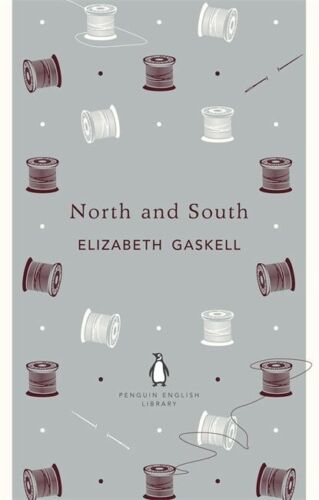
North and South by Elizabeth Gaskell - I did think about putting up the cover of the DVD of the BBC series as the picture here (hello Richard Armitage) but I restrained myself!


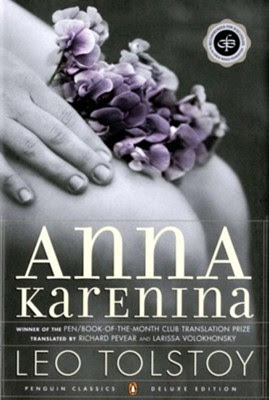
Anna Karenina by Leo Tolstoy - I really enjoyed this! Another Oprah read!


What's your favourite classic?

Tuesday, July 28, 2020

Top Ten Tuesday: Books Set in Paris


Welcome to this week's edition of Top Ten Tuesday which is hosted by That Artsy Reader Girl. This week is a freebie topic.

A couple of months ago, I did a TTT post all about books set in places I would like to visit. The surprising thing was that there were no books set in Paris on that list, but there as a reason for that. I already knew that for this freebie topic I was going to combine Top Ten Tuesday with Paris In July and feature books I've read set in Paris.


Die for Me and Until I Die by Amy Plum - These are the first two books in a YA paranormal series set in Paris. This is one of those cases where the cover gods smile on an author not once or twice. I did enjoy the books but haven't read any more.


Anna and the French Kiss by Stephanie Perkins - This is another YA book but no vampires or werewolves in sight. In this book a young girl moves to Paris to go to school. A while ago someone on a TTT post mentioned that there is going to be a special edition cover so I just had to buy it.


For the King by Catherine Delors - I read this book years ago and enjoyed it. It is set in Paris when a police inspector must investigate a failed assassination attempt against Napoleon.


Paris, My Sweet by Amy Thomas - A New York girl moves to Paris for a year and goes on the hunt for the perfect dessert! This is one book that made me yearn to go to Paris.


The Chocolate Kiss by  Laura Florand (or really any of her books)- I mentioned The Chocolate Thief last week, but all of her books are set in France and often feature lots of food. If you like a bit of romance featuring hot French guys with delicious food, this is an author for you!


French Milk by Lucy Knisley - This is a graphic novel about a young woman's trip to Paris with her mother. It's not my favourite Lucy Knisley book but it did make me want to visit. Then again, you're possibly noticing that is a theme for all the books in this post!


The Little Bookshop on the Seine by Rebecca Raisin - A bookseller swaps her life in small town America for a busy bookshop in Paris. This was my first novel by Rebecca Raisin, but I have read another couple since, and will read more.


Almost Paris by Sarah Turnbull - An Australian woman makes an implulsive decision to move to Paris to live with the French man she has just met. This book explores the cultural differences that she encountered. (review here)


The Many Lives and Secret Sorrows of Josephine B by Sandra Gulland
- Sandra Gulland has written a number of historical fiction novels set in France. This is the first in the trilogy focussing on the life of Josephine Bonaparte.(review here)


Les Miserables by Victor Hugo - I am not sure what I need to say about this book other than it is a story of the French revolution.


Monday, May 13, 2013

Seduction by M J Rose

I am going to start with a huge disclaimer about my review of this book. I didn't enjoy this as much as I expected, mainly because it wasn't the book I expected to read.

To be honest, that is my own fault. I have read a number of M J Rose's books before and liked them well enough, but after reading the third book in her Reincarnationist series I decided that was enough for me. It's not that I didn't enjoy the books I read but thrillers aren't really my thing and I am not invested in the paranormal aspects to a great degree, and so I felt it was time to let this series go.

When the next book, The Book of Lost Fragrances, came out last year I stayed strong and didn't read it, just like I apparently didn't read the blurb closely enough when I was offered this book for review. I have a very clear memory of thinking that it was interesting that M J Rose was choosing to go in a new direction. I guess I was stuck on the references to Victor Hugo on the island of Jersey (I had no clue that he had lived there) and didn't actually read the rest of the blurb.

Here's the thing though... the blurb and the cover don't really help considering that there is nothing in either that tells you that this is part of the Reincarnationist series. And that is a real bug to me because as a reader I prefer to read a series in order. I prefer not to find out that a book is part of a series when I read the second chapter and recognise a character name from the previous books. And yes, I am sure that there are plenty of people who would tell me that this is a standalone book, and it was to a degree, but there were still a lot of references to the events of the previous book.

Anyway...enough of my ranty mcranty rant. How about the book itself?

There are three strands in the story that link together over time to form the whole story. The first and most interesting to me related to the aforementioned Victor Hugo who was living in exile on the island of Jersey along with his wife and some of his children, and his mistress. Very cosy! It was while living there that Hugo becomes interested in trying to communicate with his daughter Didine who had died in a boating accident ten years before. He becomes more and more involved with seances and, in doing so, opens himself up to other paranormal experiences. Along the way, Hugo records all of his experiences in some journals, including his relationship with a young woman named Fantine.

In the present day, Jac L'Etoile is asked to head to Jersey by an old friend. Theo and Jac shared an important friendship in their teens but they were separated and hadn't seen each other for many years. Jac is now a mythologist and she is intrigued by the Celtic links that are present in the ruins and the history of the island. When she gets to Jersey and Theo shares the Victor Hugo connection, she is even more intrigued and agrees to help Theo find the lost journals that could reveal more about the famous author's time on the island and also about the history of Theo's family.

The final strand in the story concerns a Druid priest who is called upon to make an unfathomable sacrifice. The emotional trauma to his family presents through time as the characters relive their conflicts time and time again through history in each new identity.

There is much to admire in Rose's writing. The language is evocative, drawing the reader to the past with ease, to the power of scent and it's role in memory and to the shadowy world of seances and ghostly presences. There is no doubt that the writing draws the reader into the story, building the tension as each new twist in the story seems to in turns ravel and unravel the threads in the story. The author must also be commended for not falling into the all too predictable trap of throwing in an obviously romantic conclusion. This doesn't mean that the ending isn't satisfying, because it is, but this is not a 'and they lived happily ever after kind of read'.

Having said that, there were threads that didn't feel fully developed to me, particularly in relation to the losses that Jac was trying to coming to terms with, and I would have liked to have more focus on the historical stories in particular.

If you enjoy a good thriller or like books that explore intellectual discussions of the paranormal realm with interesting historical settings, then this could be a book that you would enjoy. It wasn't a bad read for me, it just wasn't the book that I wanted to read right now. And I suspect that is actually a lot more about me than it was about the book!

Rating 3/5


Tour Details

Link to Tour Schedule:Link to Tour Schedule
Twitter Hashtag: #SeductionVirtualTour
M J Rose's website.
M J Rose on Facebook
M J Rose on Twitter.

Synopsis

From the author of The Book of Lost Fragrances comes a haunting novel about a grieving woman who discovers the lost journal of novelist Victor Hugo, awakening a mystery that spans centuries.

In 1843, novelist Victor Hugo’s beloved nineteen-year-old daughter drowned. Ten years later, Hugo began participating in hundreds of séances to reestablish contact with her. In the process, he claimed to have communed with the likes of Plato, Galileo, Shakespeare, Dante, Jesus—and even the Devil himself. Hugo’s transcriptions of these conversations have all been published. Or so it was believed.

Recovering from her own losses, mythologist Jac L’Etoile arrives on the Isle of Jersey—where Hugo conducted the séances—hoping to uncover a secret about the island’s Celtic roots. But the man who’s invited her there, a troubled soul named Theo Gaspard, has hopes she’ll help him discover something quite different—Hugo’s lost conversations with someone called the Shadow of the Sepulcher.

What follows is an intricately plotted and atmospheric tale of suspense with a spellbinding ghost story at its heart, by one of America’s most gifted and imaginative novelists.

Sunday, January 20, 2013

Sunday Salon: On reading Les Miserables


If you have been taking note of the books that I have listed as Currently Reading at the bottom of every Sunday Salon post, you may have noticed that I have had the same book listed there for a couple of months. My intention was to finish Victor Hugo's Les Miserables before I went to see the movie. In the end, I went to see the movie a couple of weeks ago, so today I am going to post about my experience of reading the book because I finished it this week (yay!) as well as about how seeing the movie when I did affected my reading experience. Bree from All the Books I Can Read started the book around the same time as I did but finished it much earlier. It seemed like a good chance to have a discussion about the book.

This is the first part of the discussion post. You can read the second part of the discussion at Bree's blog.


Marg: In a way I am often a little bit concerned about trying to review a classic like this book. While I felt a profound sense of achievement when I closed the book for the last time a few days ago, the reality is that I am not the first one to do so! Having said that, I often find when I do read such well known stories that I assume that everyone knows what the book is about, and often it isn't the case. I haven't seen the musical of Les Miserables, but I knew that the main characters were Jean Valjean and Fantine, and and so I expected the novel to focus on them I was therefore somewhat surprised when Fantine played a pivotal but short role. Other than that, I didn’t really know a lot about the story. Did you know much about the story before you started it?

Bree: To be honest - absolutely nothing! Some classics I have a vague idea of the plot and the characters but Les Miserables is one of the ones where I really didn’t know anything at all about it before beginning. I picked it up on a whim really - after you’d mentioned a read-a-long you were going to participate in, my original reaction was 1200p over 4 weeks? No way! But the more I thought about it, the more it interested me. I’ve made it a resolution to read more classics (don’t ask me how I’m going with that) and this one is iconic. So I decided to tackle it. Like you, I felt a huge sense of achievement when I finished the novel. It’s a long book, it’s quite involved and quite honestly, after the first 60-odd pages, I wasn’t even sure I was going to continue. Victor Hugo never met a tangent he didn’t love to embrace and at times I struggled with some of these. But there’s a great core story weaving through the book, isn’t there?

Marg: Definitely, the story itself is great, but oh, those tangents. The book begins on a tangent, with many pages talking about the bishop in a small town, about his habits, his background. Now, he was important in terms of his impact on the former galley slave Jean Valjean and he certainly shaped the man that Jean was to become, but that was a lot of background! Those kinds of tangents continued with pages and pages about Waterloo, and even towards the end lots of pages about the Paris sewer system.

I couldn’t help but wonder what this book would have looked like had it been published today. It would probably have been at least halved in size! There would not have been the slow build up at the beginning and a lot of the other extra information, like an extended discussion about the difference between a riot and a revolution, would most likely have not been included!

In terms of the core story, Jean Valjean is a man who was imprisoned for stealing a loaf of bread to feed his starving family. Originally imprisoned for 4 years, his sentence was extended several times because he kept on trying to escape before finally being released after 19 years. The rules for released prisoners are very strict, so when Valjean breaks the rules, he is in effect once again a fugitive.

Bree: I totally agree about what would’ve happened to the novel, should it have been published today. Chunksters of the 1200p variety aren’t too common these days and it seems like most stories get a pretty ruthless edit and anything not immediately useful to the story gets the chop. For me, the novel started when Jean Valjean appeared, that’s when I became interested and every time it deviated from that, I lost a little bit of interest until he reappeared again. He reinvents himself so many times during this novel, he’s such a fascinating character. He loses 25 years in a prison, so he’s already middle aged when he’s released the first time and really ‘begins’ his life on the outside. Then he chooses to devote himself to raising Cosette and he’s more than just a guardian to her. He’s a father, a grandfather, a friend - for a long time he’s all she ever really had. Their relationship is a real triumph in the novel, I think. Hugo says a lot about them with the glimpses he gives the reader into some of their time together at various stages of Cosette’s life. I think the two of them might have been my favourite part.

Marg: That is definitely the strongest relationship in the book by far, especially seeing as the thread that connects them was rather obscure in the beginning, although I did enjoy Marius’ story a lot as well.

One of the things I found myself pondering when I finished the book was the links between the characters, the way that they were all connected and were drawn back together even after years apart. Jean Valjean, Fantine and her daughter Cosette, Marius and his father, the Thenardiers, and even Inspector Javert seemed to be locked into a connection that just would not let them go.

Bree: There are a lot of.... coincidences in this novel! I’m not entirely sure how large a city Paris was at this time, but I’m assuming it was big enough for all of these to be extraordinarily unlikely, but they do make the book quite fun, puzzling out all of the different ways in which characters are related to one another, or how they have crossed paths in their past.

Marg: When I saw the movie, I did lean over to my friend and wonder if Javert was the only policeman in France at the time!

I know that you haven’t seen the movie (you really should!), but I did find it helped me get through the last half of the book, because I had a fair idea what was coming. Given that we talked before about all the tangents, I actually missed some of the details that were in the book. For example, when we first meet Fantine in the movie, she is working in the workshop and her baby is already being looked after by the Thenardiers, with Fantine sending money to them regularly. What we didn’t see is anything about the relationship, about how she came to leave Cosette at the inn. We also didn’t get the background on Marius and his family and their complicated relationships.

Getting back to the plot, Valjean reinvents himself once he gets out of prison and becomes a gentleman of independent means. When he decides that he is going to rescue Cosette from her living hell with the Thenardiers, they come to Paris. Having narrowly escaped from being arrested by Javert again, the two of them settle into a quiet, contented life. One day, at a park in Paris, a young man named Marius notices the beautiful Cosette and so begins a period of unrequited passion between the two.

How did you find this section?


You will need to go and read the second part of the post to find out the answer to this question, plus a discussion about translations, footnotes and more!


Rating 4/5

Synopsis

Sensational, dramatic, packed with rich excitement and the sweep and violence of human passions, Les Miserables is one of the greatest adventure stories ever told. It is a novel peopled by colourful characters from the nineteenth-century Parisian underworld; the street children, the prostitutes and the criminals. In telling the story of escaped convict Jean Valjean, and his efforts to reform his ways and care for the little girl he rescues from a life a cruelty, Victor Hugo drew attention to the plight of the poor and oppressed. Les Miserables is a masterful detective thriller, a comic and tragic story of romance and revolution, and ultimately, a tale of redemption and hope.
This counts for the 'Book with an emotion in the title' category of the What's in a Name 6 challenge, and I read this for the Historical Tapestry readalong


Currently Reading

The Captive Sun by Irena Karafilly

Up Next

The Wedding Shroud by Elisabeth Storrs
TEMPLATE CREATED BY PRETTYWILDTHINGS