If I was lucky enough to be in London today, or indeed anytime between now and the end of September, I would be sure to head to Hampton Court Palace to visit the temporary exhibition, The Wild, The Beautiful and the Damned. The exhibition features the portraits of many of the famous people who lived and played in the court of King Charles II including his numerous mistresses.
I have mentioned before how much I have enjoyed books set during the Restoration period and to see all those portraits and learn more about the people and the time would be fascinating.
Alas, a trip to London is not about to happen, so instead, I have to make do with this introductory video.
If I was lucky enough to be there during the time when the Palace is holding one of the live Tudor cookery events, I would be hard pressed to pass by without stopping by for a look!
I would be sure to spend some time admiring Henry VIII's astronomical clock too:
Hmmm. Maybe I better set aside two days to spend at Hampton Court Palace.
I am not 100% sure why, but it has been more than 18 months since I read The Oak Apple, which is the fourth book in the sprawling Morland dynasty series. I can assure you that it will not be that long before I read the next one! I reviewed the first four books in the series here.
The previous book in the series, The Oak Apple, covers the events leading up to the removal of Charles I from the throne and the establishment of the English Commonwealth as headed by Oliver Cromwell. This book mostly skips the Commonwealth years, although it does deal with the tail end of that era, but then picks up speed as Charles II is called back from exile and ascends to the throne!
When the book opens the main focus is on Ralph Morland. He is head of the family, but the influence that once would have accompanied that position has been somewhat diminished as a result of having supported the Royalist side during the Civil War. Like other Royalists the Morlands were forced to pay huge fines, and large sections of Morland land has had to be sold off to meet these costs.
Ralph is married to Mary, who is quite a devout Catholic, which was still very dangerous during the end days of the Commonwealth. He has also drawn the enmity of the local magistrate who would love to see nothing more than himself becoming the owner of Morland.
As it seems is normal, in a Morland novel, some characters are introduced and others are killed off, and as always there are cousins falling love all over the place which is hard for us to necessarily understand but was seemingly normal at the time.
One character who was in little danger of being killed off, in this book at least, is cousin Annunciata. She is the daughter of Ruth, a wealthy spinster, but no one except Ruth knows exactly who her father was and Ruth isn't telling! Annunciata is headstrong and beautiful and captures the hearts of all the men around her at Morland with the utmost of ease. When Charles II returns to the throne she makes her way to London to join the Court. Given Charles' notorious reputation when it comes to women, it was something of a relief to see that Harrod-Eagles didn't take the most obvious route and make Annunciata one of his mistresses. That doesn't mean to say that Annunciata doesn't manage to stay out of trouble completely!
I have posted before about how much I enjoy reading about the Restoration court of Charles II and this book was no exception. I was also glad to see more of Charles' cousin Prince Rupert of the Rhine, a man that I would be just as happy to find out more about! The other major historical event that occurs in the pages of this volume of the saga is the onset of the plague, but I am not telling exactly how the plague affects all of our characters!
I really enjoyed this instalment of the Morland story! On to The Long Shadow now.
Rating 4.5./5
This book counts for the Historical Fiction Reading Challenge. Here is the synopsis from the large print version of the library book that I read:
The saga of the Morlands continues, with hope reborn as the monarchy is restored after Cromwell's Commonwealth. For Ralph Morland, the return of the King is a chance to rebuild the family estates and fortune, and for the beautiful and ambitious Annunciata, the Restoration brings a journey to London...
I have posted before about my fascination with the reign of King Charles II of England. This song, from the wonderful people at Horrible Histories, might help explain why!
I am conscious that it seems that I am cheating a bit when it comes to this challenge! I mean K is for King...how many books would you be able to use just for that. Luckily it will make Q a bit easier so a bit of advance warning. My post for Q is most likely to be Q is for Queen someone or another. I haven't planned that far in advance yet!
To be fair though, King Charles II of England, Scotland and Ireland is one of the kings in British history that just fascinates me. He seems to be a man of contradictions, a man with incredible charisma and charm, but he was something of a tomcat, so I thought I would have a look at these contradictions and also look at the the books of Susan Holloway Scott who has been writing about Charles and his mistresses.
I should say though that reading Susan Holloway Scott's books weren't my first introduction to Charles II. I suspect that I probably read about him when I was going through my Jean Plaidy stage back in high school, but the first time I remember finding his character fascinating was when I saw Rufus Sewell in the title role of Charles II: The Power and the Passion. Now admittedly the fact that it was Rufus Sewell in the role may well have been a good part of the reason why I was fascinated, but that interest was fed when I read the historical fiction classic, Forever Amber by Kathleen Winsor.
Previously I mentioned contradictions, so I thought I would explore a few of them.
Charles' court has a reputation for being a very ostentatious and hedonistic but he spent 9 years in exile in comparative poverty following the execution of his father Charles I. When he was buried in Westminster Abbey in February 1685 there was no pomp at all. Indeed, there were two major events that changed the landscape of English history during Charles early reign, and not in a good way - the Plague that devastated the population especially during 1665, and also the Great Fire which destroyed so much of London in 1666. I think that it says something about the nature of the man when you hear that he was out trying to fight the fire alongside his people, and that he was quite relaxed about being out in public.
He was not able to father a child with his legal wife, Queen Catherine of Braganza, but he fathered at least 12 acknowledged children from a variety of mistresses. Whilst he had many, many sexual encounters in his lifetime, he did seem to love wholly once he gave his heart to one of his women, and whilst he loved some very highly placed noble women like Barbara Villiers, Lady Cleveland and the French noblewoman, Louise de Kérouaille, Duchess of Portsmouth, but then he also had a lasting relationship with a young lady who started as an orange seller and then worked her way up to be an actress at a time when women were only just being allowed on the stage as performers, Nell Gwyn. Allegedly on his deathbed Charles implored his brother to "be well to Portsmouth, and let not poor Nelly starve". There seems to have been only one woman who was able to resist Charles charms - Frances Stuart resisted him for years, eventually marrying Charles Stewart, Duke of Richmond and Lennox.
Whilst I wouldn't want to marry a man with Charles morals when it comes to his sexual habits, I do admire the fact that despite being counselled to put aside his apparently barren queen, he was determined the he would not divorce his queen and take another queen, and supported his brother as his heir.
Charles was very much in favour of religious tolerance, and constantly fought against the Parliament who wanted to exclude Catholics from holding positions in the Court. The Parliament was particularly concerned about his brother's accession to the throne given that James had converted to Roman Catholicism. Indeed Charles himself is said to have made a deathbed conversion to Catholicism. Despite his efforts, the Parliament passed acts of exclusion which meant that quite a few of the highest placed officials in the land had to resign from their positions due to the religious inclinations.
An interesting little fact is that if Prince William comes to the throne, he will be the first King of England descended from Charles through a couple of his illegitimate children.
Most recently, I have been rediscovering this interest in Charles, by reading Susan Holloway Scott's novels about his mistresses.
Royal Harlot: A Novel of the Countess Castlemaine and Charles II is about Charles' relationship with Barbara Villiers, who even before meeting Charles is portrayed as being something of a wild child, embarking on passionate relationships and licentious behaviour, generally throwing off the shackles of the puritan rules that had been in place during Cromwell's rule. Married to Roger Palmer, it is believed that none of her children were fathered by him, with at least 5 of her children rumoured or acknowledged as the king's offspring. Despite receiving many gifts and honours from Charles she wasn't happy when she was put aside, but that didn't stop her from pursuing other powerful men, some of them allegedly whilst she was still involved with Charles.
The second novel about Charles mistresses is The King's Favourite: A Novel of Nell Gwyn and King Charles II and is about his relationship with Nell Gwyn, the commoner who started as an orange seller, became an actress, and then became the King's mistress for an extended period of time. The Charles that we see here is quite often a lonely man who whilst surrounded by people doesn't have a lot of true friends - a role that Nell is happy to play. Her razor sharp wit kept Charles by her side for many years, but her somewhat less demanding requests of the king saw her not receive the same kind of rewards that her fellow mistresses were given.
This was actually the last of the three books I read a few weeks ago. I actually chose a Teaser Tuesday quote from this book when I was reading it.
The first of the books that I read was the third written, and is called The French Mistress: A Novel of the Duchess of Portsmouth and Charles II. This novel is about a poor noble woman who finds herself firstly at the French court in the service of Charles's sister Henrietta, and then sent to the English court as a gift to Charles, not only with the expectation that she would be able to lure him to her bed, but also that she would then be able to spy on behalf of her homeland. You can read my full review of this book here.
To close I thought I would include a couple of quotes about Charles from his contemporaries. The first is from John Evelyn, a diarist who corresponded regularly with the more recognised Samuel Pepys:
"a prince of many virtues and many great imperfections, debonair, easy of access, not bloody or cruel"
And by one of the famous wits who played was friends with Nell Gwyn, John Wilmot, 2nd Earl of Rochester
Restless he rolls from whore to whore
A merry monarch, scandalous and poor.
Finally, here is Rufus Sewell in his role as Charles II, shown dissolving Parliament
The acclaimed author of The King’s Favorite returns to the decadent court of King Charles II to follow the dazzling life of Louise de Keroualle, a shy maid of honor who would rise to become one of the wealthiest and most powerful women of her time.
1668: The daughter of a poor nobleman, Louise leaves the French countryside for the glittering court of the legendary King Louis XIV. As a baby-faced maid of honor, the innocent Louise attracts little notice––until she catches the eye of the visiting English king, Charles II. Before long, she is sent by the scheming Louis to London as a royal “gift” for Charles. There she is expected not only to please the tastes of the jaded English king, but to serve as a spy for France.
Alone in a foreign land with few friends, many rivals, and ever-shifting loyalties, Louise soon learns the perils of her new role. Yet she is too clever—and too ambitious—to be merely a pawn in the intrigues of others. With the promise of riches, power, and even the love of a king, Louise dares to create her own destiny in a dangerous dance of intrigue between two kings—and two countries.
One of the regular subjects that I have seen discussed over the last couple of years in various forums is the fact that there are so many Tudor books around. Don't get me wrong, I still love to read a well written book on Henry VIII and his wives, but there are other very interesting English kings that don't seem to get anywhere near as much attention as Henry VIII. There are probably lots of other very interesting figures from history outside of English royalty that we don't hear about enough either.
One such king that I have only had small glimpses of in the past is the Merry Monarch, Charles II. He first came to my attention when I watched a mini-series that featured the very, very tasty Rufus Sewell as Charles II. Then there were glimpses in Forever Amber , enough to make me want to know more. And what a story it is. His father was dethroned and Charles II had to live in exile. Then Charles II was returned and he proceeded to have mistresses all over the place, whilst remaining married to his Queen. The long running struggle between Catholics and Protestants continued throughout his reign, especially when his heir came to the throne following Charles' death.
So what about this book? This is the third book in Susan Holloway Scott's ongoing series about the loves of Charles II, and features Louise de Keroualle. She was a young French lady who was a maid of honour to Charles sister, Henrietta, Duchess D'Orlean, known as Madame, who was married to the brother of Louis XIV (known as Monsieur). Louise came from a poor but noble family, and finds herself overwhelmed and overlooked at the French court, but she soon comes to be one of Madame's closest companions. When Henrietta travels to England to negotiate an integral treaty between her homeland and her adopted country, Louise accompanies her and so is introduced to the very handsome and virile King of England, Charles II.
Following the death of Henrietta, Louise finds herself sent back to England with a dual purpose. The first is to be a 'gift' to Charles, and the second is to be a spy for France. And so begins a love affair that stood the test of time, and the challenges associated with trying to love an English King but still serve the French nation. Even when Charles' attention strayed, he returned time and again to Louise.
The Charles that we see in this novel is a man of contradictions. He seems to have had unflagging energy (and he needed it with all those mistresses to keep happy, and the resulting children to be actively involved with), and appears to have an incredible charisma when it comes to charming the ladies. And yet, he obviously had his own personal integrity, stubbornly choosing to not put his queen aside despite the lack of an heir.
Having not read any of the other books in the series (yet!), it took me a few pages to get used to the way that the story was told. I was also a little uncomfortable with the first portion of the book that was set in the French court. I have read about Monsieur, Duc D'Orleans in other novels set in the French court, namely the Angelique novels, by Sergeanne Golon and he is inevitably portrayed as a very unlikeable character. It is no different here, but in a way it was a very intimate glimpse into a disastrously unhappy royal marriage and in some ways that was quite confronting to read.
Once the action moved away from the French court, Louise, and this book, really came into their own, becoming a very assured and confident lady and story. Without being graphic there was no doubt of the attraction between Charles and Louise, no doubt of the jealousy at Court as Louise is granted honours and gifts, and no doubt of the rivalry between Louise and the other established mistresses of the King, chief among them Barbara Palmer (Lady Castlemaine) and the actress Nell Gwynn.
If there was any other criticisms of this book, it is that the ending was quite rushed, and it would have been really interesting to see what happened to Louise once Charles died. I guess though, the fact that I wanted to read more about Louise, can be taken both as a bad thing and a good thing. The book was cut a little short, but I enjoyed the book enough to want to read more.
In the end I found this an enjoyable read, and I am now in the process of acquiring the first two books in the series. I will definitely be looking for the next book, which Susan has revealed will be called The Countess and the King about Catherine Sedley and should be released next year.
This is one of the books that I read for the Pub09 Challenge.
Thanks so much to the author for sending me an ARC of this book.
This is my read for the April TBR challenge, which for this month was to read a book that has been in your TBR pile for longer than 6 months.
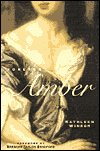
Title: Forever Amber
Author: Kathleen Winsor
Year published: Originally published in 1945
Why did you get this book? I have been meaning to read this for a couple of years and then it was chosen for this month's book of the month in one of my groups.
Do you like the cover? The cover that I have been able to show here is infinitely better than the cover of the version I have that was published in 1983. My cover features a man and a busty woman in a very low cut dress walking together up a hill that overlooks London.
Did you enjoy the book? Yes.
Was the author new to you and would you read something by this author again? The author is new to me, but I probably won't be reading anything else by her. Whilst Miss Winsor did have other books published, Forever Amber was the only one that was actually anywhere near successful (a kind of one hit wonder so to speak), which is kind of strange given that this book was banned in some US states not too long after it was published because it was too sexy. You would have thought that that kind of notoriety would have made it easy for follow up sales, but apparently not.
Are you keeping it or passing it on? Keeper! There were lots of details in this book, and I'm sure a reread would bring some more of those to the forefront.
Anything else? At 850+ pages this is a doorstopper of a book, but it is a relatively easy read. It is chocked full of historical details, including gruelling details of the Plague that hit London in 1665, and the subsequent Great Fire that destroyed parts of the city the following year. We follow a young woman, Amber St Clare through a 10 year period of her life, from when she is a 16 year old village girl who meets and becomes besotted with a Lord Bruce Carlton and runs away to London with him, through a period in Newgate debtor's prison, to her rise as an actress, courtesan and finally mistress to King Charles II, notorious womaniser. We see Amber at her best, at her most manipulative and most cunning as she tries to work her way up from the bottom of the social ladder to the very top. Yet through numerous relationships, marriages, and affairs, Amber still loves Bruce Carlton as she can love no other.
A bawdy romp through Restoration England and well worth a read