Showing posts with label Miles Franklin Award. Show all posts

Sunday, August 06, 2023

Six Degrees of Separation: Romantic Comedy to All That I Am


Welcome to this month's edition of Six Degrees of Separation, which is a monthly meme hosted by Kate from Books Are My Favourite and Best.  The idea is to start with a specific book and make a series of links from one book to the next using whatever link you can find and see where you end up after six links.  I am also linking this post up with The Sunday Salon, hosted by Deb at Readerbuzz. 


This month's starting point is Romantic Comedy by Curtis Sittenfeld. When this was announced as the starting point I was pretty pleased. I mean, I read plenty of books which might be counted as romantic comedies. Except when it came to making the first step when I was writing the post I got very stuck. And the theme I ended up following wasn't particularly romantic or funny!


One author who came to mind when I thought about romantic comedy is Emily Henry. Her book Happy Place was also released in April 2023, the same month as the Sittenfeld book. Emily Henry's next book is going to be called Funny Story so that must surely be a romantic comedy. She announced that this week.


Also announced this week was the winner of the Miles Franklin award for 2023 which was Chai Time at Cinnamon Gardens by Shankari Chandran. I read this book last year and liked it a lot, which isn't always the case for me and award winners.


Another Miles Franklin award winner I have read and enjoyed many years ago now is That Deadman Dance by Kim Scott who is an indigenous author. (my review)


I mentioned above that I am not always enamoured by award winners. One Miles Franklin award winner that I tried unsuccessfully to read was Carpentaria by Alexis Wright. She too is an indigenous author.


So I have given you two Miles Franklin Award winners I have read and enjoyed, one I DNF'ed so my next step is another winner by another indigenous author, Tara June Finch which is called The Yield. I own this book but I haven't read it yet!


My final link in the chain for this month is another Miles Franklin award winner that I have read which is All That I Am by Anna Funder. I really wanted to finish with this book because the starting point for next month is Anna Funder's new book, Wifedom. (my review)


Are you joining in on Six Degrees this month? Where did your chain take you?


Sunday, July 08, 2012

Sunday Salon: That Deadman Dance by Kim Scott


Some times, as a reader, I need a bit of a push to read a specific book. Usually, this happens with books that I wanted enough to buy but then I struggle to fit it in between library reads and review copies.

So it was with this book.  I bought it last year when I attended a Melbourne Writers Festival session which featured the author, Kim Scott, along with a couple of other authors talking about writing books from the indigenous perspective. In this case, Kim Scott is an indigenous Australian, a member of the Noongar tribe which originates in the far south western corner of Western Australia.

As soon as Lisa from ANZ Litlovers announced that she was going to run the Indigenous Literature Week this week (to coincide with NAIDOC week) I knew that this was the book that I was finally going to read! (NAIDOC originally stood for National Aborigines and Islanders Day Observance Committee although now it is more the name of the week than an acronym for something else).

Was the wait to read it worth it? I would have to say yes, but there is a bit of a disclaimer, but I will get to that in due course.

This novel asks a very simple question. What if, at first contact between native Australians and the British colonisers, things were different? What if the two groups worked together with mutual benefit, rather than be a story of domination and destruction? What if true friendship could be formed between the two groups, and by extension what lessons could we possibly take from this example today?

Of course, all those what ifs are coloured by the truth of what was, and that truth is not denied in any way, but for a while there it seems as though the colonisers and the representatives of the Noongar people might have been able to find a way.

The pivotal character of the book is Bobby Wabalanginy and he in effect performs the role of guide to the reader. At various times throughout the novel he is equally at home with his tribe and also within the homes of the British who have come to colonise the area around King George Sound, which is near  current day Albany. Bobby has a special affinity with the whales that follow their migration through the sees nearby, and also a special ability as a storyteller and to mimic those around them, both in voice and in dance. We see Bobby as both a young boy telling of his life now, but also as an old man looking back through time. Far from being a conduit between the two cultures, as an old man Bobby is something of an oddity, telling his fascinating story to anyone who would listen - in effect he was a tourist attraction.

Whilst Bobby is our guide, he is not the only voice that we get to here in the pages of this book. We meet Dr Cross, one of the first men to make the trek to the area with the hope of starting a new settlement. The good doctor is keen to foster good relationship with the locals and initially it seems that will be possible. He takes Bobby under his wing, but he is not a well man.

Following in his footsteps are the ambitious Mr Chaine  (and his family) who has high hopes of making his fortune by catering to the needs of the American whaling ships that flock to the area for the annual harvest of whale oil, Mr Skelly the soon to be ex convict, Sargeant Killam, Jak Tar the sailor who escapes from one of the ships, and the Governor who comes with very set ideas on how the native issues should be resolved.

It may sound as though the focus is purely on the Aboriginal experience, but Scott doesn't back away from the hardships that the white settlers face

The narrative is both straight forward and yet somewhat convoluted thanks to the way that the book is structured. Part 1 is set in 1833 to 1835 whereas part 2 tells of the events that occurred in 1826 to 1830 but this section is told to us by old man Bobby looking back through the years. We are then back in 1836 to 1838 for Part 3 and 1841 to 1844 in Part 4. Even within those parts there are flashbacks and past questions answered. And yet, overall, at the end of the book, the story felt quite straight forward and linear. That doesn't always happen when an author plays with the concepts of time in their storytelling.

One of the things about this book is that it did challenge me, it did make me work for the pay off. There are lots of sections where the language is beautiful and yet other sections where there was repetition of phrases which becomes very obvious as I was reading. There was also a lot of information in the book about the process of whaling as it was performed in the 1800s. Not something that modern readers would necessary be comfortable with, but certainly that aspect fitted within the historical context of the time.

One of the most poignant passages in the book is one that I shared in my Tuesday Teaser post last week:

Me and my people... My people and I (he winked) are not so good traders as we thought. We thought making friends was the best thing, and never knew that when we took your flour and sugar and tea and blankets that we'd lose everything of ours.. We learned your words and songs and stories, and never knew you didn't want to hear ours....
Later in the book as the narrative wends it's way to the inevitable truths that we know of the relationship between the two groups, the observation is made about how the white man has taken everything from the Noongar: their food, the watering holes have been destroyed by introduced stock, their freedom. And yet the whites punish the natives if they try to take the food etc that they so badly need. Even though it is the story that we know, it was a very powerful section to read.

Whilst Scott makes it clear in his notes that this story is fiction, he does acknowledge that there is evidence to suggest that this idea of cooperation between the Noongar people and the white settlers did happen.

This book won the prestigious Miles Franklin Award in 2011 amongst many other prizes, and without having read the other shortlisted books, it does seem like a worthy winner to me. By focusing on the indigenous experience, Kim Scott gave me a fresh perspective on a story that seems so familiar to most Australians. It is a story that needed to be told.

I am glad that participating in ANZLitlovers Indigenous Literature Week has finally given me the nudge that I needed to actually read this book! I definitely intend to read more from Mr Scott in the future.

Rating 4/5

Bobby Wabalanginy never learned fear, not until he was pretty well a grown man. Sure, he grew up doing the Dead Man Dance, but with him it was a dance of life, a lively dance for people to do together...

Told through the eyes of black and white, young and old, this is a story about a fledgling Western Australian community in the early 1800s known as the 'friendly frontier'.

Poetic, warm-hearted and bold, it is a story which shows that first contact did not have to lead to war.

It is a story for our times.

Wednesday, June 20, 2012

Anna Funder wins the Miles Franklin Prize

The winner of most prestigious literary prize in Australia was announced tonight, and for once it is a book that I have actually read and reviewed!

The winner was All That I Am by Anna Funder, and you can find my review here.

Congratulations to Anna Funder!


Thursday, March 29, 2012

2012 Miles Franklin longlist


Yesterday the longlist for the 2012 Miles Franklin award was announced.

The Miles Franklin is the most prestigious literary award. Of the list, I have read two, which isn't many but it is better than I have been in the last few years. One of the books, All That I Am, I liked but didn't love and the other, Foals Bread was a struggle for me. Click on the links to read my thoughts.

Blood by Tony Birch
Spirit of Progress by Steven Carroll
Spirit House by Mark Dapin
The Precipice by Virginia Duigan
All That I Am by Anna Funder,
Sarah Thornhill by Kate Grenville
Five Bells by Gail Jones
Foal’s Bread by Gillian Mears
Autumn Laing by Alex Miller
Cold Light by Frank Moorhouse
Past the Shallows by Favel Parrett
The Street Sweeper by Elliot Perlman
Animal People by Charlotte Wood

I have every intention of reading Sarah Thornhill, Past the Shallows and The Street Sweeper in due course. Maybe I will try to read the shortlist... or maybe not!

Sunday, March 21, 2010

TSS: Reading the awards

I am kind of still finding my way with this whole Sunday Salon thing and so I think that for the time being, I am going to keep unofficially participating in Sunday Salon and also officially participating in Muse in the Fog's Suddenly Sunday at the same time.

In case you hadn't noticed the longlist for the Orange Prize for Fiction was announced this week. It has been mentioned one or two times around the blogosphere, and yes, I am going to talk about it here. What I wanted to focus on though was what it means to a reader if a book is long listed for one of the big prizes, let alone wins one. First, here's the list of books that made the long list:

Rosie Alison: The Very Thought of You (UK)
Eleanor Catton: The Rehearsal (New Zealand)
Clare Clark: Savage Lands (UK)
Amanda Craig: Hearts and Minds (UK)
Roopa Farooki: The Way Things Look to Me (UK)
Rebecca Gowers: The Twisted Heart (UK)
M.J. Hyland: This is How (UK)
Sadie Jones: Small Wars (UK)
Barbara Kingsolver: The Lacuna (US)
Laila Lalami: Secret Son (Morocco)
Andrea Levy: The Long Song (UK)
Attica Locke: Black Water Rising (US)
Maria McCann: The Wilding (UK)
Hilary Mantel: Wolf Hall (UK)
Nadifa Mohamed: Black Mamba Boy (UK)
Lorrie Moore: A Gate at the Stairs (UK)
Monique Roffey: The White Woman on the Green Bicycle (Spain/UK)
Amy Sackville: The Still Point (UK)
Kathryn Stockett: The Help (US)
Sarah Waters: The Little Stranger (UK)


My initial thoughts when I first saw this list was 'oh my goodness I haven't read any of these'! I own Wolf Hall, I have The Help out from the library at the moment, and I have had The Little Stranger out as well, but I had to return it unread. I will borrow it again eventually I am sure. There are several others that I have been meaning to read as well, but haven't actually done anything about.

My second reaction was based purely on my affection for Historical Fiction as a genre. Of the twenty books that are listed, twelve of them have a historical setting, or at least are partially set in a different era! The Very Thought of You is set on the eve of WWII (so a must read for me)and Savage Lands by Clare Clark is set in 1700s Louisiana and sounds fascinating and The Lacuna by Barbara Kingsolver is set during the Mexican Revolution. I really loved The Poisonwood Bible and so this is already on my TBR list. The Long Song by Andrea Levy is about slavery and The Wilding by Maria McCann is set in the post English Civil War era (a time that I find fascinating too). Wolf Hall by Hilary Mantel is a Tudor novel that has been garnering critical awards all over the place, and Black Mamba Boy by Nadifa Mohamed is set in 1930s Africa. I can't get enough of books set in Africa. The White Woman on a Green Bicycle by Monique Roffey is set in post Colonial Trinidad, which it is fair to say I have never read about before, and The Still Point by Amy Sackville is partially set at the end of 19th century. The Help by Kathryn Stockett (1960s American South) and The Little Stranger by Sarah Waters (post WWII UK) round out the list.

Then I saw the longlist for the Miles Franklin Literary Award, which is Australia's most prestigious literary fiction prize, and again, I hadn't read any of them. I had heard of some of the authors - let's face it, you can't be a reader in Australia and not have heard of Peter Carey and Tom Kenneally at the very least - and I have read Sonya Hartnett, and have been meaning to read Peter Temple for the longest time too. It is interesting to have a crime novel make the long list too. That's not something that you see that often.

Figurehead, Patrick Allington (Black Inc. Publishing)
Parrot and Olivier in America, Peter Carey (Penguin Group)
The Bath Fugues, Brian Castro (Giramondo Publishing)
Boy on a Wire, John Doust (Fremantle Press)
The Book of Emmett, Deborah Forster (Random House)
Sons of the Rumour, David Foster (Pan Macmillan)
Siddon Rock, Glenda Guest (Random House)
Butterfly, Sonya Hartnett (Penguin Group)
The People's Train, Tom Keneally (Random House)
Lovesong, Alex Miller (Allen & Unwin)
Jasper Jones, Craig Silver (Allen & Unwin)
Truth, Peter Temple (Text Publishing)

So heres the thing. Apparently, despite the fact that in the past 15 months I have read approximately 150 books, I am not reading the books that are garnering the critical praise that comes associated with being nominated with these prestigious prizes. Coincidentally, this week also saw the launch of the third annual DWABAHA tournament, where popular romance novels that have been released in the previous 12 months are pitted against each other in brackets. Participants then vote, until finally there is one book left that is called champion! The initial list was 64 books long, and out of that list, I had read a miserly total of 4. This means that I am not reading the critically acclaimed books and I am not reading the popularly acclaimed books in the genres that I enjoy reading, so what the heck am I reading?

As I do every year, I have added the long listed books to my ever growing TBR list, and think about when I might possibly read some of them, so that I can continue my participation in the ongoing Orange Prize Project challenge at the very least.

Do you like to read the novels that are long listed for prestigious prizes? Some people try to read as many as possible of the long listed novels before the prize is nominated? If a novel does win one of these prizes, do you add it to your TBR list? Does seeing which books made the list attract your interest to those novels, or do prizes not matter to you at all? Perhaps some prizes mean more than others to you?

Let's talk prizes!

Friday, March 13, 2009

2009 Miles Franklin Longlist

Last night the longlist for this year's Miles Franklin award were announced! I am ashamed to say that I haven't read any of them, and hadn't heard of a few of them!

The Pages - Murray Bail
Wanting - Richard Flanagan
Addition - Toni Jordan
One Foot Wrong - Sofie Laguna
Ice - Louis Nowra
Fugative Blue - Claire Thomas
A Fraction of the Whole - Steve Toltz
The Devil’s Eye - Ian Townsend
The Slap - Christos Tsiolkas
Breath - Tim Winton

In fact, of all those authors I have only read one book by one of those authors and that was Tim Winton.

The Miles Franklin award is arguably the most prestigious prize awarded for Australian Fiction.

I am a bad Aussie!

Saturday, July 05, 2008

Jack Maggs by Peter Carey

'Look at me', said Tobias Oates insistently. 'Look into my eyes - I can take away this pain.' Maggs peered at Oates as if through a heavy veil. The little gent began to wave his hands. He passed them down, up , down. 'Watch me' said Tobias Oates, and Jack Maggs, for once, did exactly as he was told.

Peter Carey's new novel, set in London in 1837, is a thrilling story of mesmerism and possession, of dangerous bargains and illicit love. Jack Maggs, raised and deported as a criminal, has returned from Australia, in secret and at great risk. What does he want after all these years, and why is he so interested in the comings and goings at a plush townhouse in Great Queen Street? And why is Jack himself an object of such interest to Tobias Oates, celebrated author, amateur hypnotist and fellow burglar - in this case of people's minds, of their histories and inner phantoms?

In this hugely engaging novel one of the finest contemporary writers pays homage to his Victorian forebears. As Peter Carey's characters become embroiled in each other's furtive desires and increasing fall under one another's spell, their thirst for love exacts a terrible, unexpected cost.
If I had of been looking at this book on the shelf either at the library or at the bookstore, there is a pretty fair chance that I would never have picked this up. In fact, I had a lot of trouble finding this image and ended up scanning it in. Even at Peter Carey's website where there are over 20 different cover images for this novel, this one isn't up there.

Luckily for me, this book is up for discussion this month at my online book group, and so I felt obliged to look beyond the horrible cover, and actually go with what was inside the book.

At first, I wasn't sure that the contents were much better than the cover art. Most of the characters are for the most part unlikeable, especially in the first parts of the novel. There is Jack Maggs, a convict who has returned from Australia in secret, knowing full well that if he gets caught back in England he will likely swing. He has come to Great Queen Street desperately searching for someone or something, and is willing to make almost any deal in order to find what he is looking for. In a case of mistaken identity, Jack finds himself being employed as a footman in the household of Mr Buckle, a former grocer and fried fish seller who unexpectedly found himself the recipient of a large inheritance so now is doing his best to be a gentleman. Also in the Great Queen Street house is Mercy Larkin - a young woman who Mr Buckle saved from a life of prostitution...kind of. She is a maid, but she is also Mr Buckle's Good Companion, sometimes to her cost. Another of the strange characters is Edward Constable, the other half of the matching set of footman, but he has secrets of his own, and is in grieving for his former footman partner who had recently killed himself.

Into the house comes celebrated author Tobias Oates for a dinner party, along with several other notable names, mainly from the theatrical set. Whilst at the dinner party, Jack Maggs catches Tobias Oates eye, and it isn't long before Tobias has had agreement from Mr Buckley to allow Jack to be the subject of Scientific Experiment using Magnets to in effect hypnotise and then to draw out Jack's secrets. Tobias is however a man with his own secrets, secrets that haunt him and have huge impacts in his home, and tragic consequences for his family.

From here, the tale of Jack Maggs and this cast of somewhat strange characters, are slowly entwined in each others story and what follows is an almost gothic, very dark tale of love, and danger, theft and murder, distrust and deception, with Jack searching for what he thinks it is that he wants, not realising that he has more than that to lose back in Australia.

Ultimately this was a rewarding read, and it is a book that I think would benefit from a reread, as having now read the book once I could appreciate how well Carey drew the connections between the cast of characters, particularly in relation to Jack's adopted family. For example, the very opening scene of the book felt a little disconnected from the major part of the story, until about half way through when it all suddenly made perfect sense.

I have always felt like a bit of a bad Australian at times. I can't stand Vegemite. I am not that fussed about lamingtons or pavlova. I don't watch Neighbours or Home and Away, and I hadn't read very many of our biggest names in literature, including Peter Carey. Whilst I don't see any of the other things I have listed their changing in the near future, I do definitely plan to read more of Peter Carey's works.

Peter Carey is one of the most successful Australian authors around in terms of winning awards, and with this book he won both the Commonwealth Writers Prize in 1998, and the Miles Franklin Award as well (which is Australia's most prestigious literary award).

I ended up giving this book a rating of 4/5. Until the very end I thought that the grade would be a bit lower than that, but ultimately it was an enjoyable reading experience.

Friday, March 14, 2008

Miles Franklin Award 2008 - Longlist

The longlist for the Miles Franklin Award for 2008 was announced last night. This award is probably the premier Australian literature award. I have heard of a couple of them...and read none of them.

Landscape of Farewell by Alex Miller, A&U
Love without Hope by Rodney Hall, Picador
Orpheus Lost by Janette Turner Hospital, Fourth Estate
Secrets of the Sea by Nicholas Shakespeare, Harvill Secker
Sorry by Gail Jones, Vintage
The Fern Tattoo by David Brooks, UQP
The Memory Room by Christopher Koch, Knopf
The Time We Have Taken by Steven Carroll, Fourth Estate
The Widow and Her Hero by Tom Keneally, Vintage

I do intend to read some of them eventually!

The shortlist is announced in April

Tuesday, October 23, 2007

Carpentaria by Alexis Wright

Carpentaria is Alexis Wright's second novel, an epic set in the Gulf Country of north-western Queensland.

The novel's portrait of life in the precariously settled coastal town of Desperance, centres on the powerful Phantom family, leader of the Westend Pricklebush people, and its battles with old Joseph Midnight's renegade Eastend mob on the one hand and the white officials of Uptown, and on the neighbouring Gurfurrit mine on the other.

Wright's storytelling is operatic and surreal: a blend of myth and scripture, politics and farce. The novel teems with extraordinary characters - the outcast saviour Elias Smith, the religious zealot Mozzie Fishman, the murderous mayor Bruiser, the moth-ridden Captain Nicoli Finn, the activist Will Phantom, and above all, the rulers of the family, the queen of the rubbish dump and the fish embalming king of time, Angel Day and Normal Phantom - figures of such an intense imagining, they stand like giants in this storm-swept world.


I am torturing myself!

I have pretty much decided that I am going to stop reading this book that I am struggling with. I have been reading it for what feels like an eternity, but in reality is only 5 days. Normally I can read a 500 page book in 3 days - with this one I am only 200 pages in.

What I am struggling with is that I should just return the book, but I can't help but think that I should reborrow it and try again later? I can only think of 3 books that I have put down in the last couple of years with no intention of ever finishing....and each one was a dilemma for me!

It is an added dilemma that this was the winner of the Miles Franklin Literary Award which is one of the most illustrious literature award in Australia, so I should like it....right?

So for now, this is a DNF. There's no guarantee that I won't try again at another time.

Sunday, June 24, 2007

Miles Franklin Award winner

And the winner was:


Carpentaria by Alexis Wright:


A portrait of life in the newly established coastal town of Desperance centres on the powerful Phantom family, whose members are are the leaders of the Pricklebush people.


It does sound like an interesting read from articles I have read about it. I've added it to my TBR list!

Thursday, June 14, 2007

Miles Franklin short list

The short list for the Miles Franklin award for 2007 have just been announced. The Miles Franklin award is the most prestigious prize awarded for Australian Fiction.

The finalists are:


Careless by Deborah Robertson

In the midst of her life with her small brother and unpredictable mother, Pearl is a child who strives to get things right. But the events of one summer's day are about to change her life, and nothing may ever be right again. In ways connected but unforeseen, this child's tragedy will also enter the lives of two strangers. Sonia lives in a cooler, greener part of the city, where she is learning to live alone after the death of her famous husband. And at the edge of the city, close to the beaches, in a run-down building, the young sculptor Adam Logan contemplates the celebrity that his artwork has brought to him. Through a seductively woven plot that reflects the interlacing nature of our lives, Careless explores the ties of caring and responsibility, for the living and the dead, that are formed, and broken, in our society.

Carpentaria by Alexis Wright

A portrait of life in the newly established coastal town of Desperance centres on the powerful Phantom family, whose members are are the leaders of the Pricklebush people.


Dreams of Speaking by Gail Jones

'She wished to study the unremarked beauty of modern things, of telephones, aeroplanes, computer screens and electric lights, of television, cars and underground transportation. There had to be in the world of mechanical efficiency some mystery of transaction, the summoning of remote meanings, an extra dimension - supernatural, sure. There had to be a lost sublimity, of something once strange, now familiar, tame. We must talk, Alice Black, about this world of modern things. This buzzing world.' Alice is entranced by the aesthetics of technology and, in every aeroplane flight, every Xerox machine, every neon sign, sees the poetry of modernity. Mr Sakamoto, a survivor of the atomic bomb, is an expert on Alexander Graham Bell. Like Alice, he is culturally and geographically displaced. The pair forge an unlikely friendship as Mr Sakamoto regales Alice with stories of twentieth-century invention. His own knowledge begins to inform her writing, and these two solitary beings become a mutual support for each other a long way from home. This novel from prize-winning author Gail Jones is distinguished in its honesty and intelligence. From the boundlessness of space walking to the frustrating constrictions of one person's daily existence, DREAMS OF SPEAKING paints with grace and skill the experience of needing to belong despite wanting to be alone.


Theft: A Love Story by Peter Carey

From Australia to Manhattan via Tokyo, Peter Carey’s new novel is a strange sort of love story. Once famous artist Butcher Bones is reduced to being a caretaker for his biggest collector and nurse to his erratic brother, Hugh. When the mysterious Marlene turns up, events take a very peculiar turn.

Tuesday, March 20, 2007

Longlists!

Not only is the Orange long list out today, also out this week was the long list for the Miles Franklin Award, which is the most prestigious Australian literary award.

The long list for the Orange award is as following:

Chimamanda Ngozi Adichie - Half of a Yellow Sun
Clare Allan - Poppy Shakespeare
Rachel Cusk - Arlington Park
Kiran Desai - The Inheritance of Loss
Patricia Ferguson - Peripheral Vision
Margaret Forster - Over
Nell Freudenberger - The Dissident
Rebecca Gowers - When to Walk
Xiaolu Guo - A Concise Chinese-English Dictionary for Lovers
Jane Harris - The Observations
M J Hyland - Carry Me Down
Lori Lansens - The Girls
Lisa Moore - Alligator
Catherine O'Flynn - What Was Lost
Stef Penney - The Tenderness of Wolves
Deborah Robertson - Careless
Rachel Seiffert - Afterwards
Jane Smiley - Ten Days in the Hills
Anne Tyler - Digging to America
Melanie Wallace - The Housekeeper

The only one of those I have read is The Tenderness of Wolves, although there are several others on the list that I have been wanting to read for a while!

The long list for the Miles Franklin is as below:

Beyond the Break by Sandra Hall
Careless by Deborah Robertson
Carpentaria by Alexis Wright
Dreams of Speaking by Gail Jones
Silent Parts by John Charalambous
Theft: A Love Story by Peter Carey
The Unexpected Elements of Love by Kate Legge
The Unknown Terrorist by Richard Flanagan


I have actually only heard of a couple of those. Interestingly enough, last year all of the shortlisted books were Historical Fiction. This year, I don't think any of these books are HF!

The plan is to read the shortlists of some of these awards as the year goes on! We will see how we go.

Thursday, April 27, 2006

Australian Historical Fiction

It would appear that the state of historical fiction is pretty good here in Australia. Today the five nominations for The Miles Franklin Award 2006 were announced and all five of them are historical fiction.

The nominations are:

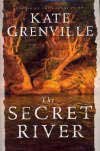
The Secret River by Kate Grenville

Historical novel set in the early years of the settlement of NSW, and follows the life and times of William Thornhill, who was sentenced in 1806 to be transported to NSW for the term of his natural life. With his wife and children, he eventually takes up land on the Hawkesbury River, and it’s this phrase, ‘takes up land’, that Kate Grenville examines, because it’s a phrase that doesn’t instantly invoke the risk and bloodshed that actually happened.

The Wing of the Night by Brenda Walker

The novel is mainly set in the farming communities of the south west of Western Australia where women were left to run farms. They formed strong bonds with their neighbours which transcended class divisions.

The book also explores what it was like for the men who survived the war and returned home.


Everyman's Rules for Scientific Living by Carrie Tiffany

Living off the land must be scientifically based. If you don’t do it properly, you fail. In the old days you’d starve. In the 1930s, a train carrying experts travelled across the countryside dispensing knowledge in the confident expectation that crop yields could be increased. This is the setting for an extraordinary novel by Carrie Tiffany, just published here and abroad.

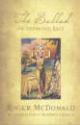
The Ballad of Desmond Kale by Roger McDonald

Roger's latest novel delves into the tough and vibrant landscape that was the setting for the colony of New South Wales' emerging wool industry. In 'The Ballad Of Desmond Kale' two tough men - Kale, an Irish political prisoner and Parson/Magistrate Matthew Stanton become arch rivals as they both endeavour to produce the finest wool ever produced in New South Wales.


The Garden Book by Brian Castro

Brian Castro's new novel is set in the Dandenong Ranges in the years between the Depression and the Second World War. The story revolves around Swan hay, born Shuang He, daughter of a country schoolteacher, her marriage to the passionate and brutal Darcy Damon, and her love affair with the aviator and architect Jasper Zenlin. Fifty years after her disappearance, Norman Shih, a rare book librarian, pieces together Swan's chaotic life from clues found in guest house libraries, antiquarian bookshops and her own elusive writings. But what exactly is he hoping to find?


Of these the only one I have read is The Secret River and it was quite a good read. As for the others...well, I have added another four items to my TBR list! I'm excited at the prospect of discovering four new authors as well.

Previous winners of the award include Patrick White, Andrew McGahan, Thomas Kenneally and Tim Winton.
TEMPLATE CREATED BY PRETTYWILDTHINGS