Showing posts with label Kate Grenville. Show all posts

Sunday, August 30, 2020

Bestsellers Around the World: Canada and Australia

A couple of months ago I came up with an idea to start a regular feature where I take a look at the bestseller lists for a particular country and compare them to the Australian one! The first month I looked at the British bestseller list, and then last month it was France.  This month I am taking a look at a Canadian bestseller list.

Here is the Top 10 Fiction list from the Toronto Star for the week ending August 19:
  1. The Book of Lost Names, Kristin Harmel Gallery 
  2. American Dirt, Jeanine Cummins, Flatiron 
  3. The Silent Wife, Karin Slaughter, William Morrow 
  4. The End of Her, Shari Lapena, Doubleday Canada 
  5. Where the Crawdads Sing, Delia Owens, G.P. Putnam’s 
  6. The Midwife Murders, James Patterson, Richard DiLallo, Grand Central 
  7. The Woman Before Wallis, Bryn Turnbull, Mira 
  8. The Guest List, Lucy Foley, William Morrow 
  9. Their Last Secret, Rick Mofina, Mira 
  10. The Order, Daniel Silva, HarperCollins Canada 
And here is the Top 10 for Australia as at 15 August from BetterReading.com

  1. When She Was Good by Michael Robotham (Hachette)
  2. Where the Crawdads Sing by Delia Owens (Hachette)
  3. The Yield by Tara June Winch (Hamish Hamilton)
  4. 1st Case by James Patterson (Century)
  5. The Order by Daniel Silva (HarperCollins)
  6. Boy Swallows Universe by Trent Dalton (Harper Collins)
  7. Say No More by Karen Rose (Hachette)
  8. A Room Made of Leaves by Kate Grenville (Text Publishing)
  9. The Dictionary of Lost Words by Pip Williams (Affirm Press)
  10. The Silent Wife by Karin Slaughter (HarperCollins)
The last time I looked at the Australian bestsellers list was in mid June. Of the books on this current list Boys Swallows Universe, The Dictionary of Lost of Words and Where the Crawdad Sing were there two months ago.  I still need to get around to reading the first two of these books. I own Dictionary of Lost Words having bought it when it first came out, but I haven't quite managed to crack it open yet.

The two other books on this list that call to me are both Australian authors, and I heard them speaking at Melbourne Writers Festival. I am very interested in reading The Yield by Tara June Winch  and the other is A Room Made of Leaves by Kate Grenville. I have read Grenville's previous historical novels so I will get to this one eventually.

It is interesting that Where the Crawdads Sing is still appearing on lists around the world even thought the book was released two years ago. I don't see this book disappearing off the lists any time soon given that there is now going to be a movie made of it.

When I look at the Canadian list, the two historical fiction novels are the two that I am drawn to the most. The Book of Lost Names is a WWII novel based on a true story. The title of The Woman Before Wallis is kind of self explanatory if you have any knowledge of 20th century English history but it also includes links to American "royalty", the Vanderbilts. It sounds like quite a read.

The two Canadian authors are Shari Lapena and Rick Mofina. Both of these novels are crime novels, with Shari Lapena's appearing to be a twisty turny suspense novel. It turns out that Mofina has written around 25 novels, and won multiple writing prizes, and he has a very interesting life story.

Are there any of these titles that you find interesting? Have you read any of these books or authors?

Next month, I am planning to take a look at the bestsellers list in South Africa!

I am sharing this post with Sunday Salon, which is hosted by Deb at Readerbuzz


Sunday, August 09, 2020

Sunday Salon: Melbourne Writers Festival: Digital - week 1

A few weeks ago I shared a list of just some of the authors that I have seen over the years at Melbourne Writers Festival. This weekend this year's festival has commenced, albeit in a fully digital version, so I am getting the opportunity to add to that list.

Over the years, my coverage of MWF events has ranged from a very detailed summary of every session that I attended to not even mentioning that I went! This year, my aim is to end up somewhere in the middle of that scale.

Like so many other events around the world, there was no choice but to move this festival into the digital realm. One of the interesting aspects of this festival is that we could choose to pay what we like for sessions. There were multiple options ranging from free to $50 per session.

When I looked at the program for this year, I selected a number of sessions, but none of them were this weekend. It really was only as the daily email came out that I realised that there were actually a couple of sessions I wanted to attend. I am not sure why it was that I didn't notice them when I initially looked at the program.

The first session that I watched was Australian indigenous author Tara June Winch, author of the Miles Franklin winning book The Yield, interviewing Ngāi Tahu author and journalist Becky Manawatu, about her book Auē. This book won one of the biggest prizes in New Zealand, the Jann Medlicott Acorn Prize for Fiction.

This conversation was incredibly interesting to me from the aspect of how much these two indigenous authors had in common. Neither of them was a formally trained writer when they started writing their prize books, they both live outside their country while in the process of writing very Australian and New Zealand books, and they shared similar feelings about being successful with stories that are their own, but are also so much the stories of their peoples and the burden that brings.

There was a lot of conversation about the legacy of colonisation, about the role of "curdled masculinity" in the ongoing violence in Maori society, how writing a painful story helps with personal pain, the need for mentoring and support of indigenous writers and so much more. It was thought provoking session.

Today I attended a session with Singaporean author Jing-Jing Lee whose book How We Disappeared was long listed for both the Women's Fiction Prize and the Walter Scott Prize for Historical Fiction. The book tells the story of the Singaporean women who were forced to become comfort women for the Japanese army after the invade the city during WWII.

I have long been fascinated by the story of how seemingly impregnable Singapore fell, so this book is one that I am drawn to straight away. In addition, this is a dual timeline story as we follow Wang Di, the main character, during her life in WWII and also in the early 2000s where she lives life as a "cardboard woman", a hoarder who makes a living selling recycled cardboard. There is also a third perspective which was interesting as it provided the author a break from the intense story that she was telling, and also assists in showing what Singapore is like today.

One of the interesting things that tied both of these sessions together was the idea of shame and the role it plays in our lives. For the comfort women, it was taboo to talk about their experiences, and it forever shaped their lives.

I definitely want to read this book.

I also listened to the podcast of the opening session which featured well known Australian author Kate Grenville talking about the stories we tell ourselves, particularly in times like those that we are experiencing right now. This is also available on podcast so I think that anyone can listen to it, so if you are interested check it out here.

During the week, I am intending a session featuring former Australian Prime Minister Julia Gillard, and then I have a full weekend next weekend, so expect to hear more about MWF Digital!

I am sharing this post with Sunday Salon, which is hosted by Deb at Readerbuzz

Tuesday, July 21, 2020

Top Ten Tuesday - Writer's I've Seen at MWF


Welcome to this week's edition of Top Ten Tuesday which is hosted by That Artsy Reader Girl. This week's theme is Book Events/Festivals I’d Love to Go to Someday (Real or Fictional) which was  submitted by Nandini @ Unputdownable Books)

Is it too much of a cop out to say all of them? It feels like it is!

I am very lucky to live in a city which was the second city in the world to be named as a UNESCO City of Literature and there are plenty of festivals or conferences around the city. The main one, the Melbourne Writers Festival, is announcing it's line up and format tomorrow! If the program had been released today then my Top Ten post would have been about that, but instead, it is out tomorrow, so instead I have decided to use my post this week to talk about some of the authors who I have heard speak in previous years.

I have been going to Melbourne Writers Festival for around 10 years now. Not only have I had the chance to listen to some great authors speak, but also I have been able to meet up with other book bloggers over the years. Some of the authors I have heard speak at MWF include:


Ann Patchett - I saw Ann Patchett back in 2011, where she was talking about her book State of Wonder. I did enjoy that book. I do still need to read her newest book The Dutch House too.


Sarah Dunant - I saw a couple of sessions with Sarah Dunant back in 2013 and both were fascinating. The first session was talking about Italian art and history, with a particular focus on Lucrezia Borgia. I got her book, Blood and Beauty, at that time. Still haven't read it!


Kate Grenville - I saw a session with Kim Scott and Rohan Wilson back in 2011 talking about the challenges of writing about the settlement of Australia, particularly in relation to native Australian portrayals. Kate Grenville has a new book out and looking at the current MWF website, I would suggest she is going to be a featured author again this year.


Kim Scott -After hearing Kim Scott speak in the same session as  Kate Grenville, I knew that I had to read his book That Deadman Dance, which I thought was excellent.


Kevin Kwan - Kevin Kwan was a speaker in 2013at as session which focussed on books as objects of beauty which was fascinating.


John Boyne - This session was memorable for a couple of reasons. Firstly because I could have listened to him talk for hours, but also because a friend of mine who lives in Sydney happened to walk in and sit down in front of me. I had no idea she was in Melbourne, and for her it was a impulsive decision to attend a session.


Melina Marchetta - This was one of the sessions I attended last year because I do love her books! And I would totally go and listen to her talk any time!


Justin Cronin - In 2016 I attended several MWF sessions, including Rainbow Rowell and David Leviathan, but for the purpose of this post I am going to mention seeing the author of the Passage trilogy.


Susan Johnson - I saw Australian author Susan Johnson speak back in 2013 at a session called Sex and Sensibility. You know that a session exploring sex and sensuality in literature is going to be fun, which it was!


Margo Lanagan - My final author for today's post is another Australian author, Margo Lanagan who I saw speak back in 2013.


Back in the day I was very diligent and wrote recaps of many of the sessions I attended which you can revisit through the links I have included above. The last couple of years I haven't written anything! Whoops! This year I will try to do better and do something between those two extremes.

Oh, and in answer to the actual question for this week, in addition to all the Australia capital city festivals (Perth, Adelaide, Sydney etc) I would like to visit the Ubud festival in Bali, Hay on Wye festival in the UK, and Book Expo America. Closer to home there is a small town in country Victoria called Clunes which has an annual weekend festival which I would like to visit one day.

Sunday, August 28, 2011

MWF - Native Titles


Today I headed in to the city to go to my second Melbourne Writers Festival event for this year. Next Saturday I am spending all day at the festival so I suspect my next Sunday Salon post will also be about the festival.

The session I attended today was called Native Titles:
Can fiction reveal the truth of the earliest encounters between Indigenous and settler Australians more honestly than conventional history? Three award-winning novelists, Kate Grenville (The Lieutenant), Kim Scott (That Deadman Dance) and Rohan Wilson (The Roving Party) consider approaches to the relationships at the heart of our nation. With Stephen Romei.
Kim Scott
The reasons why I chose to attend this session are that I have read and enjoyed both of Kate Grenville's historical fiction novels which are set during the earliest days of British colonisation of Australia and her latest novel, Sarah Thornhill, has recently been released. I am really interested in hearing more from Kim Scott. His book, That Deadman Dance, has been very successful in terms of literary prizes including winning the Miles Franklin award this year and I intend to read it at some point, although I am not sure when that will be as my library still doesn't have it on the catalogue at all. I think I am going to have ask them to buy it. Again I walked away from the session thinking that I needed to read all of the books that were discussed, including Rohan Wilson's The Roving Party which sounds fascinating.

The focus of the panel today was discussion of the portrayal of the settlement of Australia by the British and the representation of the indigenous story. I found the composition of the panel itself to be quite interesting. Kim Scott is a member of the Noongar people, an indigenous Australian tribe and is writing from the indigenous viewpoint. He stressed the importance of indigenous Australians having a voice and how important this will be in the continuing healing process which would include being able to look back to find strength and sustenance from their own stories. Kate Grenville is a white Australian who can trace her family back to settlement and places an important emphasis on the fact that whilst she has Aboriginal characters in her works she does not, and she will not, enter the Aboriginal characters internal world.. Finally, Rohan Wilson is a white Australian who does write from an indigenous perspective in his novel. Part of the reason for this is that, unlike other states like WA where Kim Scott comes from, there seems to be no indigenous voice in Tasmania and he hoped to at least start a conversation about the issues, and he has had positive feedback from the indigenous community despite his own doubts as to the correctness of choosing this voice.

Once again, the session was very interesting. Each of the authors started with a reading from their latest book and then it was on with the questions, starting with why does the story of settlement and first contact need to be told and what are the advantages of using fiction.

Kate Grenville
Kate Grenville talked about coming to the realisation that her own forebears may well have been involved in many of the events that happened in the early days of the colony, particularly in relation to the taking up of land along the Hawkesbury River which would by definition have resulted in the displacement of the native Aboriginal tribes at the time, and yet in all the historical records of the time, there was no mention at all of them. She originally planned to tell her ancestor's story through non-fiction, but instead it became a fictionalised representation of the first contact story. When asked if she was done with the historical setting that started in The Secret River continued in The Lieutenant and now concludes the trilogy with Sarah Thornhill, Grenville did agree that there was a chance that there is more to come from her pen within this setting.

One of the themes that was touched on many times throughout the panel was the idea of the silence that is in the historical record. Kim Scott expanded on this idea by saying that he wanted to rewrite the history to give voice and agency to his previously silenced ancestors and to also emphasise more the shared history that we all have. For Rohan, the idea of the profound silence of minorities such as indigenous and women in the historical record was a motivating factor as well.

As a fan of the historical fiction genre, I was intrigued by the discussion that were held about the role of fiction in telling the story of history. At one point, Kim Scott talked about history itself being a narrative, and therefore we see limited viewpoints including who are the good guys and who are the villains ( which to my mind reflects the well known adage that history is written by the winners).  He said that fiction can attempt to create a narrative sensibility that informs story and gets readers to move in consciousness as well by creating a relationship between reader and writer and using that as a basis for illuminations. It was interesting to me that there were several times where I saw correlations between this session and the last one I attended, and this was one of those moments.

Kate's answer to this question was that she takes elements of what is real and shapes it to create a believable bigger story, illuminating human nature and a moment in space and time.

Rohan Wilson
The question of historical accuracy is one that often comes up for readers of historical fiction and each of the authors had examples of readers identifying errors. Rohan Wilson did however have a different perspective on the issue of accuracy. He agreed that it is important but he is more than happy to bend and shape the story as he wants. He is not a history writer, and fiction is not history. When he is writing it is about characters and story, aiming to create characters that can be represented in such as way that reader's disbelief is suspended. Personally I wonder if this is a differentiation that you might also be able to draw between the historical fiction genre itself and literary fiction with a historical setting, but I think it is something that I need to ponder a bit more yet.

Also touched on is how the past could shape the future, and the idea that we can work towards a better relationship in relation to the many issues that are still very real for indigenous Australians because really the story is not over yet. Definitely food for thought.

There was quite a bit more that was covered during the session, but I think that those were most of the main points!

It was heartening to see how full the festival bookshop was both before I went into my session and after it and the signing queue for Jonathan Franzen was huge! I had to leave pretty much straight away because I was on babysitting duties but I am looking forward to spending a bit of time browsing the shelves next week! I was also very pleased to meet up with Lisa from ANZ Litlovers blog and I am looking forward to having a bit of a longer chat with her later in the festival! You can read Lisa's take on this session here.

My next session is on Friday afternoon, and I am contemplating asking the boss for half a day off so that I can squeeze in at least one extra session on that day and then all day Saturday as well!



Tuesday, November 18, 2008

The Lieutenant by Kate Grenville

Daniel Rooke,soldier and astronomer, was always an outsider. As a young lieutenant of marines he arrives in New South Wales on the First Fleet in 1788 and sees his chance. he sets up his observatory away from the main camp, and begins the scientific work that he hopes will make him famous.

Aboriginal people soon start to visit his isolated promontory, and a child named Tagaran begins to teach him her language. With meticulous care he records their conversations.

An extraordinary friendship forms, and Rooke has almost forgotten he is a soldier when a man is fatally wounded in the infant colony. The lieutenant faces a decision that will define not only who he is but the course of his entire life.

In this profoundly moving novel Kate Grenville returns to the landscape of her much-loved bestseller The Secret River. Inspired by the notebooks of William Dawes, The Lieutenant is a compelling story about friendship and self-discovery by a writer at the peak of her power.
There's no doubt that if I try to work out where my gaps are in terms of the Historical Fiction that I read, then Australian history is one of those gaps. It's not because it doesn't interest me, because it does, but I think because it is either difficult to find out about good books that use Australian history as the base, or because there aren't that many good books out there.

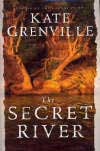
Not long before I started blogging back in 2005, I read The Secret River by Kate Grenville. Set at the time of the First Fleet it looked at the relationship between white settlers and the native Australian Aborigines who were already here. Grenville returns to this same setting in The Lieutenant.

The main character in the story is Lieutenant Daniel Rooke. He is a young man who has been chosen to receive a top notch education based on his impressive mathematical abilities, and finds himself recruited to serve in the First Fleet that it coming to Australia. Whilst he is a soldier, his main role once he gets to the new land will be as astronomer, observing the night skies and in particular looking for signs of a comet. With his skills as astronomer, linguist and orienter are very valued on such an expedition, he is also very much aware that he is something of an outcast.

When the fleet arrives in Botany Bay, Rooke sets up his observatory at a distance away from the rest of the soldiers and convicts. This places him in an ideal position to be able to interact with the local tribespeople, and he quickly begins to study the language and make friends with the people, most especially a young girl. It doesn't take long however for relations between the settlers and the natives to degenerate and Rooke finds himself having to choose between duty and friendship.

Whilst the setting is similar, there are significant differences between the two stories. In this novel, Grenville has pared the narrative right back to the basics of the story. We are very much focussed on Rooke's life, and his interactions. For me, this made The Lieutenant a much stronger, more interesting book.

I was interested in a couple of the choices that Grenville made with this book. There is no secret that this book is very much based on the life of one Lt William Dawes who was a skilled astronomer and who did document the language. On her website, Grenville explains the choices that she made. The interesting thing to me was that she chose to use different names for all the characters - not only for Rooke/Dawes but also for first Governor and for the known names of some of the other important figures from the First Fleet. I am not sure that it was necessary to make these changes, but I do understand her intent. As she says on her website:

I've taken events that took place in the real world and used them as the basis for a work of imagination.

This is a novel, then, not history.

It is a deceptively short book. The hardcover version I had had a total of 307 pages, but the text size and white spaces were definitely on the generous side.

I enjoyed this trip into Australian history, and hope to read more with this setting. This book will be published in the US and UK on February 5 2009.

Thursday, April 27, 2006

Australian Historical Fiction

It would appear that the state of historical fiction is pretty good here in Australia. Today the five nominations for The Miles Franklin Award 2006 were announced and all five of them are historical fiction.

The nominations are:

The Secret River by Kate Grenville

Historical novel set in the early years of the settlement of NSW, and follows the life and times of William Thornhill, who was sentenced in 1806 to be transported to NSW for the term of his natural life. With his wife and children, he eventually takes up land on the Hawkesbury River, and it’s this phrase, ‘takes up land’, that Kate Grenville examines, because it’s a phrase that doesn’t instantly invoke the risk and bloodshed that actually happened.

The Wing of the Night by Brenda Walker

The novel is mainly set in the farming communities of the south west of Western Australia where women were left to run farms. They formed strong bonds with their neighbours which transcended class divisions.

The book also explores what it was like for the men who survived the war and returned home.


Everyman's Rules for Scientific Living by Carrie Tiffany

Living off the land must be scientifically based. If you don’t do it properly, you fail. In the old days you’d starve. In the 1930s, a train carrying experts travelled across the countryside dispensing knowledge in the confident expectation that crop yields could be increased. This is the setting for an extraordinary novel by Carrie Tiffany, just published here and abroad.

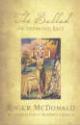
The Ballad of Desmond Kale by Roger McDonald

Roger's latest novel delves into the tough and vibrant landscape that was the setting for the colony of New South Wales' emerging wool industry. In 'The Ballad Of Desmond Kale' two tough men - Kale, an Irish political prisoner and Parson/Magistrate Matthew Stanton become arch rivals as they both endeavour to produce the finest wool ever produced in New South Wales.


The Garden Book by Brian Castro

Brian Castro's new novel is set in the Dandenong Ranges in the years between the Depression and the Second World War. The story revolves around Swan hay, born Shuang He, daughter of a country schoolteacher, her marriage to the passionate and brutal Darcy Damon, and her love affair with the aviator and architect Jasper Zenlin. Fifty years after her disappearance, Norman Shih, a rare book librarian, pieces together Swan's chaotic life from clues found in guest house libraries, antiquarian bookshops and her own elusive writings. But what exactly is he hoping to find?


Of these the only one I have read is The Secret River and it was quite a good read. As for the others...well, I have added another four items to my TBR list! I'm excited at the prospect of discovering four new authors as well.

Previous winners of the award include Patrick White, Andrew McGahan, Thomas Kenneally and Tim Winton.
TEMPLATE CREATED BY PRETTYWILDTHINGS